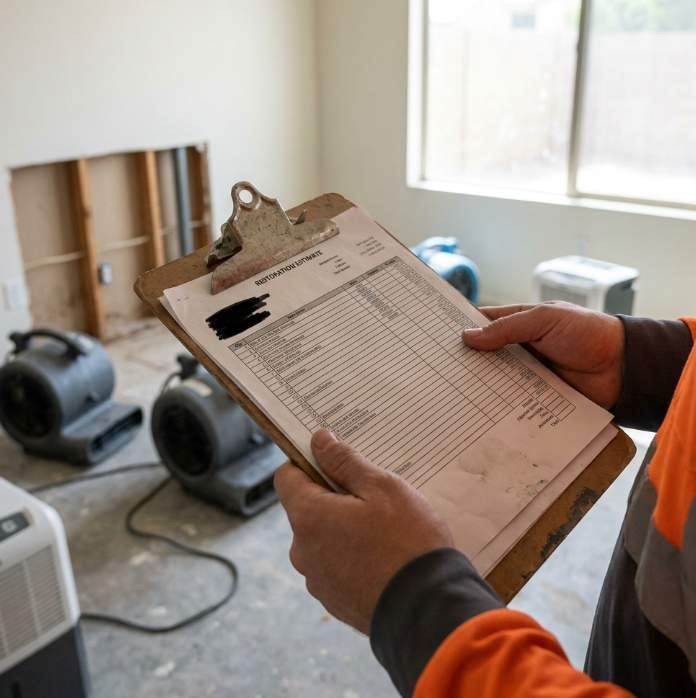
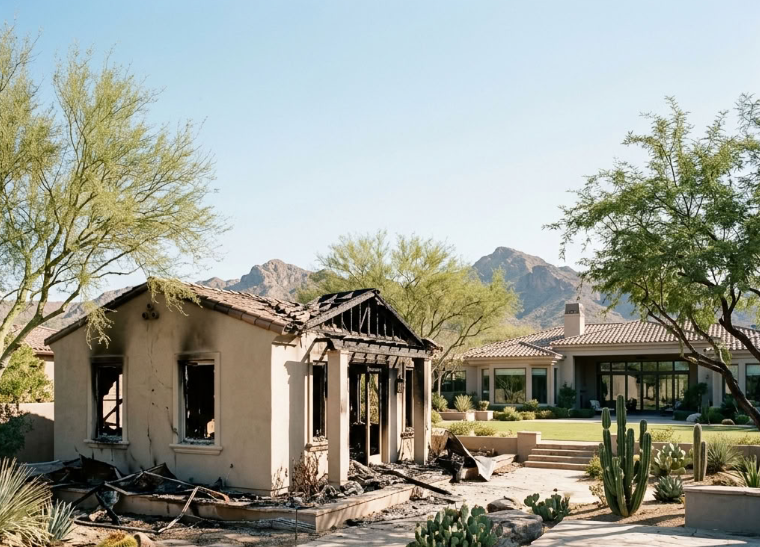
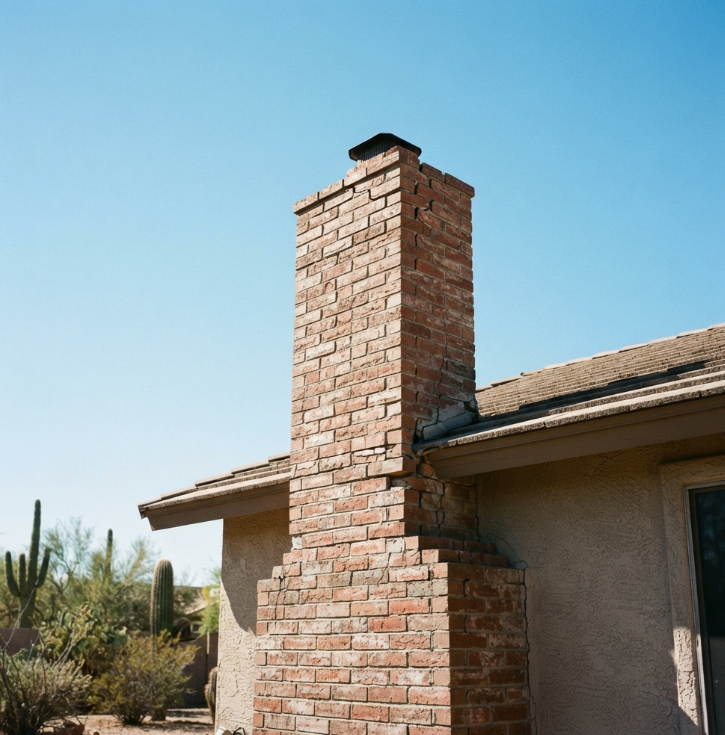
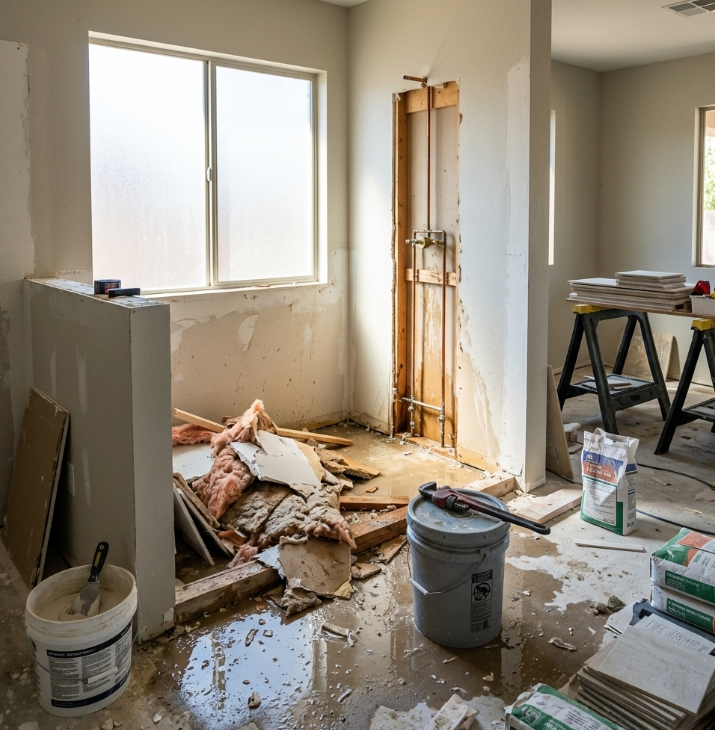
The estimate lands in your inbox on the worst day you've had in a while. Your property is damaged, your insurer is involved, and a contractor is waiting on your signature. The document is four to eight pages long and written in a shorthand you've never seen before.
Most people sign it. They're overwhelmed, they trust the process, and they want to move forward.
That's understandable. It's also one of the more expensive decisions you can make without realizing it, because what's in that estimate — and what isn't — determines a lot about how your claim resolves and what condition your property ends up in.
Here's what to actually look at before you sign anything.
The Platform Matters Before You Read a Single Line Item
Most insurance carriers operating in Arizona — State Farm, Travelers, Allstate, USAA, the major TPA networks — use a platform called Xactimate to price restoration work. It's a line-item estimating system with standardized labor and material costs indexed to your specific zip code. When your contractor writes in Xactimate and your adjuster reviews in Xactimate, they're working from the same pricing basis. Line items are defined. Quantities are verifiable. Disputes have a common reference point.
When a contractor hands you something else — a narrative paragraph, a spreadsheet with round numbers, a one-page summary — that document doesn't translate into your adjuster's workflow. It creates friction. Claims slow down. Approvals come in lower than what the job actually requires, because the carrier can't cross-reference what they can't recognize.
Before you read anything else on an estimate, ask: is this written in Xactimate? If the contractor can't answer that clearly, you already know something important about how this job is going to go.
Know the Difference Between a Scope and a Price
An estimate tells you what something costs. A scope tells you what's actually going to happen to your property.
The best restoration estimates do both, line by line. "Drywall repair" is not a scope. "Remove and replace 5/8" drywall — 340 SF, taped, floated, skip-trowel texture to match existing" is a scope. That distinction matters because vague language protects whoever wants to do less — and in a restoration claim, that's almost never the property owner.
Read every line. If terminology is unfamiliar, ask. A contractor who's written hundreds of these should have no problem explaining what any line item means in plain language. If they hedge or deflect, that's worth noting.
The Two Numbers and the Check Most People Don't Know Exists
If your policy includes Replacement Cost Value coverage — which most Arizona homeowner and commercial property policies do — your estimate will show two figures.
The RCV is the full replacement cost at today's prices. The ACV is the RCV minus depreciation — what your carrier releases upfront before work is complete. The difference between those two numbers is called recoverable depreciation, and it's money you're owed once the work is documented and submitted.
A lot of property owners don't know that second check exists. Some contractors don't pursue it aggressively. Make sure yours has a documented process for submitting depreciation recovery after project completion — not just a verbal assurance they'll handle it.
Every Initial Estimate Is Incomplete. What Matters Is What Happens Next.
Adjusters work fast during initial inspections. They're documenting what's visible on the day they walk the property. They haven't opened the walls yet. They haven't seen what's behind the tile, inside the ceiling cavity, or under the subfloor. In the Valley, where slab leaks saturate insulation silently for weeks and monsoon water finds every gap in an aging building envelope, the full damage picture almost never surfaces in the first walkthrough.
Supplementing is the process of going back to the carrier with documentation when actual scope exceeds what was originally approved. It happens on nearly every significant loss. Hidden moisture behind tile. Secondary damage that wasn't visible at initial inspection. Code-required upgrades that weren't accounted for in the original estimate.
The question isn't whether supplements will be needed — it's whether your contractor has a process to identify, document, and submit them, or whether they accept the initial approval and build whatever that number covers.
The financial difference between those two approaches on a meaningful loss can be tens of thousands of dollars.
Watch for Depreciation on Things That Weren't Damaged
This one catches people off guard. An adjuster working fast sometimes applies depreciation to materials or finishes that weren't actually part of the loss — flooring adjacent to the damaged area, cabinets on the unaffected side of a kitchen, trim that was never touched.
If it's on your estimate, it's affecting your payout. Go through every line. Anything that appears that doesn't correspond to actual damage is a conversation to have with your contractor before the estimate is accepted — not after.
Matching Is a Legitimate Scope Item and Often Gets Left Out
Arizona homes and commercial properties carry a particular challenge for matching. Tile patterns get discontinued. Paint colors shift with age. Flooring dye lots change between production runs. When only part of a floor or wall is damaged, replacing just the damaged section often isn't a proper restore — you end up with a visible patch in a finished space.
Matching requirements are legitimate, carrier-recognized scope items. They also tend to get missed or minimized on initial estimates. If your property has consistent finishes across affected and unaffected areas, make sure your estimate accounts for what it actually takes to restore the whole picture, not just the damaged portion.
One Contractor, Full Scope
The cleanest protection you have in a restoration claim is a contractor who owns the entire job — emergency response through final rebuild — under one roof.
When mitigation goes to one company and reconstruction to another, the documentation chain fractures. Scope justifications get built on secondhand information. Supplements are harder to support because nobody has the complete picture. And when something falls short mid-project, both companies have someone else to point at.
A single contractor who takes the job from extraction through final walkthrough has every reason to document thoroughly from day one — because their own reconstruction scope depends on that same documentation.
RCS Builders handles the full restoration cycle in-house. Estimates written in Xactimate. Direct carrier and adjuster coordination throughout. Supplements pursued as a standard part of how we run jobs. If you want to understand exactly what's in a scope before you agree to it,
call us at 480-204-9035 — we'll walk through it with you line by line.
Related: