Phoenix Guide to Reconstruction, Repairs & Build Back
Water damage mitigation is only the first step. Once the water is removed and the structure is dried, many properties are left partially demolished — with exposed drywall, missing flooring, and unfinished spaces.
At that point, the question becomes:
What happens next?
In the Greater Phoenix area, the next phase is
reconstruction (also known as build back) — restoring the property to pre-loss condition after mitigation is complete.
What Mitigation Actually Covers
Mitigation is focused on stopping further damage and stabilizing the structure. 👉 Check out this link if you'd like to learn more about
Water Damage.
This typically includes:
- Water extraction
- Structural drying with air movers and dehumidifiers
- Removal of damaged materials
- Moisture monitoring and clearance
Once these steps are complete, the mitigation team leaves — but the property is not yet repaired.
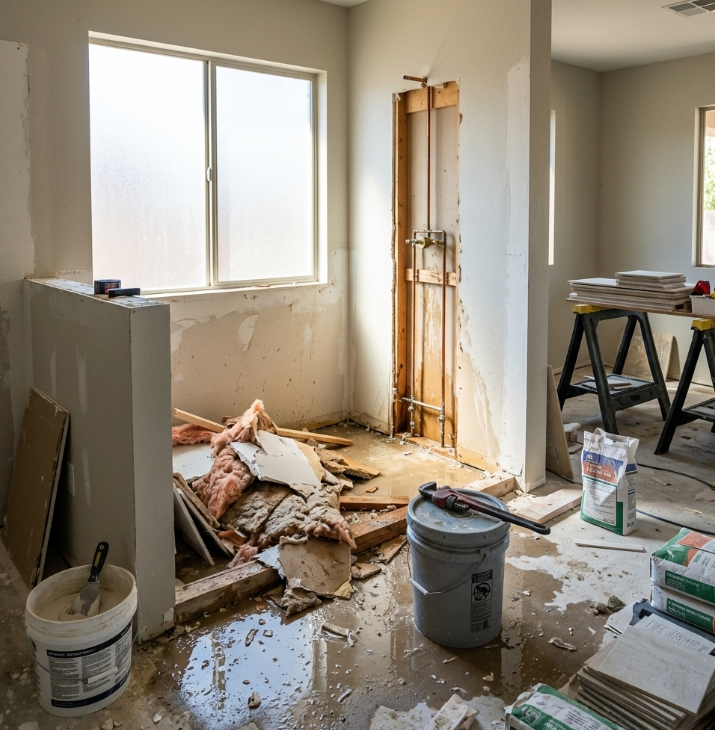
What Your Property Looks Like After Mitigation
It’s normal for a property to feel worse after mitigation than before:
- Drywall has been cut out
- Flooring has been removed
- Cabinets and trim may be missing
- Structural components may be exposed
This is necessary to properly dry the structure and prevent long-term issues like mold or hidden damage.
The Next Phase: Reconstruction & Build Back
Reconstruction is where everything gets put back together.
This phase includes:
- Drywall installation and texture matching
- Flooring replacement
- Cabinet, trim, and finish carpentry
- Interior painting
- Structural repairs where needed
The goal is to
fully rebuild the property to its pre-loss condition, not just make surface-level fixes.
👉Visit our
Reconstruction Service Pagefor more information.
How the Insurance Process Impacts Repairs
If the loss is covered, reconstruction must align with the insurance scope.
This typically involves:
- Reviewing the carrier’s estimate
- Creating or updating scope using Xactimate
- Submitting supplements if needed
- Getting approvals before additional work begins
Working with a contractor experienced in
insurance repair and reconstruction helps avoid delays and ensures nothing is missed.
How Long Does Reconstruction Take?
Timelines vary based on the size of the loss and approvals.
Typical ranges:
- Small repairs: 1–3 weeks
- Moderate rebuilds: 3–6 weeks
- Large losses: several months
Common delays include:
- Insurance approvals
- Material availability
- Scope revisions
Can You Stay in the Property During Repairs?
It depends on the extent of the damage.
You may be able to stay if:
- Damage is limited to one area
- Utilities remain functional
Relocation may be needed if:
- Large portions of the property are affected
- Kitchens or bathrooms are unusable
- Safety is a concern
Common Mistakes After Mitigation
- Waiting too long to start reconstruction
- Hiring a contractor without insurance experience
- Not reviewing the full scope of work
- Missing hidden damage before rebuild begins
Avoiding these helps keep the project on track and prevents added costs.
Why the Right Contractor Matters
Reconstruction is where the project is either done right — or not.
Working with a qualified contractor ensures:
- Proper structural and interior repairs
- Alignment with insurance scope and pricing
- Clear communication throughout the project
- A smooth transition from mitigation to finished space
Frequently Asked Questions
What happens immediately after water mitigation is complete?
Once drying and demolition are complete, reconstruction begins. This includes rebuilding walls, floors, and finishes that were removed during mitigation.
What is “build back” after water damage?
Build back refers to the reconstruction phase — restoring all materials removed during mitigation, including drywall, flooring, cabinets, and finishes.
Do I need a different contractor after mitigation?
In many cases, yes. Mitigation companies handle cleanup and drying, while a general contractor handles reconstruction and repairs.
Does insurance cover reconstruction?
If the damage is from a covered loss, insurance typically pays for repairs needed to restore the property to pre-loss condition, based on the policy.
How do I know it’s safe to rebuild?
Reconstruction should only begin after moisture levels meet acceptable drying standards and the structure is confirmed to be dry.
How long should I wait to start repairs?
Reconstruction should begin as soon as mitigation is complete and the scope is reviewed to avoid delays and secondary damage.