Emergency Restoration in Scottsdale, AZ: What the Right Company Actually Does Differently
Emergency restoration services in Scottsdale, AZ deliver rapid deployment for immediate property damage mitigation and stabilization following water leaks, fires, or storm events across residential and commercial properties.
You don't go looking for an emergency restoration company until you need one. And when you need one, you need one right now — not in the morning, not after a voicemail callback, not after someone "checks the schedule."
That's the part most companies get wrong. They've built their business around normal hours and planned work. Emergency response is an afterthought bolted onto a service menu. You find out which kind you called about 45 minutes into holding.
This is what genuine emergency restoration looks like in Scottsdale — and what to pay attention to when you're making that call.
Scottsdale Has Its Own Brand of Emergencies
Monsoon season in the Valley runs from mid-June through September. When it hits, it doesn't ease you in. You can go from clear skies to three inches of rain in under an hour, and older drainage systems across Scottsdale don't handle that gracefully. Flash flooding in areas like McCormick Ranch and the Scottsdale Road corridor can push water into structures faster than most people expect.
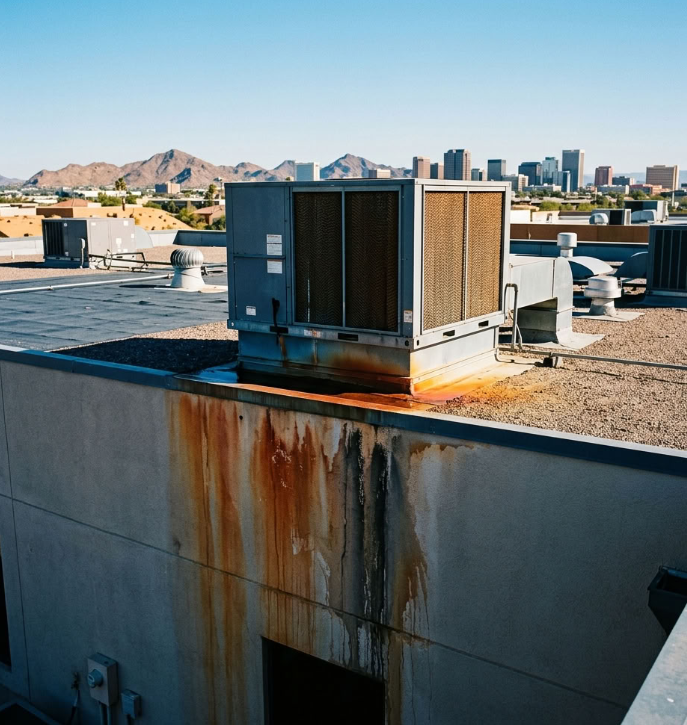
Outside of monsoon season, the desert does its own damage. Extreme summer heat accelerates wear on plumbing, roofing, and HVAC systems. A pipe that's been failing slowly all summer can let go completely at 11pm on a Tuesday. Properties near golf courses and water features — common throughout Gainey Ranch, Troon, and DC Ranch — carry additional risk from irrigation line failures that can saturate an interior silently over hours before anyone notices.
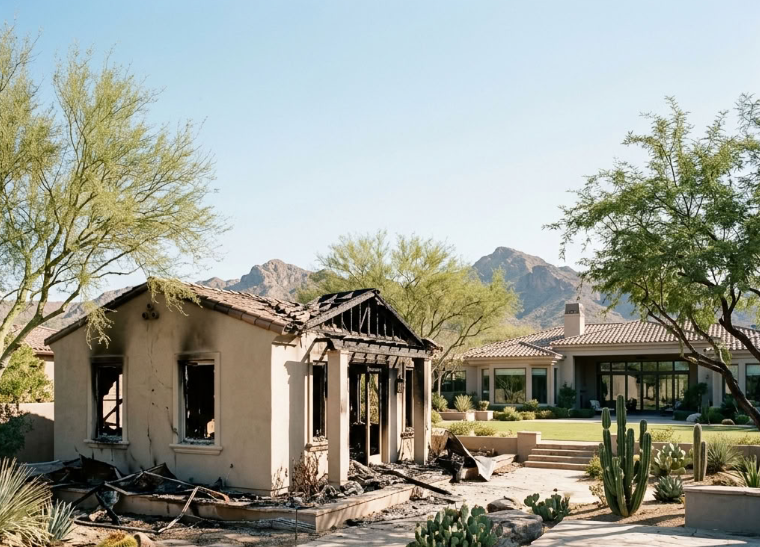
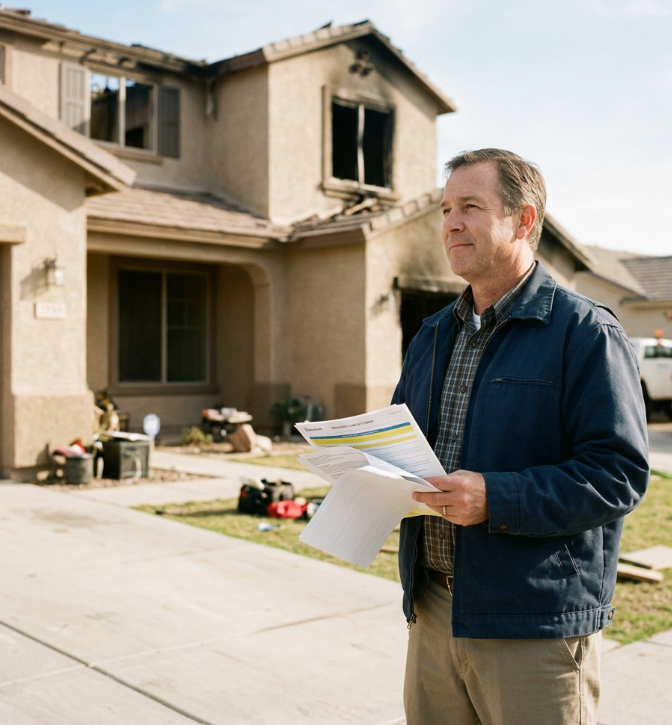
And during the dry months, wildfire risk is real in the McDowell Sonoran Preserve corridor and North Scottsdale's interface with open desert. Fire damage restoration is a different animal than water mitigation — smoke infiltrates everything, residues keep reacting with surfaces after the flames are out, and the structure is often left exposed to weather until it's properly secured.
None of this is theoretical. These are the calls we take.
The First Hour Is the Most Expensive One You Can Waste
Water moves fast. Within minutes of a pipe failing, it's already wicking into drywall and insulation. Within 24 to 48 hours, mold spores are colonizing in saturated materials. By the time you've spent three hours trying to reach a company, gotten a callback, and scheduled someone to come look at it tomorrow morning — the damage footprint has doubled.
The same logic applies to fire. Smoke residue doesn't stop working just because the fire is out. It continues etching glass, corroding metals, and embedding into porous surfaces. Every hour of exposure extends the restoration scope and the cost.
A company that tells you they'll "get someone out first thing tomorrow" after a nighttime emergency isn't offering you emergency service. They're offering you a delay with friendly language around it.
RCS Builders runs 24/7/365 — not as a marketing line, but operationally. Our crews arrive with extraction equipment, drying gear, board-up materials, and tarps ready to work. The goal when we pull up is stabilization, not assessment followed by a return trip.
What a Real Emergency Response Covers
Stabilization means different things depending on what happened, but the principle is the same: stop the damage from getting worse, secure the property, and protect what's salvageable.
For water events, that means extraction first — standing water pulled with truck-mounted pumps and portable extractors — then air movers and commercial dehumidifiers set up to establish proper drying conditions. Moisture readings get documented. Every affected area gets logged. That documentation matters later when you're dealing with your adjuster.
For fire and storm events, it means board-up and tarping to close off any openings left by the damage. Broken windows, compromised doors, sections of roof that are gone or loose — all of it gets secured before weather or unauthorized access makes things worse.
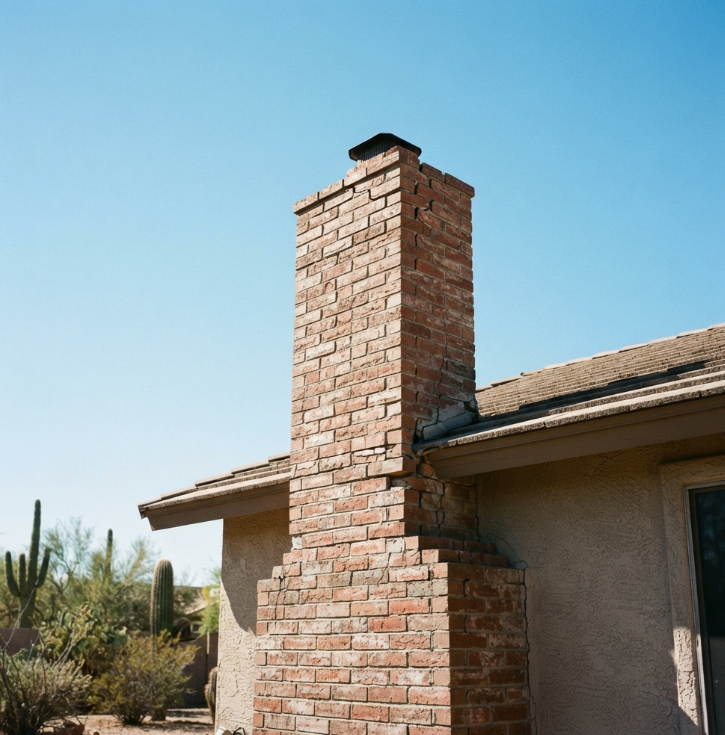
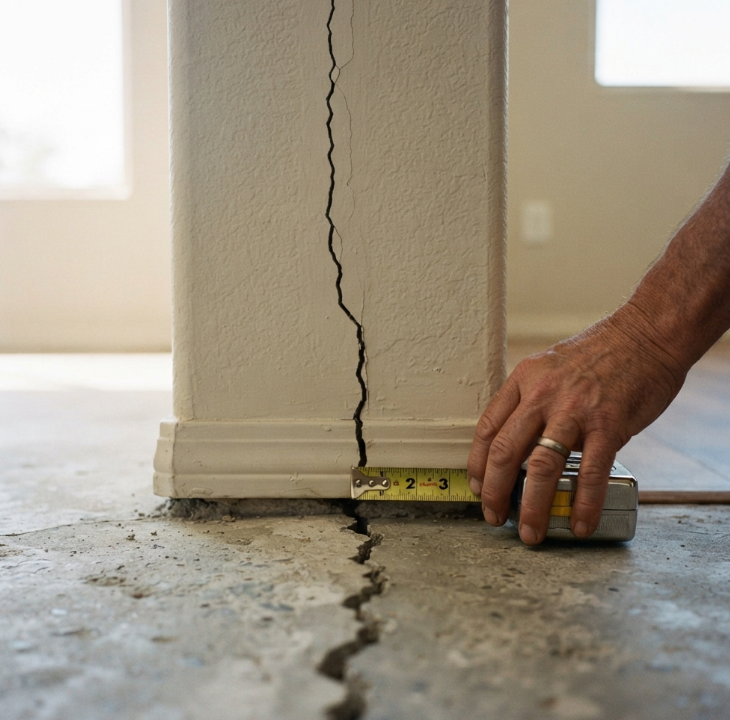
We also handle situations that don't fit neatly into a category: structural collapses, vehicle impact damage to homes and commercial buildings, vandalism and break-in repair, damage caused during emergency responder entry, tree and storm debris impact, and emergency demolition when part of a structure is unsafe and needs to come down before anything else can happen.
Our
emergency restoration services page lays out the full scope if you want the details. The short version is that we don't hand off the job partway through. One team, beginning to end.
Insurance Isn't Something You Deal With Later
A lot of people put off contacting their insurance carrier because they're overwhelmed and don't know where to start. That's understandable — but it's a costly delay. The sooner you report the loss, the sooner the clock on your claim starts running in the right direction.
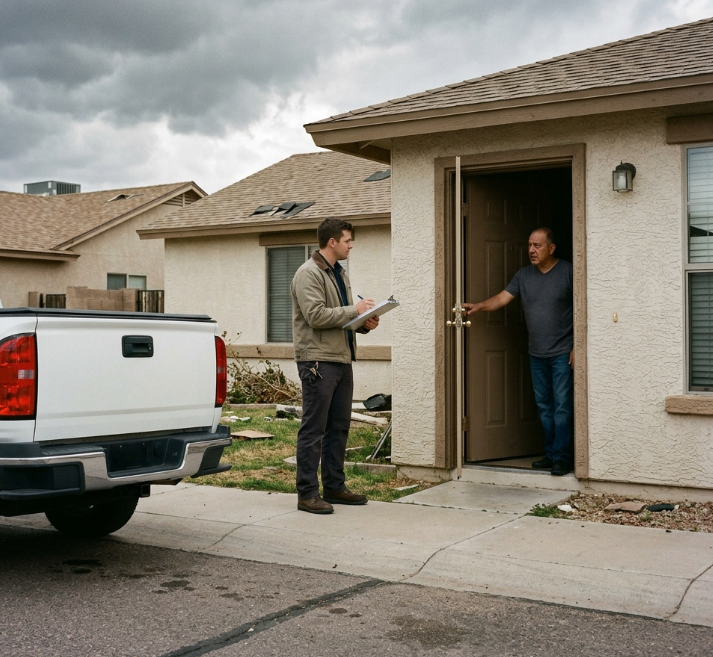
What your adjuster is going to need: photos of the damage before any cleanup, moisture readings that establish the scope of water intrusion, a detailed log of affected areas and materials, and an estimate from your contractor written in a format they can work with.
RCS Builders writes all of our estimates in Xactimate — the same platform most carriers and adjusters use. We document everything from day one, coordinate directly with your carrier throughout the project, and handle supplements when the approved scope needs to be updated. The goal is to keep your claim from stalling while the actual restoration keeps moving.
What Separates a Good Company from One That Just Says the Right Things
Here's the honest version of what to look for:
Does their 24/7 availability actually connect you to someone who can dispatch a crew, or does it connect you to an answering service that takes a message? Can they take your job from the first emergency call through full reconstruction without handing you off to a separate GC? Are they licensed, bonded, and insured — and can they prove it without you having to ask twice? Do they know how to talk to your insurance carrier, or are they going to leave that entirely on you?
RCS Builders is a family-owned, faith-driven company that's been operating in the Phoenix Valley for over 30 years. We're based in Tempe, fully licensed and insured, and we handle the complete scope of restoration and reconstruction in-house. We've worked jobs across all of Scottsdale — Old Town, the Airpark corridor, North Scottsdale, Gainey Ranch, McCormick Ranch — and we know the neighborhoods, the property types, and the kinds of damage this market produces.
You can read more about how we operate on our
Scottsdale service page and our
About Us page.
If You're in It Right Now
Call
480-204-9035. We're available around the clock and we'll pick up.
If you're doing your research before something happens — good instinct. Here's where to start: