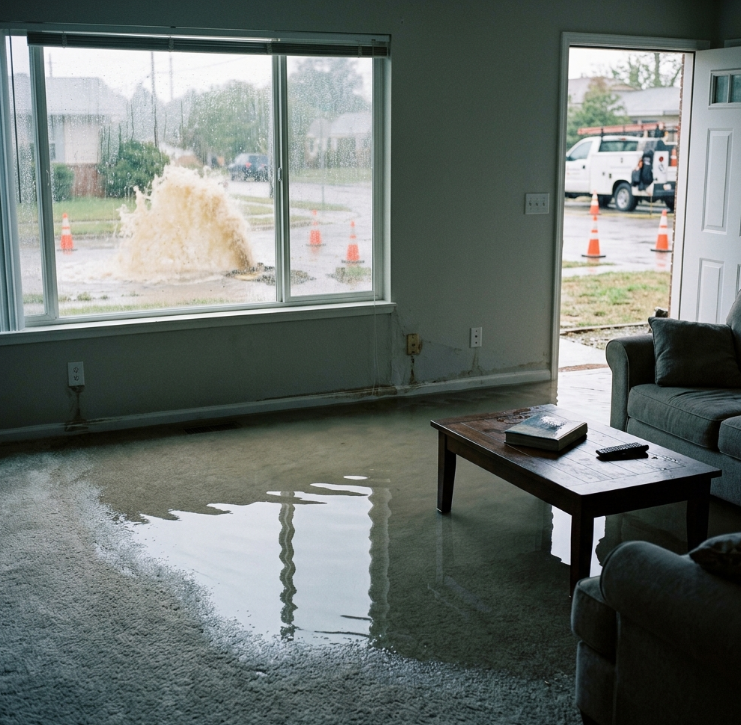
The water coming into your property isn't yours. A city sewer line backed up and pushed sewage into your home. Or a municipal water main broke and flooded your property. The damage is real, it's significant, and it was caused by public infrastructure you don't own and didn't fail to maintain.
So the city pays, right?
Not necessarily. And the gap between what property owners assume about municipal liability and how it actually works in Arizona catches a lot of people off guard at an already terrible moment. Here's the honest picture.
The Assumption vs. The Reality
The intuitive assumption is straightforward: the city's infrastructure caused the damage, so the city is responsible for the cost. It feels obvious.
The legal reality is more complicated. Government entities in Arizona — cities, towns, and special districts — have certain protections from liability that private parties don't have. The doctrine of governmental immunity, modified by Arizona statute, means a municipality isn't automatically liable for damage caused by its infrastructure the way a private party would be.
Whether a city is liable for a sewer backup or water main break generally turns on negligence — whether the city knew or should have known about a problem and failed to address it. A municipality that maintained its system reasonably and experienced an unforeseeable failure may not be liable. A municipality that ignored known problems, deferred critical maintenance, or failed to respond to warning signs may be.
This is the critical distinction: the city causing the damage isn't the same as the city being legally liable for it. Liability depends on fault, and proving municipal fault is a specific and demanding process.
The Notice of Claim Requirement — The Deadline That Catches Everyone
Here's the single most important thing to know if a government entity may be responsible for your property damage in Arizona: there is a strict notice of claim requirement with a short deadline, and missing it can permanently bar your claim.
Under Arizona law, anyone with a claim against a public entity must file a formal notice of claim within 180 days of when the claim accrues — generally when the damage occurs or is discovered. This notice has specific content requirements: it must state the facts supporting the claim, specify the amount claimed, and provide the basis for that amount.
Miss the 180-day deadline, or file a notice that doesn't meet the statutory requirements, and your claim against the government entity can be barred entirely — no matter how clear the city's fault might be. This is not a deadline that gets extended for sympathy. Arizona courts enforce the notice of claim requirement strictly.
This is why, if a city sewer backup or water main break damages your property, understanding the notice of claim process immediately is essential. The clock starts at the loss, and 180 days passes faster than people expect when they're dealing with the aftermath of significant damage.
What Determines Whether the City Is Actually Liable
Assuming the notice of claim is filed properly and on time, whether the city is liable comes down to negligence.
The factors that matter:
Did the city have notice of the problem? If residents had reported sewer issues in the area, if the city had records of recurring backups, if the infrastructure had known deficiencies the city was aware of — that knowledge supports a negligence claim. A city that knew about a problem and didn't act is in a different position than one blindsided by an unforeseeable failure.
Was the infrastructure properly maintained? A municipal system that was maintained according to reasonable standards is defensible even when it fails. One that suffered from documented deferred maintenance, missed inspections, or known deterioration that wasn't addressed is more exposed.
Was the failure foreseeable? A water main that failed due to an unprecedented event may not create liability. One that failed because it was decades past its service life and the city knew it is a different matter.
Did the city respond reasonably once the problem occurred? Even when the initial failure isn't the city's fault, an unreasonably slow or inadequate response to a known active problem can create liability for the damage that response delay allowed.
Proving these factors generally requires investigation — obtaining the city's maintenance records, complaint history, and inspection records, often through public records requests, and sometimes expert analysis of the infrastructure failure. This is frequently where an attorney experienced in claims against municipalities becomes necessary.
Your Own Insurance Is Usually the First and Faster Path
Here's the practical reality that surprises people: even when the city may ultimately be responsible, your own insurance is usually the faster and more reliable path to getting your property restored.
For sewer and drain backups specifically, coverage depends on whether you carry sewer backup coverage — a specific endorsement that many standard policies exclude or limit. If you have it, your own carrier can respond to the loss promptly, restore your property, and then potentially pursue the city through subrogation to recover what they paid. That subrogation process — your insurer going after the city — happens in the background and doesn't hold up your restoration.
This is genuinely one of the most important coverage endorsements for Phoenix property owners to verify, because sewer backup is both a real risk and a coverage gap many people don't know they have until it's too late. Standard policies frequently exclude sewer and drain backup unless the endorsement is specifically added.
If you have the coverage, the sequence is: your insurer restores your property now, and the question of the city's liability gets sorted out afterward — by your insurer through subrogation, or by you through the notice of claim process for amounts your insurance didn't cover, like your deductible.
If you don't have the coverage, you're left pursuing the city directly through the notice of claim process, which is slower and less certain — while your property sits damaged. Which is exactly why verifying this coverage before a loss matters so much.
The Documentation That Matters Even More Here
In a municipal liability situation, documentation carries even more weight than in a standard loss, because you may be building a case against a government entity that has every incentive and resource to contest it.
Document everything immediately and thoroughly: the source of the water and evidence it came from the municipal system, the extent and timeline of the damage, photos and video before any cleanup, and anything indicating the city's infrastructure was the cause. If neighbors were affected by the same event, their experience is relevant — a sewer backup or main break affecting multiple properties supports the claim and may indicate a systemic infrastructure problem the city should have addressed.
Preserve evidence. If the failure involves a specific component — a section of pipe, a backflow situation — that physical evidence may matter. Don't let it be disposed of before it's documented.
The restoration contractor's documentation matters here too. A contractor who documents the cause of loss, establishes that the water originated from the municipal system, and produces a thorough record of the damage and remediation is creating evidence that supports both your insurance claim and any claim against the city.
What to Do If City Infrastructure Damages Your Property
Here's the practical sequence:
Mitigate immediately. Same principle as every loss — don't wait. Sewer backups in particular are Category 3 black water, a serious health hazard requiring prompt professional remediation. The municipal liability question does not justify delaying cleanup. Get it stabilized and remediated right away.
Document exhaustively. The source, the cause, the damage, the timeline, the impact on neighbors. More documentation than you think you need.
Notify your own insurer. Report the loss to your carrier promptly regardless of the city's potential responsibility. If you have applicable coverage, this is your fastest path to restoration.
Calendar the 180-day notice of claim deadline. If the city may be responsible, the notice of claim clock is running from the date of the loss. Understand the requirement immediately and don't let the deadline pass.
Consider legal counsel. For significant losses where the city may be liable, an attorney experienced in claims against Arizona municipalities can navigate the notice of claim requirements, the public records investigation, and the negligence analysis. The strict procedural requirements make this an area where experienced guidance matters.
The Bottom Line
When city infrastructure damages your property, the city causing it isn't the same as the city paying for it. Municipal liability in Arizona depends on negligence, requires navigating a strict notice of claim process with a hard 180-day deadline, and is genuinely uncertain even when the city's infrastructure clearly failed.
Your own insurance — if you carry the right coverage, particularly sewer backup coverage — is usually the faster, more reliable path to getting your property restored, with the question of the city's responsibility sorted out afterward. Which makes verifying that coverage before a loss one of the smartest things a Phoenix property owner can do.
RCS Builders handles sewer backup and water main break damage across Greater Phoenix, including the Category 3 remediation these losses often require. We document the cause and scope thoroughly — which matters for your insurance claim and for any claim against the municipality — and we move fast because sewer and main break damage is both a health hazard and a situation where prompt action limits the loss. If city infrastructure has damaged your property,
call us at 480-204-9035 — we'll get the remediation handled while you work through the liability questions.
Related: