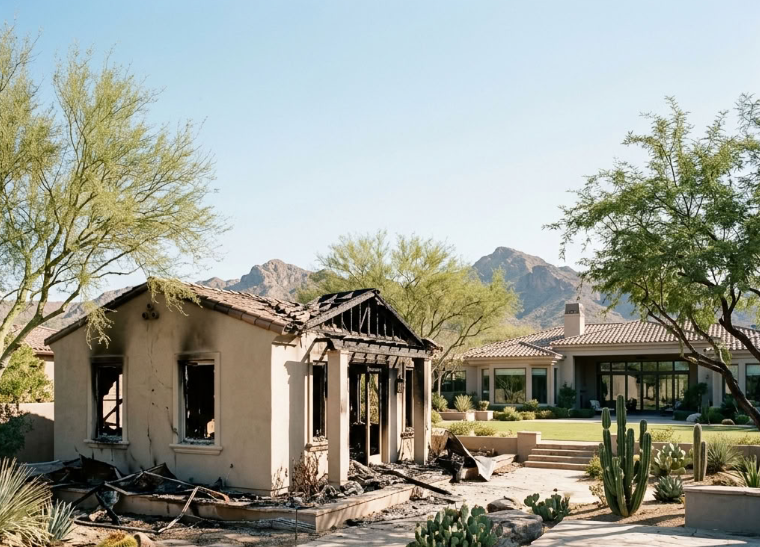
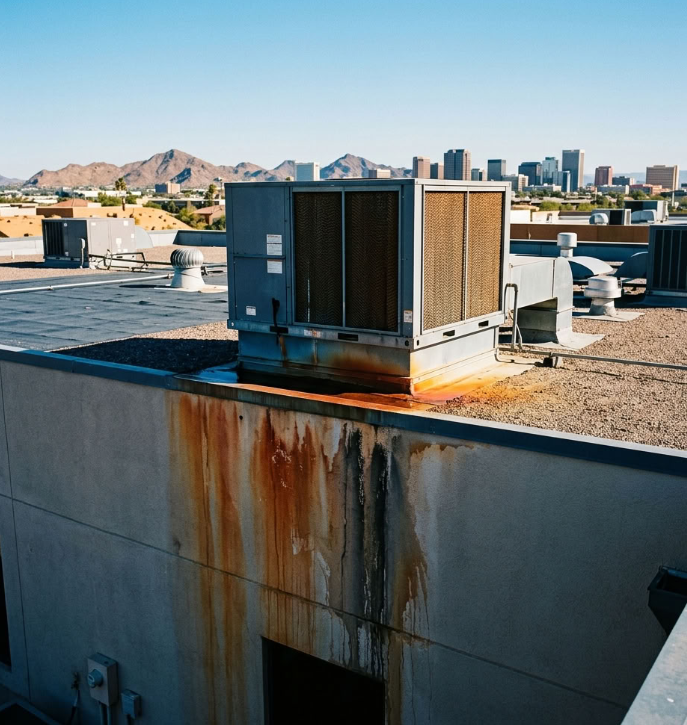
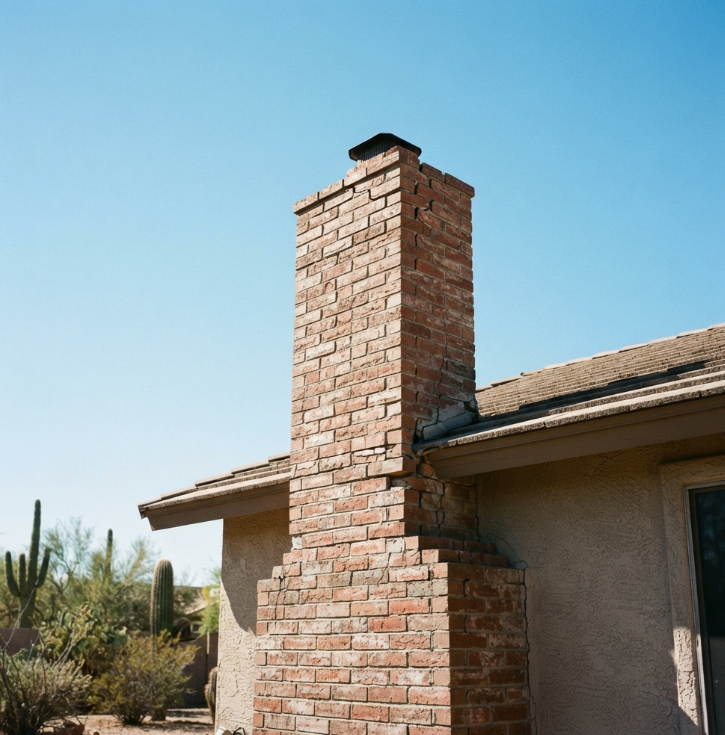
Every property insurance policy in Arizona contains some version of the same promise: the carrier will restore your property to its pre-loss condition following a covered loss.
It sounds simple. It isn't.
Pre-loss condition is one of the most consequential terms in a property damage claim and one of the least understood. What it means in practice — what it obligates your carrier to pay for, what it doesn't, and where the disputes live — determines whether your restoration actually makes you whole or leaves you with a property that looks close but isn't quite right.
Here's what the term actually means and how it plays out in real claims across Greater Phoenix.
The Baseline Definition
Pre-loss condition means the state your property was in immediately before the damage occurred. Not better. Not worse. Exactly what it was.
That sounds like a reasonable standard. The complications arise when you try to apply it to real properties with real histories — aging materials, discontinued finishes, deferred maintenance, mixed-condition components across a single structure — and real insurance policies with depreciation schedules, exclusions, and coverage limits that don't always add up to what "exactly what it was" actually costs.
The promise of pre-loss condition is genuine. The execution is where property owners run into problems.
What Pre-Loss Condition Obligates the Carrier to Do
In its purest form, pre-loss condition means your carrier is obligated to restore every component of your property that was damaged to the same condition it was in before the loss occurred.
If your hardwood floors were refinished two years ago and in excellent condition, pre-loss condition means excellent condition hardwood floors. If your kitchen cabinets were custom and intact, pre-loss condition means custom cabinets restored to the same specification. If your commercial space had consistent flooring across 4,000 square feet and 800 square feet was damaged, pre-loss condition means flooring that matches the remaining 3,200 square feet — not flooring that's close.
This is where matching becomes a legal obligation rather than just a preference. If restoring a damaged portion of your property to pre-loss condition requires matching materials, finishes, or components that weren't damaged, that matching work is part of the covered scope. The pre-loss condition standard doesn't allow for a visible patch in a finished space — it requires a result that matches what was there before.
Where It Gets Complicated: Depreciation vs. Pre-Loss Condition
Here's the tension at the center of most valuation disputes in property damage claims.
Your carrier promises pre-loss condition. Your carrier also applies depreciation. Those two things are in tension with each other in ways that most property owners don't fully appreciate until they're mid-claim.
Depreciation reduces your initial payout to reflect the age and wear of what was damaged. A ten-year-old floor gets depreciated. A fifteen-year-old roof gets depreciated significantly. The ACV payment your carrier releases upfront reflects the depreciated value of the damaged materials — not the cost of restoring them to pre-loss condition.
Under an RCV policy, the gap between ACV and full replacement cost gets paid once the work is completed — the recoverable depreciation. That's the mechanism that's supposed to reconcile the depreciation calculation with the pre-loss condition promise. You get the ACV upfront, you do the work, you submit completion documentation, and the carrier releases the holdback.
The problem is that replacement cost isn't always the same as pre-loss condition cost. If your pre-loss condition included materials that are no longer available, finishes that require custom work to match, or components that have to be sourced at premium cost to achieve the right result — replacement cost as calculated by the carrier's Xactimate pricing may fall short of what actual pre-loss condition restoration requires.
The Matching Problem in Arizona Properties
Matching is where pre-loss condition disputes are most common in the Phoenix market — and the Valley's housing stock creates conditions that make matching harder than in most markets.
Arizona properties age in ways that make matching difficult. Tile fades and discolors under intense UV exposure. Paint shifts significantly between original application and ten years of Phoenix sun. Wood finishes weather differently here than in cooler climates. Flooring dye lots change between production runs and discontinued patterns are common in properties more than a decade old.
When a portion of a surface is damaged and replaced, pre-loss condition requires that the replacement match what remains. If an exact match isn't achievable — because the material is discontinued, the dye lot is different, or the existing material has weathered in ways the new material hasn't — pre-loss condition may require replacing a larger area than was actually damaged to achieve a consistent result.
This is a legitimate, carrier-recognized scope argument. It's also one of the most frequently contested scope items in Phoenix restoration claims because it adds cost beyond what's strictly required to repair the damaged area alone.
A contractor who understands the pre-loss condition standard and knows how to document and argue matching scope is in a fundamentally different position than one who simply replaces what was damaged and calls it done. The difference can be significant — particularly in higher-end properties where finishes are custom, materials are premium, and visible mismatches are not an acceptable result.
Code Upgrades and Pre-Loss Condition
Here's a scenario that plays out regularly in Greater Phoenix restoration claims, particularly in older properties.
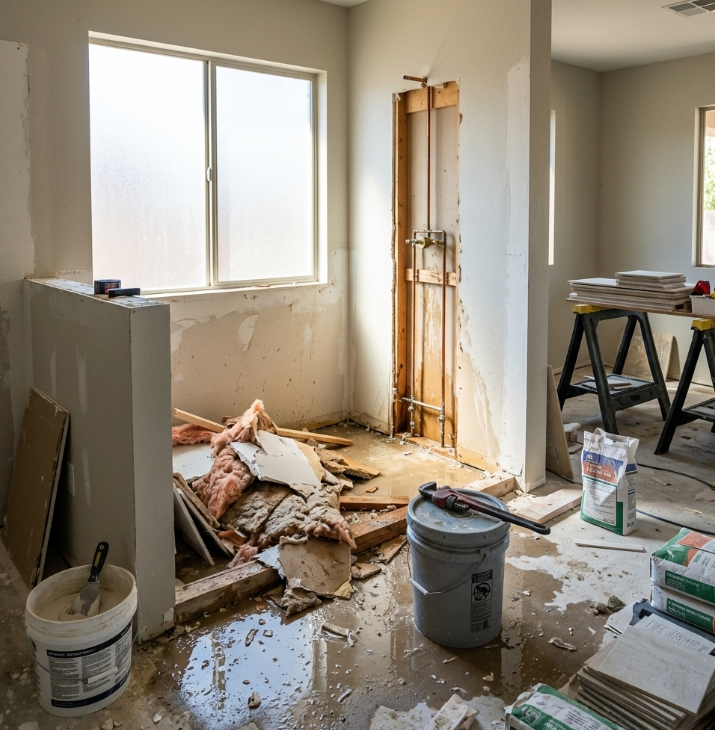
Your property sustains damage. Restoration requires opening walls. Once walls are open, the work triggers current building code — electrical, insulation, framing, or other systems have to be brought up to current standard as a condition of the permit.
Pre-loss condition doesn't include code upgrades. Your property before the loss wasn't up to current code — it was built to the code that existed when it was constructed. The carrier's obligation is to restore what was there, not to upgrade it.
Code upgrade costs — ordinance or law coverage in insurance terminology — are a separate coverage that some policies include and some don't. If your policy includes it, there are usually limits. If it doesn't, the code upgrade cost is yours.
This creates a situation where pre-loss condition restoration is technically complete but the property has cost you money beyond what the carrier covered — because the act of restoring it triggered an upgrade requirement that predated the loss and that your policy doesn't cover.
Understanding your ordinance or law coverage before a loss is the only way to know your actual exposure here. After the loss is too late to add it.
Pre-Loss Condition and Deferred Maintenance
Pre-loss condition cuts both ways.
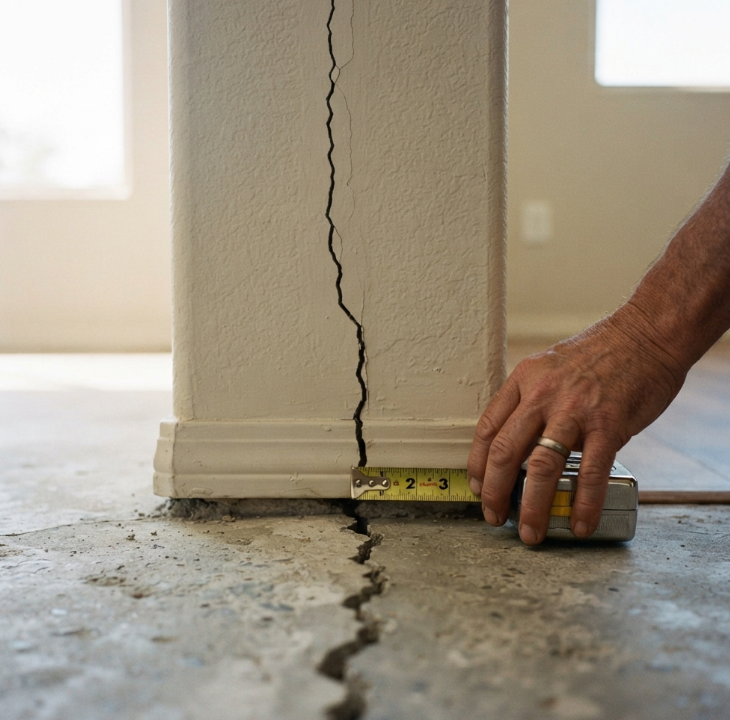
If your property had deferred maintenance issues before the loss — a roof that was already failing, plumbing that was already deteriorating, a foundation that had existing cracks — those pre-existing conditions are part of pre-loss condition. Your carrier isn't obligated to restore your property to better than it was before the loss. They're not paying to fix the deferred maintenance the storm revealed.
This is the legitimate basis for carriers limiting scope when pre-existing deterioration is present. A roof that was already at end of life didn't have better pre-loss condition than what was there — and restoring it to pre-loss condition means restoring an end-of-life roof, not providing a new one.
Where it gets disputed is when carriers use pre-existing deterioration as a basis for limiting scope beyond what's legitimate — attributing damage to pre-existing conditions that actually resulted from the covered loss, or using pre-existing issues in one area to reduce coverage for genuinely storm-caused damage in another.
The cleaner your pre-loss documentation — maintenance records, prior inspection reports, dated photographs showing the condition of your property before the loss — the stronger your position when the carrier's pre-existing condition argument overreaches.
What Pre-Loss Condition Means for Your Contractor Choice
The pre-loss condition standard has a direct implication for who you hire to do the restoration work.
A contractor who simply replaces what was damaged with the nearest available equivalent isn't necessarily restoring pre-loss condition. They're replacing damaged materials. Those are different things when the nearest available equivalent doesn't match what was there, when the scope of replacement required to achieve a consistent result is larger than what was strictly damaged, or when the quality of materials or workmanship falls short of what existed before the loss.
A contractor who understands the pre-loss condition standard — and knows how to document, argue, and execute a scope that actually achieves it — is doing something meaningfully different. They're not just completing a repair. They're restoring a property to a defined legal standard that your insurance policy promises and that you're entitled to.
That distinction matters most on complex losses, higher-end properties, and any situation where matching, custom materials, or quality of finish is part of what pre-loss condition actually means for that specific property.
If Your Restoration Didn't Actually Achieve Pre-Loss Condition
Some property owners reach the end of a restoration project and find themselves with a property that's been repaired but doesn't match — floors that don't align, paint that's visibly different, finishes that are close but not right. Or they find out mid-project that the approved scope doesn't cover what's actually required to restore the property to its pre-loss state.
Both situations are addressable. Supplements can be filed. Appeals can be pursued. The pre-loss condition standard is a contractual obligation your carrier made when they issued your policy — and a documented gap between what was approved and what that standard requires is a legitimate basis for reopening the scope conversation.
RCS Builders writes restoration scopes to the pre-loss condition standard — not just to the minimum required to complete a repair. We document matching requirements, argue scope items that are necessary to achieve the right result, and don't sign off on a job where the finished product doesn't match what was there before the loss.
If you're mid-claim and your approved scope doesn't feel like it adds up to pre-loss condition,
call us at 480-204-9035. We'll look at what you have and tell you honestly whether there's a gap worth pursuing.
Related: