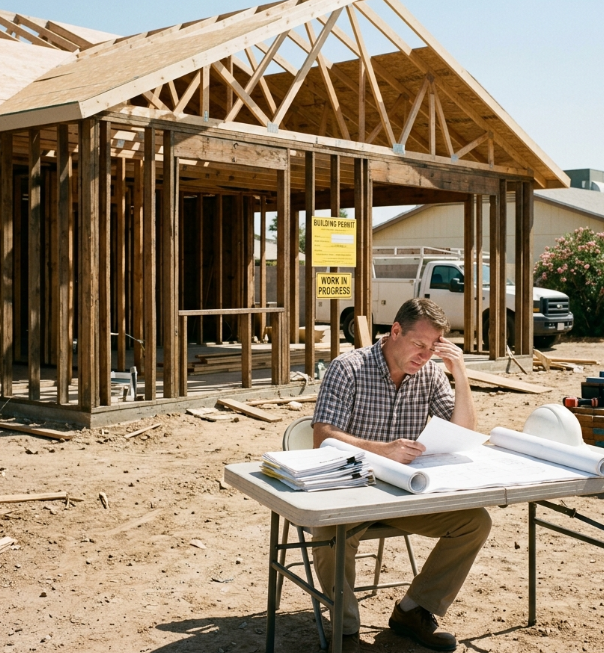
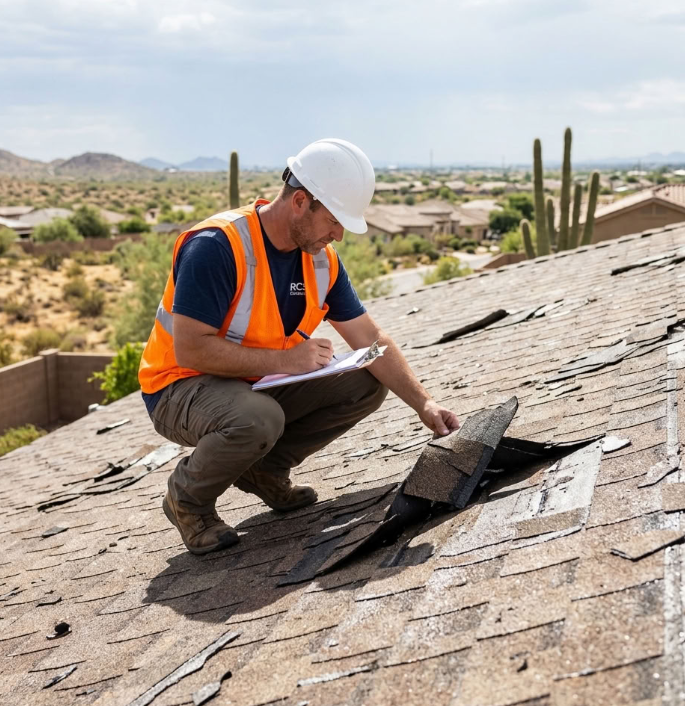
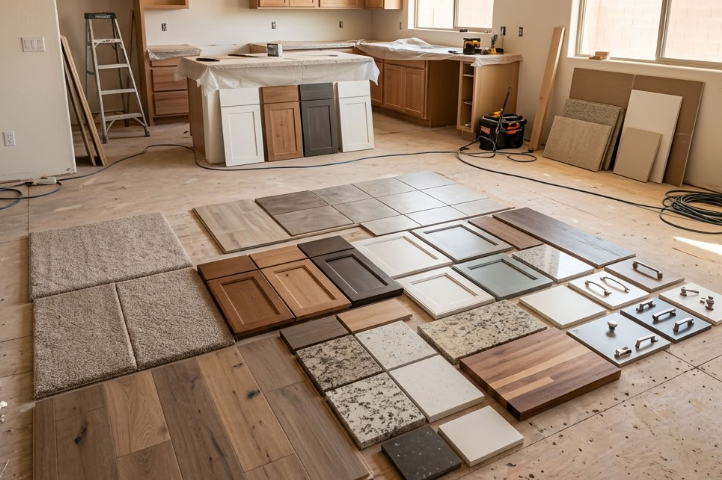
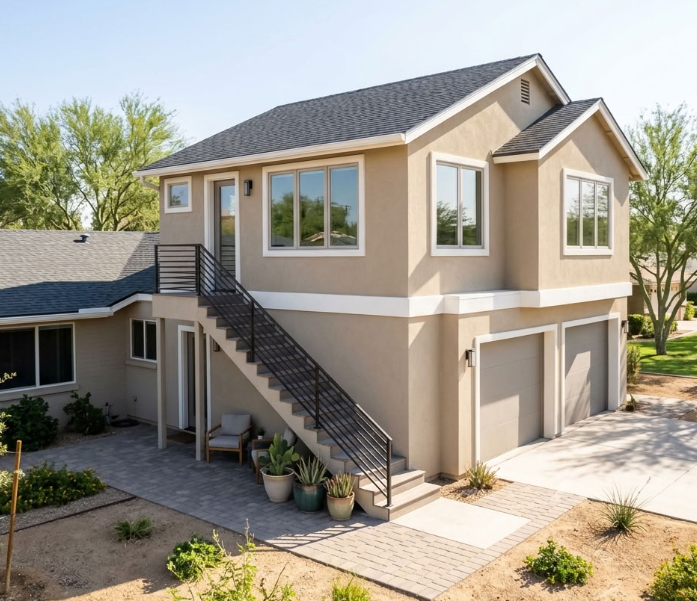
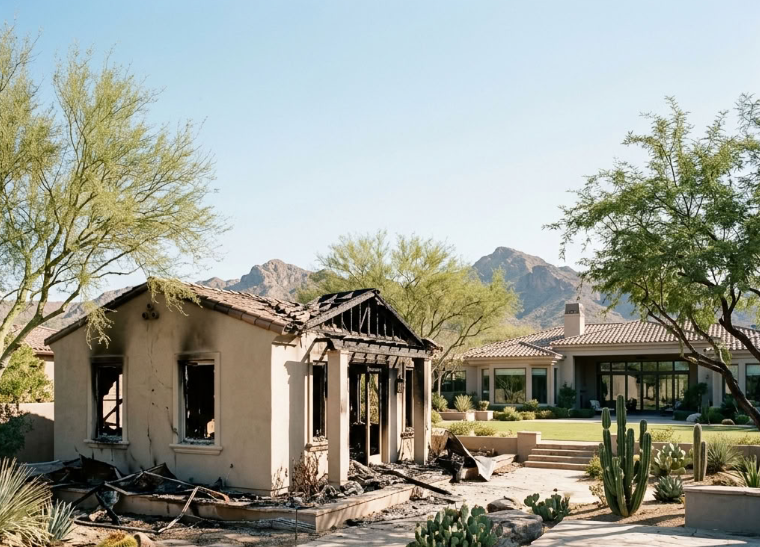
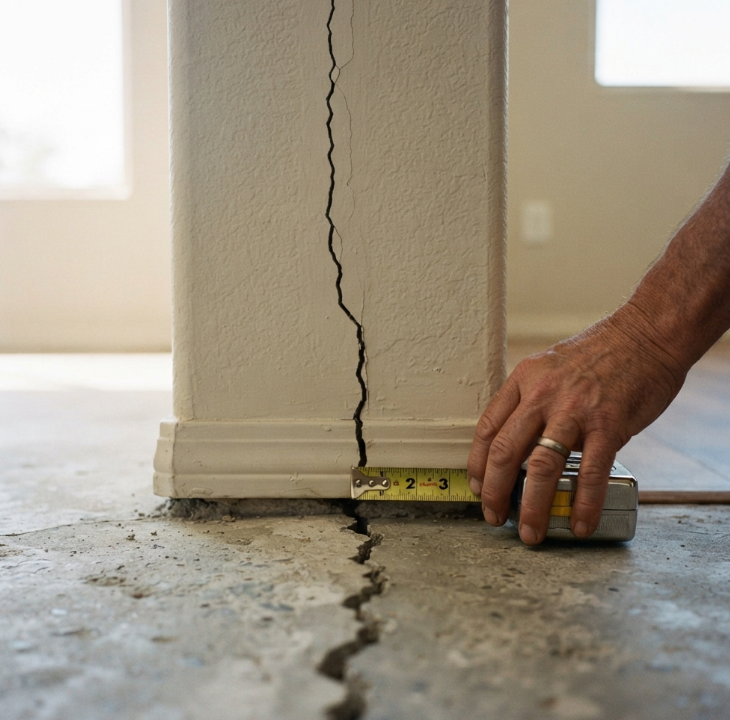
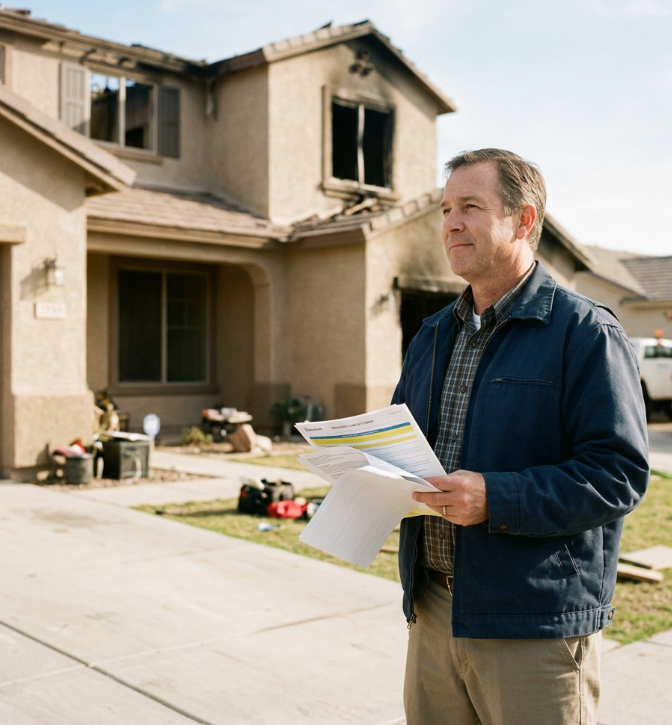
The claim is approved, the payout is set, and then the math doesn't work. The check your carrier issued — even at the full policy limit — isn't enough to rebuild what you lost. You're staring at a gap between what your insurance pays and what the restoration actually costs, and that gap is coming out of your pocket.
This is being underinsured, and it's one of the most financially painful discoveries a property owner can make — precisely because it happens after the loss, when it's too late to do anything about the coverage. Most people don't find out they're underinsured until the moment it hurts most.
Here's why it happens so often, especially in the current Greater Phoenix market, and what you can do about it before and after a loss.
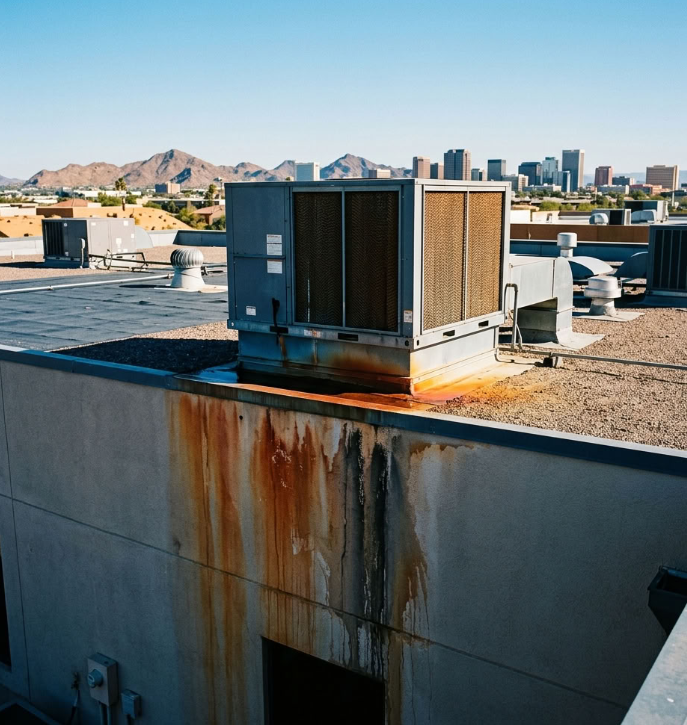
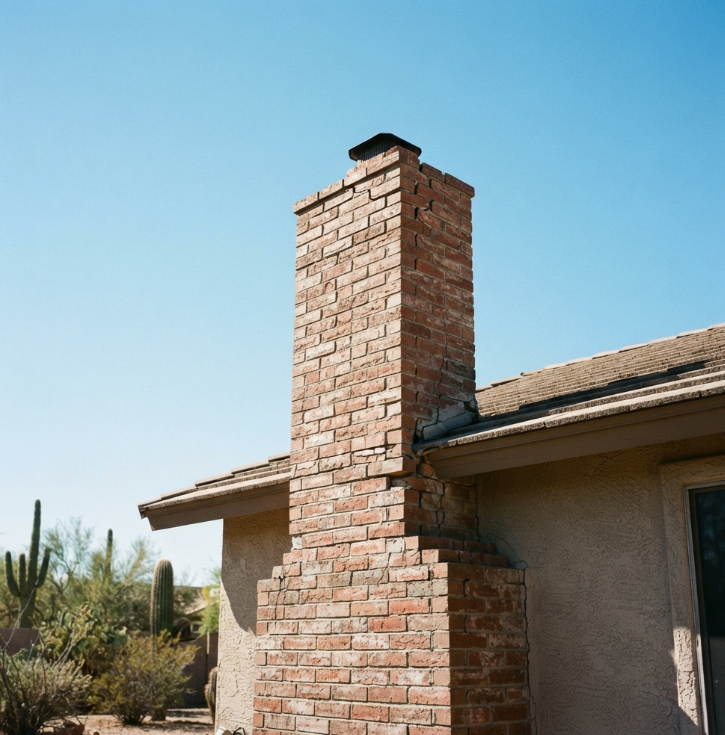
Water and fire produce the largest losses where underinsurance surfaces, so they're the clearest examples — but the same coverage-gap problem applies to any major loss, whether from storm, structural failure, or any other covered peril large enough to test your policy limits.
What Being Underinsured Actually Means
Being underinsured means your policy limits — the maximum your carrier will pay — are lower than what it actually costs to restore your property. Even when the claim is fully approved and paid to the limit, the payout falls short of the real cost of the rebuild.
This is different from a claim being denied or underpaid relative to your policy. In those cases, the issue is the carrier not paying what the policy owes. With underinsurance, the carrier may pay exactly what the policy owes — the problem is that the policy itself was written for an amount lower than your actual exposure. The coverage was insufficient from the start; the loss just revealed it.
The most common version involves dwelling coverage — the limit on the structure itself. If your home would cost $500,000 to rebuild but your dwelling coverage is set at $350,000, you have a $150,000 gap that surfaces the moment you have a total or near-total loss. The policy pays its limit and you cover the rest.
Why So Many Properties Are Underinsured Right Now
Underinsurance has become dramatically more common in recent years, and the Greater Phoenix market has been hit by several forces at once.
Construction costs rose faster than policy limits. The cost to build and rebuild has climbed significantly — materials, labor, everything. Many policies didn't keep pace. A dwelling coverage limit that was accurate when the policy was written five years ago may be well below current rebuild costs, because the cost to rebuild rose while the coverage limit sat still or crept up slowly.
The Phoenix market's growth strained labor and materials. The Valley's rapid growth has kept construction demand high, which keeps costs elevated. Rebuilding here isn't getting cheaper, and coverage limits set against older cost assumptions fall further behind each year.
Replacement cost isn't market value — and people confuse them. A lot of underinsurance comes from insuring a property based on what it's worth on the market or what was paid for it, rather than what it costs to rebuild. These are different numbers, and in many cases rebuild cost exceeds market value — especially for older homes with materials or finishes that are expensive to replicate.
Improvements weren't reported. Property owners renovate — finish a basement, upgrade a kitchen, add square footage, install higher-end finishes — and never update their coverage to reflect the increased rebuild cost. The policy still insures the pre-renovation property while the actual property is worth much more to rebuild.
Automatic inflation adjustments lagged reality. Many policies include automatic annual increases to keep pace with inflation, but during periods of rapid construction cost escalation, those standard adjustments haven't kept up with actual cost increases.
The Coinsurance Trap on Commercial Properties
Commercial property owners face an additional underinsurance risk that catches many off guard:
the coinsurance clause.
Many commercial property policies include a coinsurance provision requiring the owner to insure the property to a specified percentage of its value — commonly 80, 90, or 100 percent. If the property is insured below that threshold, the owner is penalized on every claim, not just total losses — including partial losses.
Here's how the penalty works: if your policy requires 80 percent coinsurance and you're only insured to 60 percent of value, the carrier can reduce your payout proportionally on a partial loss. So even a modest loss gets paid at a reduced rate because you didn't carry enough coverage to satisfy the coinsurance requirement. A commercial owner who thought they were saving money with lower limits discovers the penalty applies to routine claims, not just catastrophic ones.
For commercial property owners in Greater Phoenix, understanding your coinsurance requirement and insuring to it is essential — because the penalty for falling short applies far more often than a total loss ever would.
What Happens When You're Underinsured After a Loss
If you discover after a loss that you're underinsured, you're facing a real gap, and the options aren't easy — but they exist.
Confirm the carrier paid the full policy limit. First, make sure the shortfall is actually underinsurance and not underpayment. If the carrier hasn't paid what the policy owes — if there's unclaimed scope, missed supplements, or applied depreciation you haven't recovered — those are recoverable and should be pursued before concluding you're underinsured. Sometimes what looks like a coverage gap is actually an incompletely paid claim.
Check for coverages that extend the limit. Some policies include provisions that provide coverage above the stated dwelling limit — extended replacement cost coverage (which pays a percentage above the limit, often 25 or 50 percent), guaranteed replacement cost coverage (which covers the full rebuild regardless of the limit), or ordinance and law coverage for code-related costs. If you have any of these, they may close some or all of the gap. Many owners don't know these provisions are in their policy.
Prioritize the scope. If the payout genuinely won't cover the full restoration, the rebuild may need to be prioritized — addressing the essential structural and habitability work first, and phasing or value-engineering other elements to fit the available funds. A contractor experienced in working within insurance constraints can help structure a rebuild that makes the most of what's available.
Explore financing for the gap. Some property owners cover an underinsurance gap through financing — a construction loan, a home equity product, or other means. This turns an immediate shortfall into a manageable cost, though it's real money out of pocket over time.
Document everything for potential recourse. In some cases, underinsurance results from an agent or carrier failing to recommend adequate coverage or miscalculating the rebuild cost when the policy was written. Whether there's recourse depends on the specific circumstances, but documentation of how the coverage was set — and any representations made about its adequacy — matters if that question arises.
How to Avoid Being Underinsured in the First Place
The real solution to underinsurance is preventing it, because the options after a loss are all some version of absorbing a cost you shouldn't have had to.
Insure to rebuild cost, not market value or purchase price. The number that matters is what it costs to rebuild your property at current construction prices — not what it's worth on the market and not what you paid. Make sure your dwelling coverage reflects actual current rebuild cost.
Update coverage after improvements. Any time you renovate, upgrade, or add to your property, update your coverage to reflect the increased rebuild cost. The renovation that made your property better also made it more expensive to rebuild.
Review your limits annually against current costs. Construction costs move. A coverage limit that was accurate two years ago may be low today. An annual review — ideally with a knowledgeable agent who understands current Greater Phoenix construction costs — keeps your coverage aligned with reality.
Consider extended or guaranteed replacement cost coverage. These provisions exist specifically to protect against underinsurance. Extended replacement cost pays above your limit up to a percentage; guaranteed replacement cost covers the full rebuild regardless of the limit. In a market with volatile construction costs, this protection is worth understanding and often worth carrying.
For commercial properties, satisfy your coinsurance requirement. Know your coinsurance percentage and insure to it. The penalty for falling short applies to every claim, which makes adequate coverage more important than the premium savings of underinsuring.
Get a professional rebuild cost assessment. For significant or unique properties, a professional replacement cost estimate — rather than a rough calculation — gives you an accurate number to insure against. Guessing at rebuild cost is how underinsurance happens.
The Bottom Line
Underinsurance is uniquely painful because it's discovered at the worst possible moment and can't be fixed after the fact. The coverage decisions that determine whether you're adequately insured are made before a loss — and in a market where construction costs have risen sharply, coverage limits set even a few years ago may leave a serious gap.
If you're facing an underinsurance situation after a loss, the first step is confirming the carrier actually paid everything the policy owes — because what looks like a coverage gap is sometimes an incompletely paid claim with recoverable scope. From there, checking for limit-extending provisions and structuring the rebuild around available funds are the practical paths forward.
RCS Builders writes accurate, detailed rebuild scopes and works with property owners navigating insurance constraints across Greater Phoenix. If you're worried your coverage won't cover your rebuild — or you've hit a gap and need to figure out the smartest way through it —
call us at 480-204-9035. We'll give you an accurate picture of what the restoration actually costs and help you make the most of the coverage you have.
Related: