A chimney is easy to ignore. It sits up on the roof, out of sight and out of mind, often on a fireplace that rarely gets used. Which is exactly why chimney problems tend to go unnoticed until they become serious — a visible lean, cracked masonry, mortar crumbling onto the roof, or in the worst case, a partial collapse that damages the roof and structure below.
A failing chimney isn't a cosmetic issue. It's a heavy masonry structure elevated above your roof, and when it deteriorates or fails, it becomes a genuine hazard to your home and the people in it. Here's what causes chimney damage, how to recognize when it's serious, what to do about it, and how it factors into an insurance claim.
Why Chimneys Fail — Especially in Arizona
A chimney is a tall, heavy masonry structure that's more exposed and more stressed than most people realize. Several forces work against it, and the Phoenix environment brings its own particular pressures.
Thermal stress. Phoenix's extreme temperature swings — brutal summer heat, cooler winters, and dramatic day-to-night shifts — cause masonry to expand and contract continuously. Over time, this thermal cycling stresses mortar joints and masonry, opening cracks and weakening the structure. Materials that expand and contract through Phoenix's temperature extremes for years eventually show the wear.
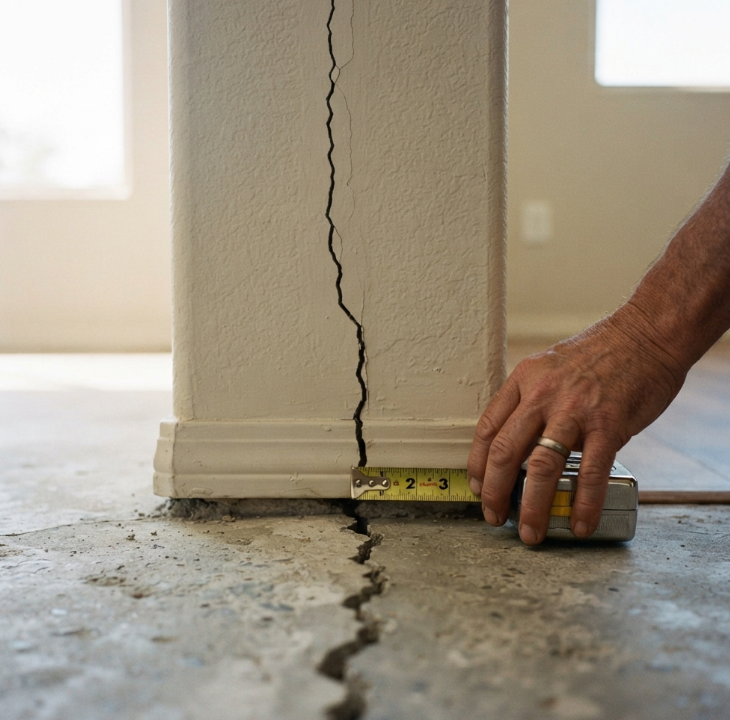
Soil movement and settling. Much of the Valley is built on caliche and expansive soils that move with moisture changes. A chimney is heavy, and differential settling of the foundation beneath it can cause a chimney to crack, separate from the house, or begin to lean. When you see a chimney pulling away from the exterior wall of a home, soil and foundation movement is often involved.
Monsoon wind and storm stress. Monsoon winds put lateral stress on the tall, exposed profile of a chimney. Wind, wind-driven debris, and storm impact can damage a chimney directly or accelerate the failure of one already weakened by age and thermal stress.
Water intrusion and freeze-related damage. Water that penetrates masonry — through a failed crown, damaged flashing, or cracks — degrades the mortar and masonry over time. While Phoenix doesn't have hard winters, occasional freezing at higher elevations in the metro and general moisture intrusion still deteriorate masonry, and monsoon moisture accelerates the breakdown of already-compromised material.
Deferred maintenance. This is the big one. Chimneys on rarely-used fireplaces get almost no attention. A chimney can deteriorate for years — mortar failing, crown cracking, masonry degrading — with nobody looking at it, until the damage is advanced. In a market where many fireplaces are decorative or seldom used, chimney neglect is common, and neglected deterioration is what leads to serious structural failure.
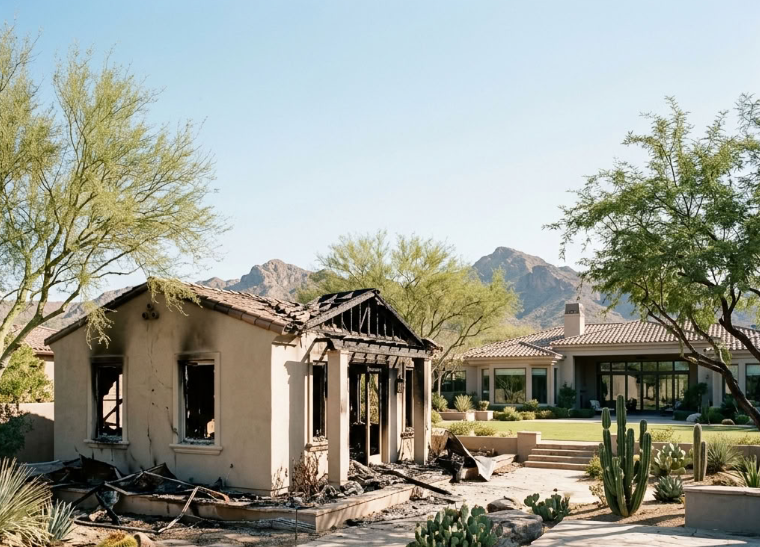
Fire damage. Less common in Phoenix, but worth noting: a chimney fire — when creosote buildup in the flue ignites — burns extremely hot and can crack the flue liner and masonry, structurally compromising the chimney. If you have a wood-burning fireplace and have had a chimney fire or suspect one, the chimney can be structurally damaged even if it looks intact, and it should be professionally inspected before use.
The Warning Signs of a Failing Chimney
Chimney structural problems usually show warning signs before catastrophic failure. Recognizing them early is the difference between a manageable repair and a collapse.
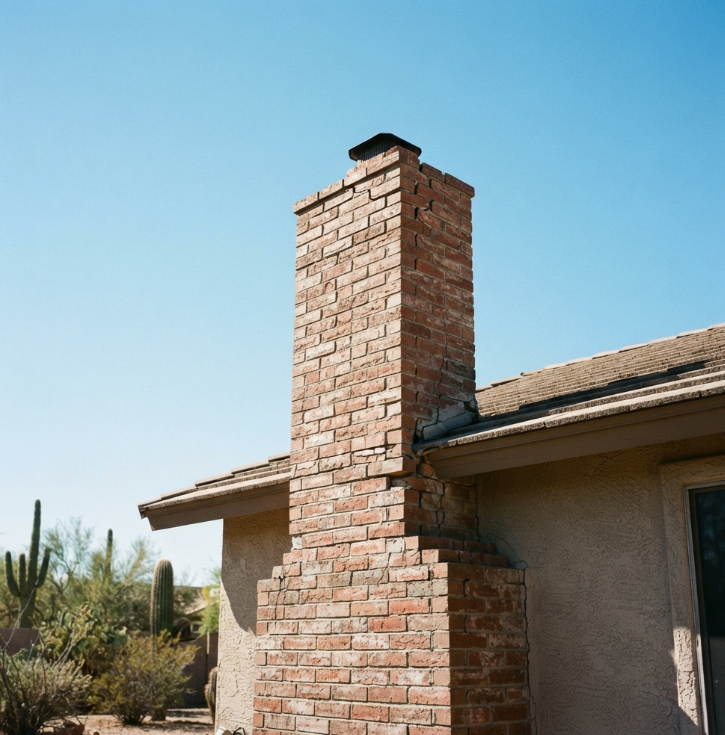
Leaning or tilting. A chimney that's no longer plumb — leaning away from the house or to one side — is a serious warning sign. Leaning indicates foundation movement, structural deterioration, or both, and a leaning chimney can progress to collapse.
Separation from the house. A visible gap opening up between the chimney and the exterior wall of the home indicates the chimney is pulling away from the structure — a sign of settling or structural movement that needs assessment.
Cracked or spalling masonry. Cracks in the brick or masonry, or spalling (where the surface of the masonry flakes, crumbles, or pops off), indicate deterioration. Significant or growing cracks are a structural concern.
Deteriorating mortar joints. When the mortar between bricks is crumbling, receding, or missing, the structural integrity of the chimney is compromised. Mortar failure is progressive — once it starts, it accelerates.
Masonry debris. Finding pieces of brick, masonry, or mortar on the roof or on the ground around the base of the chimney means material is actively failing and falling. This is a sign of active deterioration.
A damaged or missing crown. The crown is the top surface that sheds water off the chimney. A cracked or failed crown lets water into the masonry, accelerating deterioration from the top down.
Interior signs. Staining, moisture, or damage on interior walls or ceilings near the chimney can indicate water intrusion through a compromised chimney, or structural movement.
If you see any of these — particularly leaning, separation, or falling masonry — treat the chimney as a potential hazard and get it professionally assessed.
Why a Failing Chimney Is a Genuine Hazard
It's worth being clear about why this matters beyond the repair cost.
A chimney is heavy, and it's elevated above your roof and often near entryways, patios, or walkways. When a chimney fails — whether a partial collapse of the masonry or a full structural failure — that weight comes down. It can crash through the roof, damage the structure, and endanger anyone below or nearby. A chimney collapse isn't a slow, gentle process; a compromised chimney can fail suddenly, especially under the additional stress of a storm or high wind.
A partial collapse also leaves the remaining structure in an unstable, unpredictable state — masonry that's cracked and shifted but hasn't fully come down, which can give way with little warning. This is why a visibly compromised chimney should be treated as an active hazard: keep people away from the area below and around it until it's assessed and stabilized.
There's also the water intrusion dimension. A cracked or failing chimney is a path for water into your home — down through the chimney structure and into the surrounding walls, ceilings, and framing. What starts as chimney deterioration can become interior water damage and, in Phoenix's heat, the mold that follows water intrusion.
What to Do About a Damaged or Failing Chimney
If it's actively collapsing or clearly unstable, treat it as an emergency. Keep everyone away from the area, and get emergency stabilization. A chimney in the process of failing needs to be stabilized or safely removed before it comes down on its own terms.
Don't ignore the warning signs. A leaning chimney, separation from the house, or falling masonry won't fix itself — it progresses. Early assessment when you first notice the signs is dramatically cheaper and safer than dealing with a collapse.
Get a professional structural assessment. Chimney damage needs to be evaluated by someone qualified to assess the structure — the extent of the deterioration, whether it's a repair or a rebuild, whether foundation or settling issues are involved, and what the surrounding structure needs. A visual glance doesn't tell the full story, particularly where soil movement or hidden water intrusion is involved.
Document it for insurance. Photograph the chimney, the damage, and any related interior or roof damage. Note when you first observed the problem and any event — a storm, for instance — that may have caused or worsened it. This documentation matters for the claim, particularly around the cause.
Don't use a fireplace connected to a damaged chimney until it's been inspected and cleared, both for structural safety and, if it's wood-burning, fire safety.
The Insurance Picture — Where Cause Matters Most
Chimney damage is one of the clearest examples of where the cause of the damage determines whether it's covered — and where documentation matters enormously.
Insurance covers sudden, accidental damage. If your chimney is damaged by a covered event — a storm, a lightning strike, wind, a vehicle impact, a fire — the resulting damage is generally covered. A chimney knocked down or cracked by a monsoon storm, for instance, is typically a covered loss.
What insurance generally doesn't cover is deterioration, wear, and damage from deferred maintenance. A chimney that slowly crumbled over years of neglect, with no sudden triggering event, falls into the maintenance category that policies exclude. This is the same sudden-versus-gradual distinction that runs through most property claims — and with chimneys, where slow deterioration is so common, it's frequently the deciding factor.
This is exactly why documentation and the cause determination matter so much here. If a storm damaged your chimney, documenting the storm connection supports a covered claim. If the damage is characterized as pure long-term deterioration, the carrier may deny it. A restoration contractor who documents the cause thoroughly — establishing the connection to a covered event where one exists — is protecting your claim. And as with any claim, if the damage genuinely resulted from a covered event, don't accept a quick "it's just wear and tear" denial without the documentation to support the actual cause.
Why This Requires Real Structural Expertise
Chimney damage sits at the intersection of masonry, structural integrity, roofing, and often water intrusion — which means restoring it properly requires more than a patch job.
A significant chimney repair or rebuild involves assessing the structural cause (including any foundation or settling issues), safely stabilizing or removing compromised masonry, addressing the connection to the roof and the surrounding structure, resolving any water intrusion and resulting interior damage, and rebuilding to a sound, weather-tight, structurally sound condition. Handling all of that — the structural work, the roof integration, the interior repairs, and the insurance documentation — under one scope is what produces a complete, lasting result rather than a cosmetic fix that fails again.
RCS Builders is a licensed general contractor handling structural and storm damage across Greater Phoenix, including chimney and masonry structural repair, the roof and interior work that often comes with it, and the full insurance documentation and coordination. If your chimney is cracked, leaning, dropping masonry, or showing any sign of structural failure,
call us at 480-204-9035. We'll assess the real structural condition — not just the surface — and tell you honestly what your home needs to be safe.
Related: