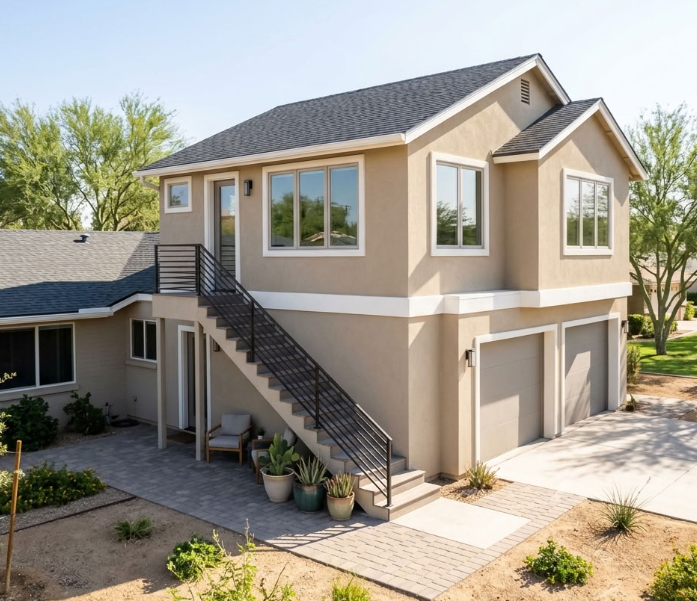
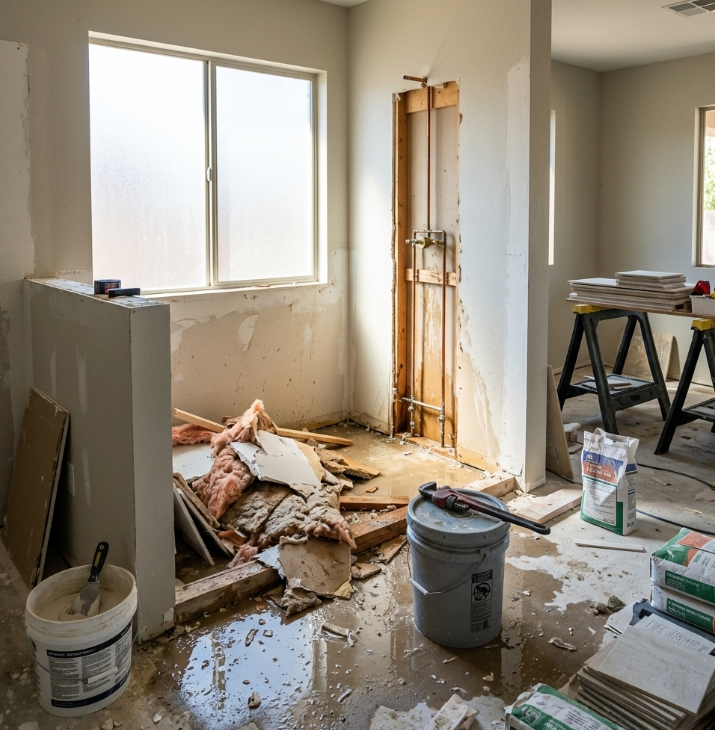
Accessory dwelling units are having a moment in Arizona. Recent state legislation has pushed cities across Greater Phoenix to loosen restrictions on ADUs, and homeowners are converting garages, building detached units, and adding livable square footage at a pace that's genuinely reshaping what a "single-family home" looks like across the Valley. Whether it's called an ADU, a junior ADU (JADU), a secondary dwelling unit, a detached dwelling unit, or simply a garage conversion or garage apartment, the legal and insurance stakes are the same.
What doesn't get talked about nearly enough is what happens when that addition wasn't built the right way — permitted, inspected, and reported to your insurance carrier. Because when it wasn't, the risk isn't just a smaller payout. It can mean your entire claim gets denied, and it can complicate the sale of your home for years after the fact.
Here's what actually matters.
The Permit Question: Is Your Addition Even Legal Yet?
Every ADU, garage conversion, detached unit, or home addition in Arizona requires a building permit from the relevant municipality. Permits exist to verify the structural, electrical, plumbing, and life-safety work meets current code — and the permitted status of a structure becomes part of its legal record.
A significant number of ADUs and garage conversions across the Valley were built without permits — sometimes by a previous owner, sometimes by a homeowner who assumed a smaller project didn't need one, sometimes by a contractor who skipped the step to save time and cost. Whatever the reason, an unpermitted structure carries real consequences that most owners never think about until something goes wrong.
Unpermitted work isn't recognized as legal living space. If your ADU or converted garage was never permitted, it may not be officially recognized by the municipality as habitable, code-compliant space — regardless of how finished or lived-in it actually is.
It's a disclosure issue when you sell. Arizona real estate disclosure requirements mean unpermitted square footage is a material fact that has to be disclosed to a buyer. Discovering unpermitted work during a sale can delay or kill the transaction, or require retroactive permitting before closing.
It can trigger a stop-work order or forced correction. If a municipality discovers unpermitted work — through a complaint, a routine inspection, or a permit application for something else on the property — the consequences can include fines, a stop-work order, or a requirement to open the structure back up for inspection.
The Insurance Question: Did Your Carrier Even Know This Structure Exists?
This is the part that catches people the hardest, and it's separate from — and often worse than — the permit issue alone.
Your insurance policy is priced and structured based on the property your carrier believes they're insuring. When you add a detached ADU or convert a garage into livable space, that changes the actual value and configuration of your property — and your carrier needs to know about it for your coverage to properly reflect it.
Undisclosed additions can affect your coverage limits. If your carrier doesn't know a detached unit exists, it likely isn't factored into your coverage limits at all — meaning a loss to that structure could be significantly underinsured, or in some cases, arguably not covered under the policy as written. If the unit is detached, it typically falls under Other Structures coverage rather than your main dwelling coverage — a separate consideration worth understanding on its own.
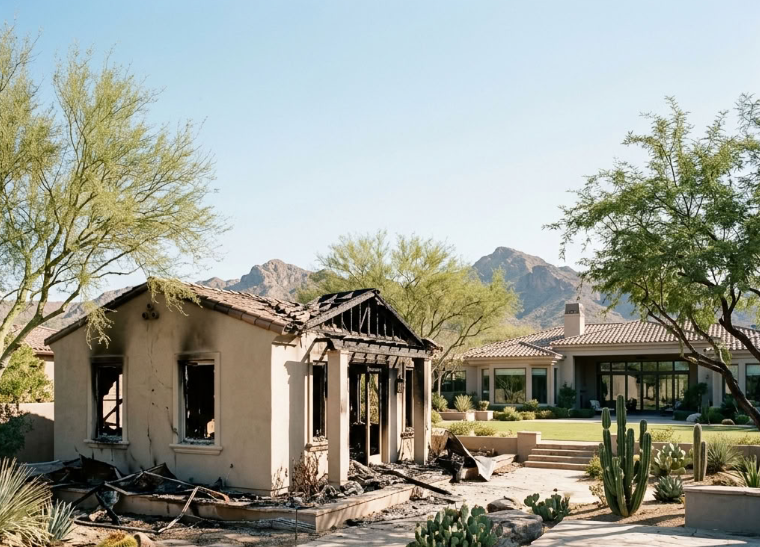
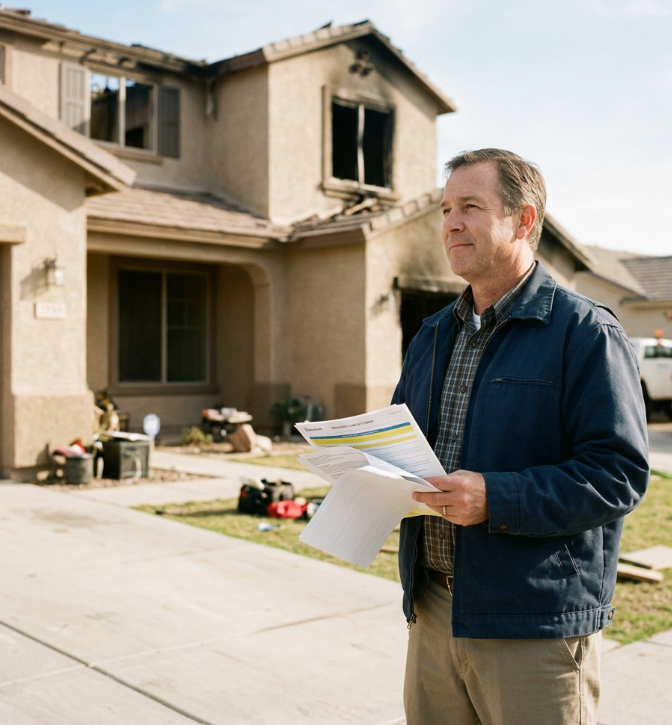
Unpermitted structures can give a carrier grounds to deny a claim entirely. This is the scenario that should concern every owner with an unpermitted addition. If a loss occurs — a fire, a significant water event, storm damage — and the carrier discovers during the claims investigation that the damaged structure was built without permits and was never disclosed, that can become the basis for denying the claim outright, not just reducing the payout. Carriers can argue the structure represents an undisclosed material change to the risk they agreed to insure.
Misrepresentation on a policy application or renewal can void coverage more broadly. If a carrier determines that an unpermitted structure was knowingly not disclosed, and that disclosure would have affected their underwriting decision, the consequences can extend beyond just that structure's claim.
Why This Matters More Right Now in Arizona
Arizona's recent legislative push to expand ADU allowances has led to a wave of new construction — homeowners converting garages or building detached units for aging parents, rental income, or extra space, often moving quickly to take advantage of loosened restrictions. That speed is exactly where corners get cut: a homeowner or a less experienced contractor treats the project as a straightforward build and skips or shortcuts the permitting process, not realizing the insurance implications sitting behind it.
At the same time, home values and construction costs across Greater Phoenix have risen enough that an ADU or garage conversion represents real, substantial value — not a minor outbuilding. The combination of more units being built, faster, with real dollar value at stake, is exactly the environment where the permit-and-disclosure gap becomes a genuinely expensive problem for property owners who don't address it.
What to Do If You Already Have an Unpermitted Addition
Find out if it was actually permitted. Many owners assume permits were pulled — by a previous owner, a past contractor — and never verify it. Most Arizona municipalities have online permit lookup tools tied to your property address. Check before assuming.
If it wasn't permitted, look into retroactive permitting. Many jurisdictions allow a process to bring existing unpermitted work up to code and issue a permit after the fact, sometimes called a legalization or after-the-fact permit process. This typically requires inspection and may require some corrective work, but it resolves the legal status of the structure going forward.
Notify your carrier and update your coverage once the structure is legitimate. Once an addition is properly permitted, disclosing it to your carrier and making sure your coverage — dwelling or Other Structures, depending on whether it's attached or detached — actually reflects its existence and value is essential. This is also the moment to get a realistic rebuild estimate for that specific structure, since coverage limits are frequently set too low even for properly disclosed units.
Do this before a loss, not after. Every one of these steps is dramatically easier and cheaper to handle proactively than in the middle of a claim, when a carrier's investigation uncovers the issue and you're trying to resolve it under pressure with your property already damaged.
What to Do If You're Planning a New ADU or Garage Conversion
Hire a licensed general contractor who pulls the permit as a matter of course. This is one of the clearest reasons licensing matters — a licensed GC pulling permits is building your addition with its legal status established from day one, rather than leaving you to sort it out later.
Notify your insurance carrier once the addition is complete and permitted. Don't assume your policy automatically updates. A phone call to your agent, confirming the new square footage, its use, and its value, is what actually gets your coverage aligned with reality.
Ask specifically about which coverage category applies. A detached ADU typically falls under Other Structures coverage — a separate, usually smaller category than your main dwelling. An attached conversion or addition is more likely to fall under your main dwelling coverage. Either way, confirm it directly rather than assuming — the distinction affects how much coverage you actually have if something happens.
A Note on Casitas, Guest Houses, and Similar Structures
If what you're dealing with is a casita, guest house, granny flat, or similar structure that's already built and simply hasn't been reviewed for insurance purposes, the permit and disclosure questions on this page still apply — but the more common issue with those structures tends to be an insurance coverage gap rather than a permit problem, since many were built or converted before ADU rules changed. If that's your situation, it's worth reading through what "Other Structures" coverage actually means for a detached casita or guest house.
We Build ADUs and Garage Conversions the Right Way From Day One
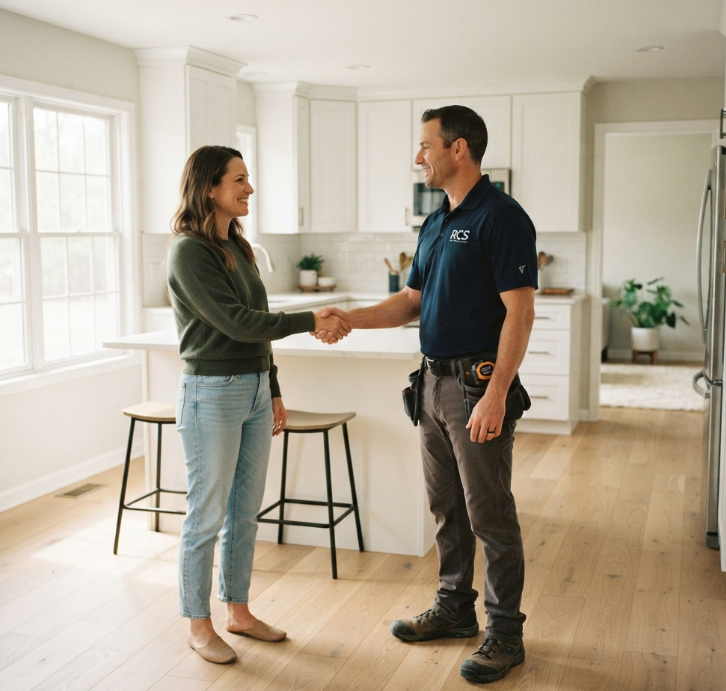
This is exactly the reason contractor choice matters as much for new construction as it does for restoration. RCS Builders designs and builds ADUs, garage conversions, and additions across Greater Phoenix as a licensed general contractor — which means permits are pulled before the first stud goes up, the work is inspected at every required stage, and the finished structure has a clean, legitimate legal record from day one. There's no retroactive permitting to chase down later, no disclosure gap sitting quietly on your policy, and no gray area waiting to surface during a future claim or a future sale.
If you're planning a new ADU or garage conversion, building it right the first time protects the investment in a way that goes well beyond the construction itself — it protects your insurance coverage, your resale value, and your peace of mind for as long as you own the property.
Why This Is Worth Addressing Now
The appeal of an ADU or converted garage — extra space, rental income, room for family — is real, and Arizona's regulatory environment is making it easier than ever to build one. But the addition is only as valuable as its legal and insurance standing actually reflects. An unpermitted structure isn't fully protecting the investment it represents, and an undisclosed one is putting your entire claim at risk the moment something goes wrong.
Whether you're building a new ADU or garage conversion, or you're not sure whether an existing one on your property was ever properly permitted, RCS Builders can help. We build new units the right way from the start, and we help existing owners find out where they stand and resolve unpermitted work before it becomes a claims problem.
Call us at 480-204-9035 to get started, whichever situation applies to you.
Related: