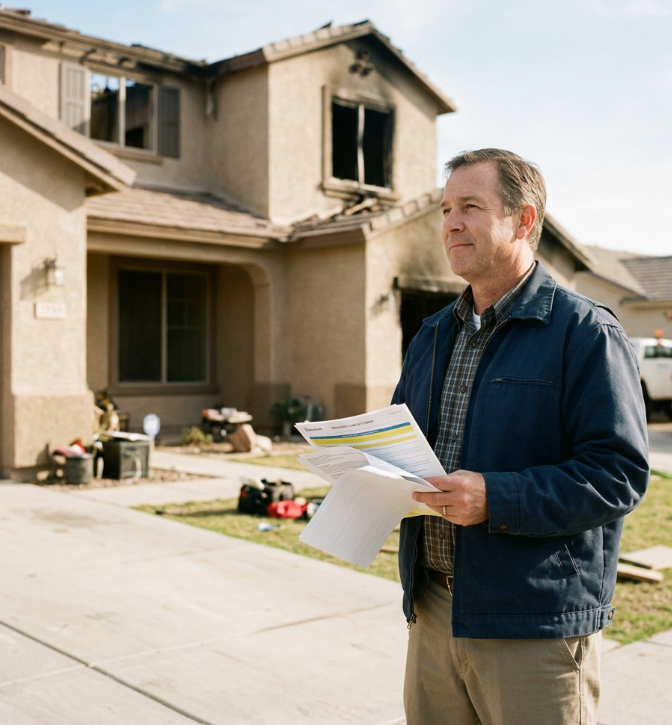
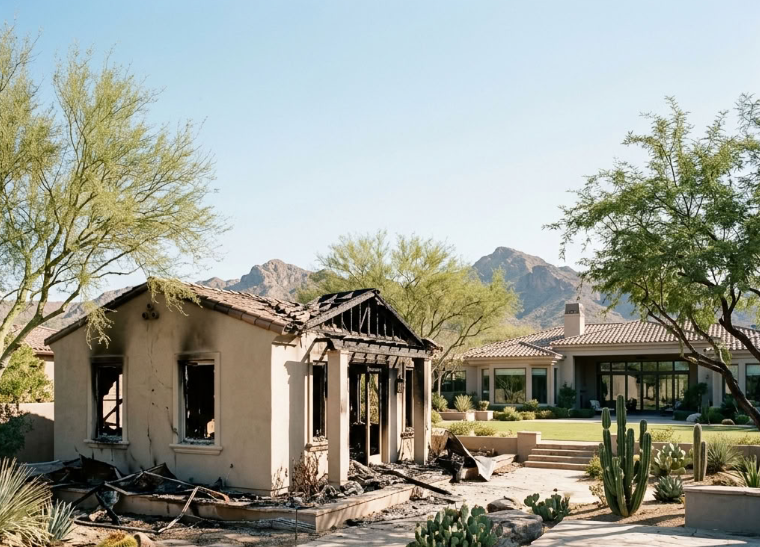
The claim is settled and the check is in hand. Now there's a question some property owners find themselves asking: do I have to spend this on the repairs, or can I take the money, do the work cheaper myself, and keep the difference?
It's a fair question, and the answer is more complicated than most people expect. In some situations you have real flexibility. In others, keeping the money without doing the work creates serious problems — with your mortgage lender, with your future coverage, with your next claim, and occasionally with the law.
Here's how it actually works and what to weigh before you decide.
This applies across every kind of covered loss — water, fire, storm, structural. The rules around settlement money work the same regardless of what caused the damage.
First: The Two-Check Structure Limits This More Than People Think
Before the "take the cash" question even gets interesting, understand how most claims actually pay out, because it constrains your options.
If you have a Replacement Cost Value policy — which most Arizona homeowner and commercial policies are — your claim typically pays in two stages. The carrier first releases the Actual Cash Value: the depreciated value of the damage. They hold back the rest — the recoverable depreciation — and release it only after the work is completed and documented.
This structure is specifically designed around the expectation that the work gets done. The first check alone often isn't enough to complete the restoration, and the second check only comes if you prove the work was performed. So the idea of "taking the cash and keeping the difference" runs into an immediate obstacle: under an RCV policy, you don't get the full amount unless you actually do the work and document it. Skip the work, and you forfeit the recoverable depreciation — sometimes a very large portion of the total claim value.
This alone makes "take the money and don't do the work" a worse deal than it sounds for most property owners.
If You Have a Mortgage, You Often Don't Control the Money
The next major constraint: if you have a mortgage, your lender is likely involved in the claim funds, and they have a strong interest in the work being done.
For significant claims, your mortgage company is typically named on the insurance check and controls the release of funds through their loss draft process. They release the money in stages tied to the completion of the work, often with inspections verifying progress. Their entire purpose in being involved is to ensure the insurance money actually restores the collateral — your property — rather than being pocketed while the home sits damaged.
This means that with a mortgage, taking the cash and not doing the work usually isn't even an option. The lender won't release the full funds without evidence the work is progressing and completed. They're structurally positioned to prevent exactly that scenario.
When You Do Have Flexibility
There are situations where you have more genuine latitude:
If you own the property outright. Without a mortgage lender controlling the funds, you have more practical control over the money. The RCV two-check structure still applies — you still forfeit recoverable depreciation if you don't do the work — but the lender constraint is gone.
On the ACV portion. The initial Actual Cash Value payment is generally yours. If you have an ACV policy (not RCV), or you're only considering the ACV portion of an RCV claim, there's more flexibility — though you're leaving the recoverable depreciation on the table by not completing the work.
For minor cosmetic damage you choose to live with. If a loss is genuinely minor and you'd rather keep the space as-is, some owners choose to take the ACV and not repair. This is more defensible for small cosmetic issues than for significant damage.
Even where you have flexibility, though, there are risks that make keeping the money without doing the work a questionable choice.
The Risks of Taking the Money and Skipping the Work
You forfeit the recoverable depreciation. As covered, under an RCV policy the held-back depreciation only comes if you do the work. Skip it and you're leaving potentially thousands or tens of thousands of dollars uncollected. The "savings" from doing it cheap or not at all often costs more than it saves once you account for the forfeited depreciation.
Unrepaired damage becomes a pre-existing condition problem. This is the big one people don't think about. If you don't repair damage and later have another loss in the same area, your carrier can deny or reduce the new claim on the grounds that the damage was pre-existing and you were paid for it already. You essentially poison your ability to claim that area in the future.
Your coverage and renewal can be affected. Carriers can inspect properties. Unrepaired damage that was paid out can affect your coverage, your renewal, and your standing with the carrier. An insurer that discovers you took claim money and left the damage unrepaired may treat you as a higher risk.
Hidden damage goes unaddressed and gets worse. Especially with water and fire, the damage you can see is often not the full damage. Taking the money and doing a cheap surface fix — or nothing — leaves hidden damage to worsen. Water in a wall cavity that isn't properly dried becomes mold and structural rot. What you "saved" becomes a much larger problem later, on your dime.
Mortgage complications. If there's a mortgage and you divert funds that were meant for repairs, you can end up in violation of your mortgage terms, which require you to maintain the property.
Potential fraud exposure. This is the serious one. Taking claim money under false pretenses — misrepresenting your intentions, inflating a claim, or collecting funds designated for repairs you never intend to make — can cross into insurance fraud. The specifics matter, and most people taking their ACV and living with minor damage aren't committing fraud. But the line exists, and misrepresentation to collect money is where it gets crossed.
The Honest Case for Just Doing the Work
Step back and the math usually favors having the work done properly:
You collect the full claim value, including the recoverable depreciation you'd otherwise forfeit. You address hidden damage before it becomes a larger, uncovered problem. You keep your property in a condition that protects your future coverage and claims. You stay clean with your mortgage lender and your carrier. And you actually end up with a restored property rather than damage you're living with and a check that didn't stretch as far as you hoped.
The scenario where
"take the cash" seems appealing — do it cheaper, keep the difference — usually doesn't pencil out once you account for the forfeited depreciation, the hidden damage risk, the future-claim exposure, and the fact that cheap work often fails and costs more later. The apparent savings tend to be illusory.
Where it can make sense is narrow: you own the property outright, the damage is minor and cosmetic, you've genuinely assessed that there's no hidden extent, and you'd rather keep the ACV and live with it. Outside those conditions, doing the work properly is almost always the better financial and practical decision.
The Bottom Line
Whether you can take the cash instead of doing the work depends heavily on your policy structure and whether you have a mortgage. With an RCV policy, you forfeit the recoverable depreciation by not doing the work — often a large sum. With a mortgage, your lender typically controls the funds specifically to ensure the work gets done. And even where you have flexibility, keeping the money and skipping the repairs carries real risks: pre-existing condition problems on future claims, coverage and renewal consequences, hidden damage that worsens, and in some cases fraud exposure.
For most property owners, having the work done properly — collecting the full claim, addressing all the damage, and keeping the property and their coverage in good standing — is the decision that actually comes out ahead.
RCS Builders handles restoration the right way and documents the completed work that triggers your recoverable depreciation release — so you collect the full value of your claim rather than leaving money on the table. If you're weighing your options after a settlement and want to understand what doing the work properly actually looks like and costs,
call us at 480-204-9035. We'll give you a straight picture.
Related: