You notice a crack. Maybe in the concrete of your garage floor, maybe running up an interior wall, maybe in the exterior stucco. And immediately the question hits: is this nothing, or is this the kind of thing that costs tens of thousands of dollars and means something is wrong with my house?
It's a genuinely stressful moment, and the honest answer is that it depends — because not all cracks are equal. Some are completely normal and cosmetic. Others are signs of real structural movement that need attention. The problem is that to a homeowner, they can look alike. Here's how to actually tell the difference, what causes cracks in Phoenix specifically, and when to take one seriously.
Why Phoenix Homes Crack in the First Place
Before sorting cosmetic from serious, it helps to understand why cracks happen here so often. The Valley's ground and climate are genuinely hard on foundations.
Expansive and caliche soils. Much of Greater Phoenix sits on soils that move with moisture. Expansive clay soils swell when they get wet and shrink when they dry out, and that expansion and contraction cycle pushes and pulls on foundations. Caliche — the hard, cement-like calcium carbonate layer common in Arizona soil — creates uneven support conditions. Soil that moves under a rigid concrete foundation is one of the leading causes of cracking here.
The wet-dry cycle. Phoenix's pattern of long dry periods punctuated by intense monsoon moisture is almost perfectly designed to stress foundations. Soil dries out and shrinks during the dry months, then swells rapidly when monsoon rain saturates it. That repeated cycle of movement works on the foundation year after year.
Flood irrigation and drainage. In flood-irrigated neighborhoods and areas with poor drainage, foundations experience repeated saturation that drives soil movement and moisture-related issues. Water pooling against a foundation — from irrigation, drainage problems, or roof runoff — is a common contributor.
Normal concrete curing and settling. Some cracking has nothing to do with soil at all. Concrete shrinks as it cures, producing hairline cracks that are completely normal. And every house settles somewhat in its early years as it comes to rest on its soil. A portion of the cracks homeowners find are simply these harmless, expected phenomena.
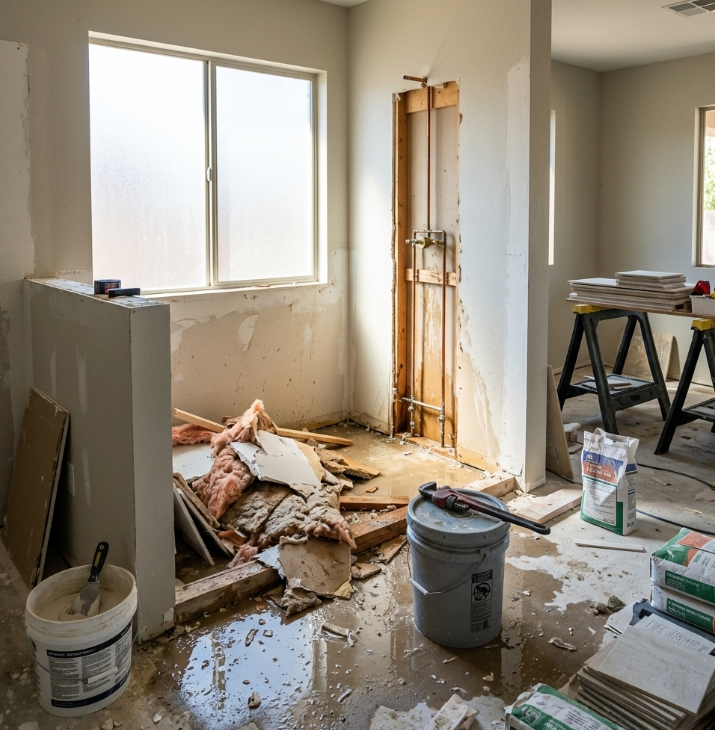
Plumbing leaks and slab leaks. Water from a leak under or near the slab can erode and shift the soil supporting the foundation, causing movement and cracking. In Phoenix, where slab leaks are common, a foundation issue is sometimes actually a hidden water problem.
The point: cracks are extremely common in Phoenix, and most homes have some. Their existence alone isn't cause for panic. It's the characteristics of the crack that tell you whether it matters.
The Cracks That Are Usually Cosmetic
Many cracks are harmless. These are the ones that generally don't indicate a structural problem:
Hairline cracks. Very thin cracks — narrower than about 1/8 inch — in concrete or drywall are often just shrinkage or minor settling. Thin, stable hairline cracks are the most common and most benign type.
Fine cracks in a slab or garage floor. Concrete slabs commonly develop shrinkage cracks as they cure and minor cracks over time. A thin crack in the garage floor, without other warning signs, is usually cosmetic.
Small vertical cracks in drywall. Vertical hairline cracks in drywall, especially near the seams or in predictable stress points, are frequently just the house settling and the drywall responding to normal movement.
Cracks that appear once and don't grow. A crack that showed up, has stayed the same width and length, and isn't accompanied by other signs is far less concerning than one that's actively changing.
These cosmetic cracks can usually be monitored and, if desired, filled and repaired cosmetically — they're an aesthetic issue, not a structural one.
The Cracks That Signal Something Serious
Other cracks are warning signs of real structural movement. These are the ones to take seriously:
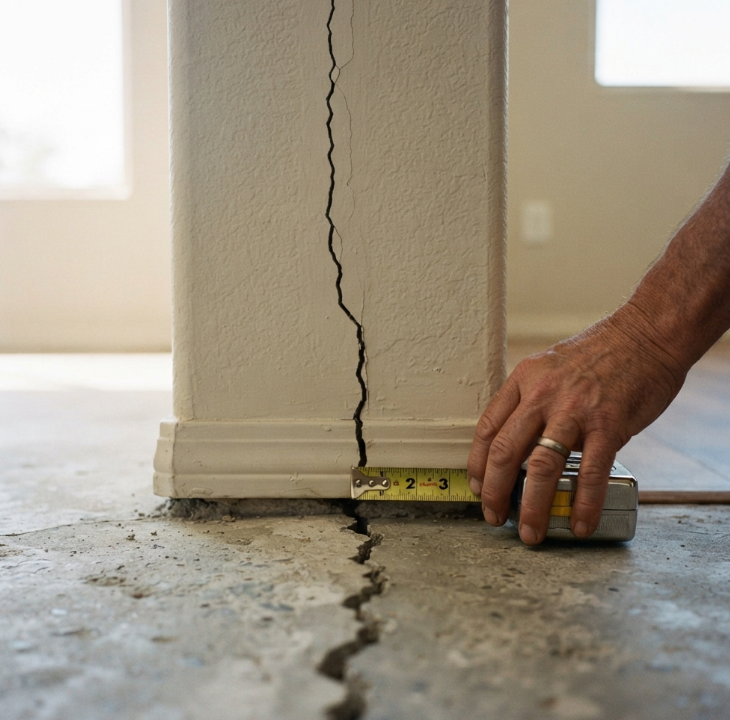
Wide cracks. Cracks wider than about 1/4 inch, and especially those that are noticeably wide, indicate more significant movement. Width matters — a crack you could fit a coin or a pencil into is a different situation than a hairline.
Horizontal cracks. In a foundation wall or stem wall, horizontal cracks are among the most concerning, because they can indicate pressure being exerted against the wall — often from soil and water pressure — that the wall is failing to resist. Horizontal cracking warrants prompt professional assessment.
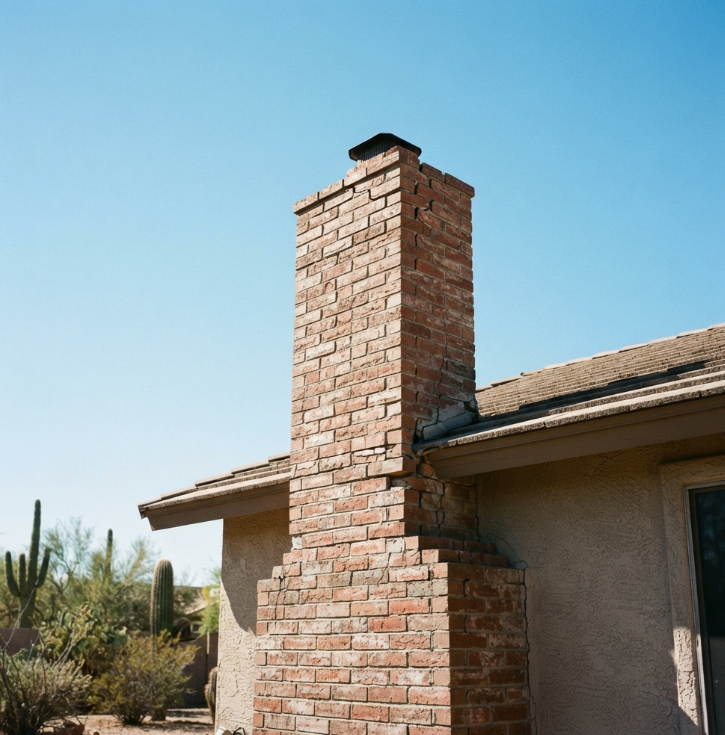
Stair-step cracks in masonry or block. Cracks that follow a stair-step pattern along the mortar joints of block or masonry walls typically indicate differential settling or foundation movement. This pattern is a classic sign of the foundation shifting unevenly.
Cracks wider at one end. A crack that's noticeably wider at the top or bottom — a tapering or V-shaped crack — suggests the foundation is moving or rotating unevenly, rather than just shrinking. Uneven cracks indicate movement.
Cracks accompanied by other symptoms. This is the big one. A crack becomes much more concerning when it comes with other signs of structural movement: doors and windows that suddenly stick or won't close properly, gaps opening up between walls and ceilings or floors, sloping or uneven floors, gaps around window and door frames, or separation where walls meet. When a crack is one symptom among several, the house is likely telling you something structural is happening.
Cracks that are actively growing. A crack that's getting longer or wider over time indicates ongoing, active movement — which is more serious than a stable crack that appeared once and stopped. Active progression means the underlying cause is still at work.
Cracks with moisture or water intrusion. A foundation or wall crack that's letting water in adds a water-damage and potential mold dimension on top of the structural question, and can indicate drainage or soil-moisture problems driving the movement.
A Simple Way to Monitor a Crack
If you find a crack and you're not sure whether it's active, there's a straightforward way to gather information: monitor it.
Mark the ends of the crack and note its width, with the date. You can mark the ends with a pencil line or a small mark, measure the width, and photograph it with something for scale. Then check it periodically over the following weeks and months. A crack that stays exactly the same is stable — less concerning. A crack that's lengthening or widening is active — more concerning, and worth professional assessment.
This monitoring gives you real information rather than anxiety, and it gives a professional useful data if you do have it assessed. That said, if a crack shows the serious signs above — width, horizontal orientation, stair-stepping, or accompanying symptoms like sticking doors and sloping floors — don't wait to monitor. Get it assessed.
When a Crack Is Related to a Loss or Event
Cracks sometimes appear or worsen after a specific event, and that connection matters — both for what it means and for insurance.
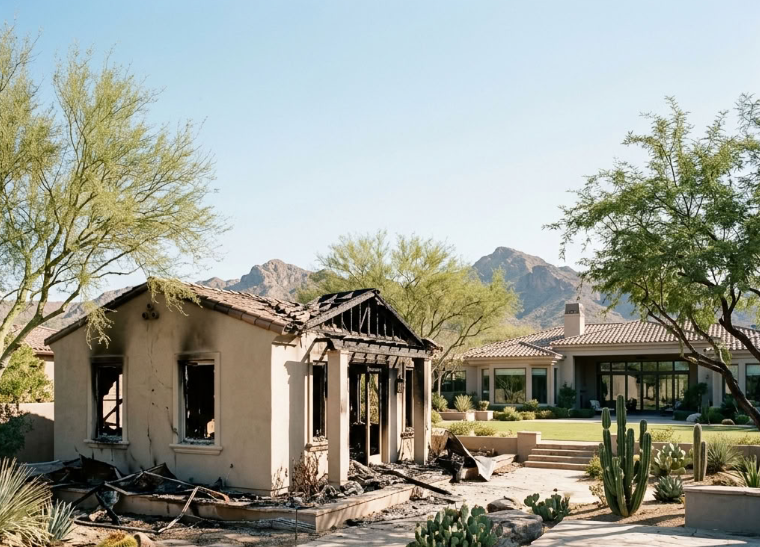
A crack that appears or grows after a plumbing or slab leak may be caused by soil erosion or movement from the water. A crack that shows up after a significant storm, flooding, or unusual soil saturation may be movement-related. Cracks following a fire can result from thermal damage to the concrete. And cracks after any impact event — a vehicle striking the structure, for instance — may be impact-related.
When a crack is connected to a sudden event like this, it changes the picture. It may indicate damage that needs restoration, and it may be a covered insurance loss — because insurance generally covers sudden, accidental damage while excluding gradual settling and long-term soil movement. This is the same sudden-versus-gradual distinction that runs through most property claims. A crack from a sudden plumbing leak or a storm event may be covered; a crack from years of gradual soil movement typically isn't. Documenting the connection to a covered event, where one exists, is what supports a claim.
What to Do If You're Concerned
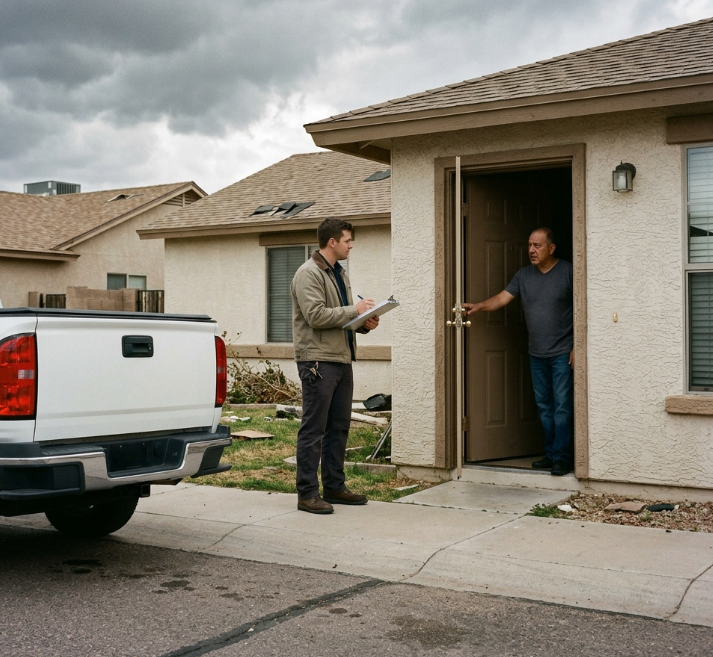
Don't panic, but don't ignore it. Most cracks aren't emergencies, but the serious ones do progress if the underlying cause isn't addressed. The goal is to figure out which kind you have.
Assess the characteristics. Width, direction, pattern, and — most importantly — whether it's accompanied by other symptoms like sticking doors, sloping floors, or gaps. These tell you a lot.
Monitor if it's ambiguous. Mark and measure it, and watch whether it's active or stable over time.
Get a professional assessment for the serious signs. Wide cracks, horizontal cracks, stair-step cracks, active growth, or cracks with accompanying structural symptoms warrant professional evaluation. Significant foundation issues sometimes require a structural engineer's evaluation to determine the cause and the appropriate response.
Identify whether it's tied to a loss. If a crack appeared after a leak, storm, fire, or impact, that connection matters for both the diagnosis and a potential insurance claim.
Where RCS Fits
Most foundation cracks in Phoenix are cosmetic products of our soil and climate — normal, stable, and not a cause for alarm. But some are genuine signs of structural movement, and the ones tied to a sudden loss — a slab leak, a storm, an impact — can be both a real structural issue and a covered insurance matter.
RCS Builders is a licensed general contractor handling structural and restoration work across Greater Phoenix.
When foundation cracking is connected to a water loss, storm, fire, or impact event, we assess the full structural picture, coordinate engineering evaluation where a significant event warrants it, handle the resulting restoration and rebuild, and document the cause for your insurance claim. If you've found cracking you're worried about — especially after a leak, storm, or other event —
call us at 480-204-9035. We'll help you understand whether you're looking at something cosmetic or something that needs to be addressed, and what your options are.
For foundation issues unrelated to a loss — pure long-term settling — a foundation repair specialist or structural engineer is often the right first call, and we're happy to point you in the right direction.
Related: