What to Do After Hail or Monsoon Damage in Phoenix
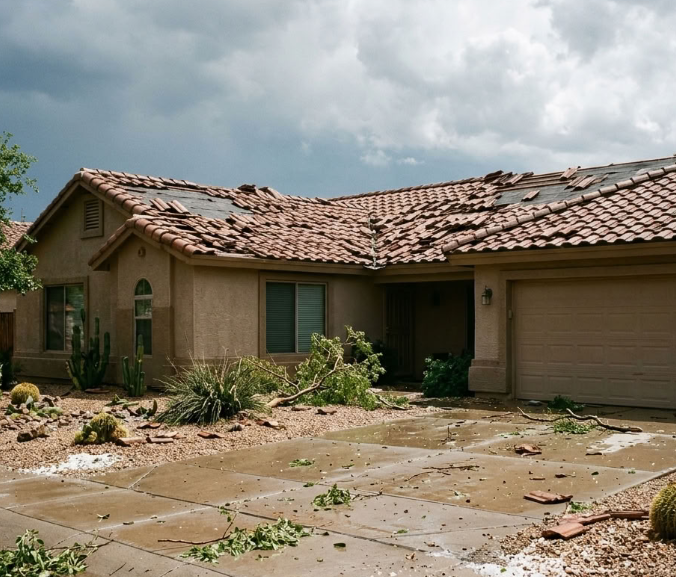
A strong Phoenix storm moves through, the hail stops, and everything gets quiet again.
Then you start looking around.
There may be roof tile in the yard. A tree limb is down. The patio cover looks different. You notice water near a window—or a stain beginning to form on the ceiling.
The first few hours after a storm matter.
Not because you need to rush into permanent repairs, but because you need to
protect the property, document what happened, and determine how far the damage actually extends.
After hail or monsoon damage, focus first on safety, documentation, temporary protection, and understanding the full scope before permanent repairs begin.
Arizona's Department of Insurance and Financial Institutions specifically identifies monsoon storms, high winds, and hail as causes of property damage in the state. DIFI recommends documenting damage, contacting your insurer promptly, preventing additional damage when safe, and avoiding unnecessary permanent repairs until the carrier has had an opportunity to inspect.
Here is the process Phoenix property owners should follow.
1. Make Sure the Property Is Safe
Before inspecting anything, look for immediate hazards.
Stay away from:
- Downed power lines
- Broken electrical equipment
- Unstable trees or large branches
- Sagging ceilings
- Damaged structural areas
- Standing water near electrical components
- Loose roofing materials
- Broken glass
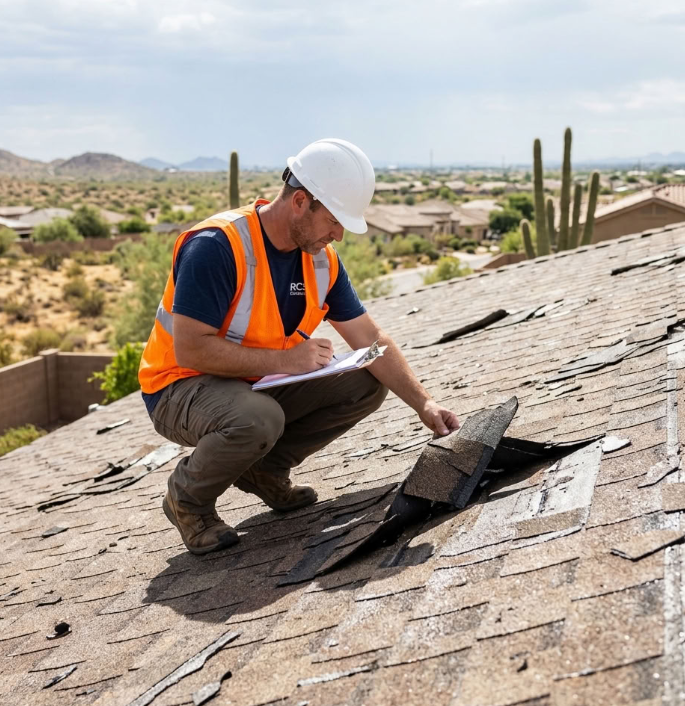
Do not climb onto the roof yourself after a hail or monsoon storm.
Roofing can be wet, loose, cracked, or unstable even when it looks normal from the ground.
If there is an immediate danger to people, call emergency services first.
Property damage can be repaired.
Safety comes first.
2. Document the Damage Before Cleanup
Once the property is safe, start documenting what you can see.
Use your phone to take both wide-angle and close-up photographs.
Outside the Property
Document:
- Roofing material on the ground
- Missing or displaced roof tiles
- Damaged shingles
- Fallen tree limbs
- Damaged fences
- Broken windows or screens
- Patio or carport damage
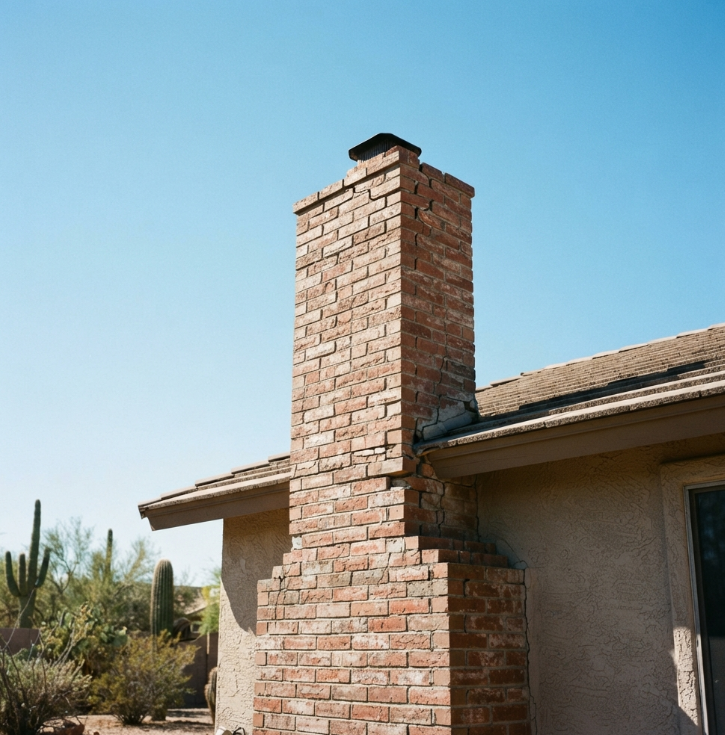
- Exterior stucco damage
- Dented gutters or metal components
- Debris impact marks
- Damaged exterior fixtures
Inside the Property
Photograph:
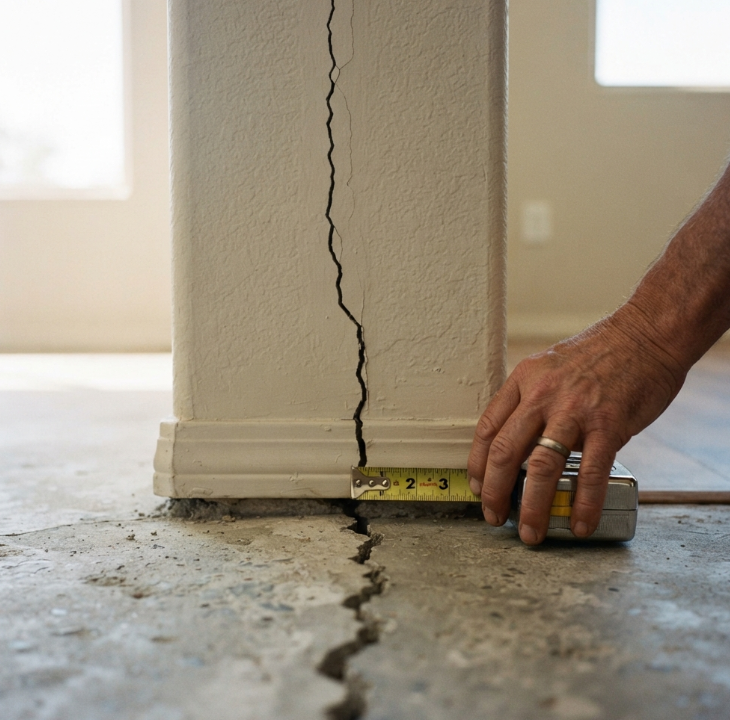
- Ceiling stains
- Wet drywall
- Peeling or bubbling paint
- Water around windows
- Wet carpet or flooring
- Damaged baseboards
- Wet insulation if safely visible
- Water near light fixtures
- Affected furniture or contents
Video can also be useful for showing the overall condition immediately after the storm.
Arizona DIFI recommends taking photographs or video of damage and retaining documentation before repairs, replacement, cleaning, or disposal whenever possible.
3. Look Beyond the Roof
Roof damage gets most of the attention after hail or high winds.
But the roof may only be where the loss started.
Storm damage can affect:
- Roofing
- Skylights
- Exterior walls
- Windows
- Stucco
- Patio structures
- Fencing
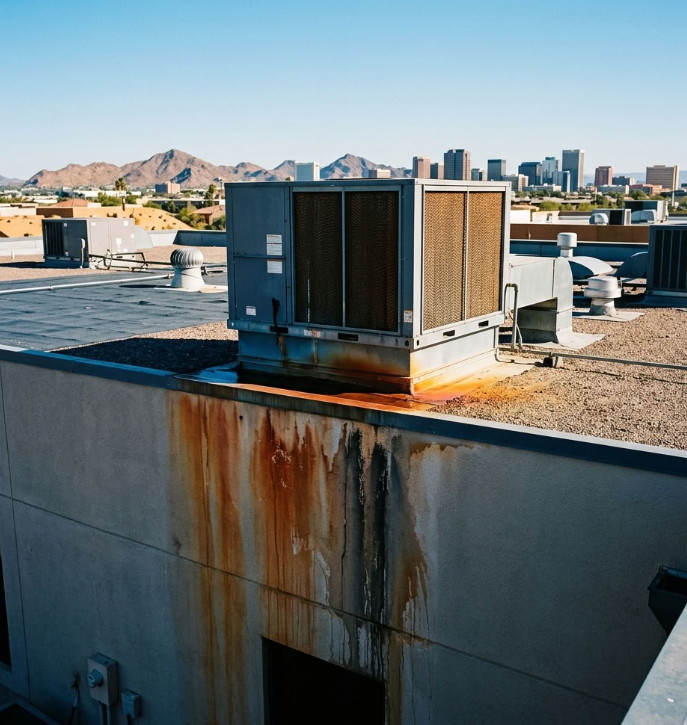
- HVAC equipment
- Insulation
- Drywall
- Flooring
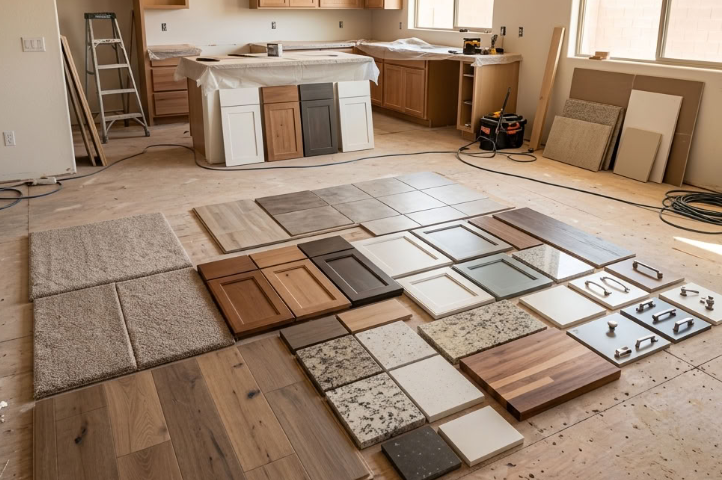
- Cabinets
- Electrical components
- Interior finishes
A missing tile may seem like a small repair.
But if that opening allowed water to enter the attic and travel into the ceiling or walls, you may have both an exterior repair and an interior water-damage project.
That distinction matters.
A storm loss should be evaluated as a property problem—not automatically treated as only a roofing problem.
4. Check for Signs of Water Intrusion
Water does not always appear directly below the damaged section of roof.
It can travel along framing, insulation, roof decking, pipes, or wall cavities before becoming visible.
Watch for:
- New ceiling stains
- Damp drywall
- Bubbling paint
- Soft ceiling areas
- Wet insulation
- Musty odors
- Water around windows
- Wet flooring
- Water inside cabinets
- Dripping near ceiling fixtures
If you notice active water intrusion, it should be addressed quickly.
The longer building materials remain wet, the more complicated the repair can become.
5. Take Reasonable Steps to Prevent More Damage
Homeowners policies commonly require policyholders to take reasonable steps to prevent additional damage after a loss.
That does not mean you need to begin a full reconstruction immediately.
It means you may need temporary protection.
Depending on the conditions, emergency work may include:
- Temporary roof tarping
- Boarding a broken opening
- Water extraction
- Drying wet materials
- Moving belongings away from affected areas
- Temporary structural stabilization
- Removing a dangerous tree limb
Arizona DIFI specifically advises property owners to prevent additional damage when it is safe to do so and to retain receipts and documentation for emergency work.
Take photographs before and after temporary work whenever possible.
6. Contact Your Insurance Carrier
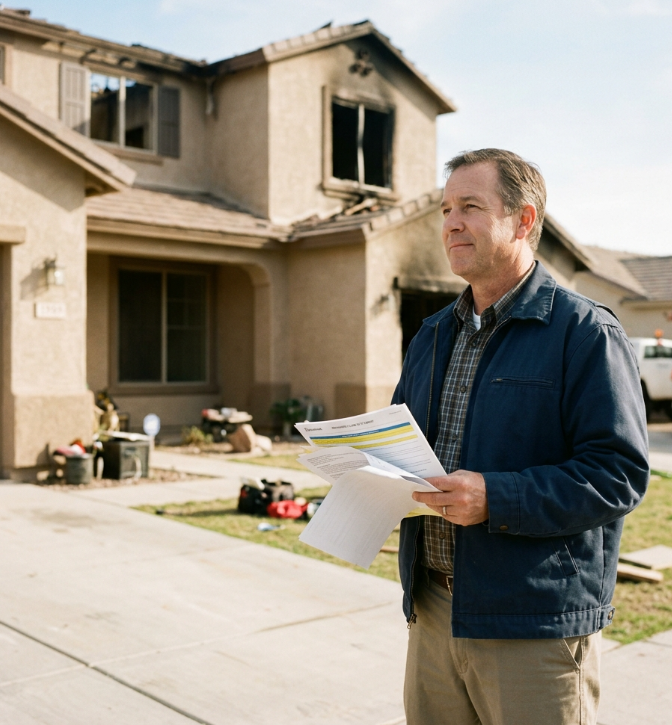
If the damage appears significant, notify your insurance carrier and ask about its inspection process.
You should be prepared to provide:
- The date of the storm
- What you observed
- Photographs or video
- Whether water is currently entering the property
- Emergency measures already taken
Do not assume that simply because hail was reported in your neighborhood, your property has covered damage.
The carrier will evaluate the claim based on the policy and the actual conditions at your property.
Likewise, the contractor's role is not to promise coverage.
The contractor should document the construction damage and explain what is necessary to repair the building.
The insurance company determines what the policy covers.
7. Do Not Rush Into Permanent Repairs
Emergency protection and permanent repair are different.
If the roof is actively allowing water into the building, a temporary tarp may be appropriate.
Replacing the entire roof before the carrier has inspected the original damage may create documentation problems.
DIFI recommends contacting the insurance company before repair, replacement, cleaning, or disposal when possible so the carrier has an opportunity to evaluate the damage.
The practical rule is:
Protect the property immediately when necessary. Document first. Permanent repairs can follow once the damage and repair scope are understood.
8. Understand the Difference Between Rain Damage and Flooding
This is especially important during Arizona monsoons.
Standard homeowners insurance generally does not cover flooding caused by rising surface water.
Separate flood insurance is normally required for that type of loss.
However, rain entering through a roof or wall that was damaged by wind or hail may be treated differently.
Arizona DIFI explains that interior water damage from rain may not be covered unless the rain entered through a roof or wall damaged by wind or hail. It also distinguishes that from surface flooding, which is generally excluded from standard homeowners policies.
For example:
Storm-Created Opening
High winds damage the roof.
Rain enters through the opening and damages the ceiling.
That may be part of a covered storm loss.
Surface Flooding
Heavy rainfall overwhelms drainage and water enters the property from ground level.
That is generally considered flooding and is handled differently.
The path of the water matters.
9. Have the Damage Evaluated by a Qualified Contractor
The insurance adjuster and the contractor serve different purposes.
The Adjuster
Evaluates:
- Policy coverage
- Claim conditions
- The carrier's estimate
- Applicable deductibles
- Settlement terms
The Contractor
Evaluates:
- What is physically damaged
- What has to be removed
- What can be repaired
- What materials and trades are required
- Whether permits are necessary
- How the project should be sequenced
- What it will take to complete the repairs properly
You need a contractor who understands the building—not just someone who can identify a hail mark.
10. Determine Whether This Is a Small Repair or a Reconstruction Project
Some storm losses are straightforward.
A limited roof repair may only require a properly licensed roofing contractor.
Other losses involve:
- Roofing
- Water mitigation
- Drywall
- Insulation
- Electrical work
- Flooring
- Painting
- Carpentry
- Windows
- Stucco
- Structural repairs
- Multiple trades
Once several parts of the property are involved, you are dealing with a reconstruction project.
That is where a licensed general contractor becomes especially valuable.
The GC's role is to coordinate the full construction scope and carry the project to completion.
When Storm Damage Becomes a General Contractor Project
Consider this example:
Roof tiles are cracked and displaced.
A tree limb comes through part of the roof and damages the framing below.
Stucco and siding are damaged.
The garage door and exterior trim are impacted.
Hail damages pool equipment and exterior mechanical components.
Decking and patio surfaces are damaged.
Windows or exterior openings are affected.
Wind-driven rain enters through the damaged areas.
Interior insulation and drywall become wet.
Water reaches flooring, baseboards, electrical components, and other finishes.
If the property includes ADA-accessible features such as ramps, handrails, thresholds, or accessible entries, those may also need to be evaluated and repaired.
Now the repair scope may include:
- Roofing
- Structural framing and roof repairs
- Tree-impact damage repairs
- Stucco and siding
- Garage door and exterior trim
- Windows and exterior openings
- Pool equipment
- Decking and patio surfaces
- Water mitigation
- Insulation and drywall
- Flooring and baseboards
- Electrical repairs
- Finish carpentry
- ADA/accessibility repairs
- General reconstruction and project coordination
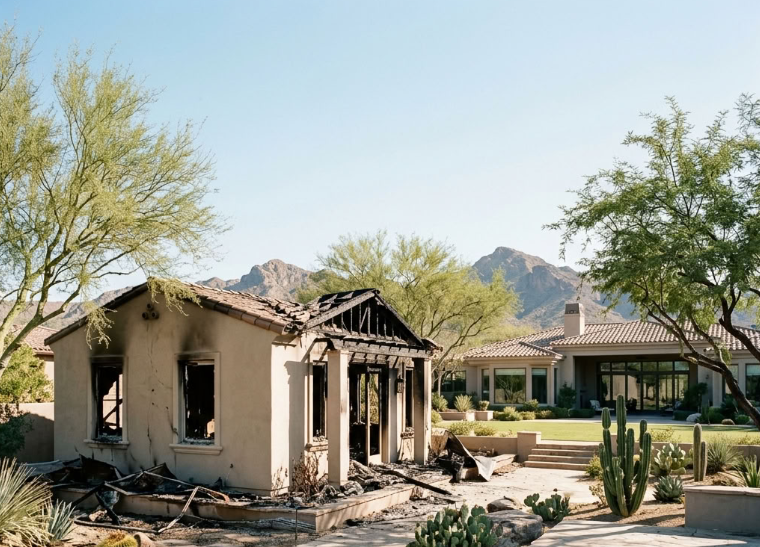
At that point, the loss is no longer just a roof claim. It is a
multi-system property-damage reconstruction project that may require a licensed general contractor to coordinate the entire scope.
The job is not finished when the leak stops. It is finished when the damaged property is properly rebuilt.
What If Another Company Already Handled the Roof or Mitigation?
That is not a problem.
The same company does not have to perform every part of the loss.
RCS Builders can:
- Handle the complete property-damage project
- Perform mitigation and continue into reconstruction
- Step in after another mitigation company has completed drying
- Handle interior reconstruction after another qualified roofing contractor completes the roof
- Take over the remaining multi-trade repair scope
What matters is having a clear understanding of what work has already been completed and what remains.
What If You Cannot See Any Damage?
Not all storm damage is obvious.
You may have hail reported in your neighborhood and still have no meaningful property damage.
Or you may have damage that is difficult to see from the ground.
Signs that may justify an inspection include:
- Roofing material in the yard
- New ceiling stains
- Water intrusion
- Dented metal components
- Broken skylights
- Visible tile or shingle displacement
- Fallen limbs against the structure
- New exterior damage
The goal is not to find a claim.
The goal is to determine whether the property was actually damaged.
Should You File an Insurance Claim Every Time It Hails?
No.
A hail map or neighborhood storm report does not automatically mean your property has a valid claim.
Before deciding how to proceed, consider:
- Whether actual damage exists
- The extent of that damage
- Whether immediate repairs are necessary
- Your deductible
- Your policy terms
- Whether interior damage occurred
RCS does not determine insurance coverage or encourage unsupported claims.
We document legitimate property damage and explain the construction required to repair it.
What If the Insurance Estimate Misses Something?
The insurance carrier's initial estimate is not always the final construction scope.
Some conditions may not be visible until work begins.
For example:
- Wet insulation may be concealed
- Additional drywall damage may be exposed
- Structural damage may appear after demolition
- Roofing components may be identified during tear-off
- Material availability may affect the repair
- Additional construction operations may be necessary
When legitimate covered work is missing from the estimate, the contractor can document the condition and submit a supplement for carrier review.
A supplement is not an upgrade.
It is a request to evaluate additional work that the contractor believes is necessary to complete the covered repair.
What About Commercial and Multifamily Storm Damage?
The same first steps apply:
- Protect people
- Document conditions
- Stop additional damage
- Notify the appropriate parties
- Evaluate the complete building
But the logistics can become more complex.
Commercial and multifamily losses may involve:
- Multiple units
- Common areas
- Large roof systems
- Carports
- Exterior elevations
- Mechanical equipment
- Resident access
- Business operations
- Emergency stabilization
- Phased construction
A general contractor can help coordinate the repair while keeping property management, tenants, residents, ownership, and insurance stakeholders informed.
How RCS Builders Helps After Hail or Monsoon Damage
RCS Builders is a licensed Arizona general contractor providing property-damage restoration and reconstruction throughout Greater Phoenix.
We can evaluate and coordinate the complete affected property—not just one damaged component.
Depending on the loss, our work may include:
- Emergency stabilization
- Water mitigation
- Damage documentation
- Roofing coordination
- Exterior repairs
- Structural repairs
- Drywall and insulation
- Flooring
- Painting
- Carpentry
- Cabinet repairs
- Multi-trade reconstruction
- Insurance repair estimating
- Final project closeout
We can manage the loss from the beginning or step in after another qualified roofer or mitigation company has already completed part of the work.
Your Post-Storm Checklist
After hail or monsoon damage:
- Make sure everyone is safe.
- Stay off the roof.
- Photograph the conditions.
- Check the interior for water intrusion.
- Prevent additional damage when safe.
- Save emergency-repair receipts.
- Notify your insurance carrier if appropriate.
- Avoid unnecessary permanent repairs before the damage is documented.
- Have a qualified contractor evaluate the property.
- Make sure the repair scope addresses the entire loss—not just the most obvious damage.
Frequently Asked Questions
Does Homeowners Insurance Cover Hail Damage in Arizona?
Homeowners insurance generally covers hail damage to a home and personal property when hail is a covered cause of loss, subject to the policy's deductible, exclusions, limits, and settlement terms. Arizona DIFI specifically identifies hail as a common storm-related cause of insured property damage.
Does Homeowners Insurance Cover Monsoon Wind Damage?
It often may. Arizona DIFI notes that monsoon storms can bring damaging high winds and hail, while the actual coverage depends on the specific policy.
Does Insurance Cover Rain Coming Through the Roof?
It may when wind or hail damages the roof or wall and rain enters through that storm-created opening. Surface flooding is generally handled differently and is not typically covered by standard homeowners insurance.
Should I Climb Onto the Roof to Look for Hail Damage?
No.
A storm-damaged roof may be wet, loose, cracked, or unstable. Have a qualified professional inspect the roof.
Can RCS Handle Repairs if Another Company Already Tarped or Dried the Property?
Yes.
RCS can step in after emergency stabilization or mitigation and handle the remaining reconstruction.
Can RCS Handle the Entire Storm-Damage Project?
Yes.
RCS can coordinate mitigation, roofing-related work, exterior repairs, and interior reconstruction as one project.
The Bottom Line
After a Phoenix hail or monsoon storm, do not rush straight into permanent repairs.
Start by:
Staying safe.
Documenting what happened.
Protecting the property.
Checking for hidden water intrusion.
Understanding the complete damage before rebuilding.
Some storm losses remain simple.
Others become multi-trade reconstruction projects involving roofing, water damage, drywall, flooring, electrical work, exterior repairs, and structural components.
That is where a general contractor can bring the entire repair together.
The goal after a storm is not simply to patch the most visible damage. It is to understand what happened and return the property to a complete, repaired condition.
For hail, monsoon, water-damage, and insurance reconstruction throughout Greater Phoenix, call
RCS Builders at 480-204-9035.
Related Services & Resources
- Hail Damage Repair Phoenix
- Roofing Contractor Phoenix
- Does Homeowners Insurance Cover Roof Replacement in Arizona?
- Roof Leak & Water Damage Restoration
- Insurance Build-Back Services
- Reconstruction & Rebuild Services
Insurance coverage, deductibles, exclusions, and settlement terms depend on the individual policy and facts of the loss. RCS Builders provides construction assessment, restoration, estimating, and reconstruction services and does not determine insurance coverage or provide public-adjusting services.