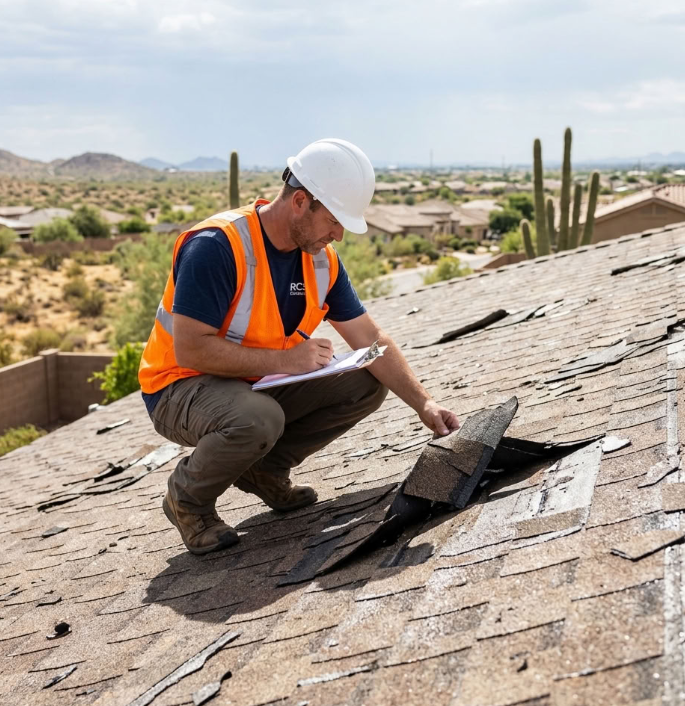
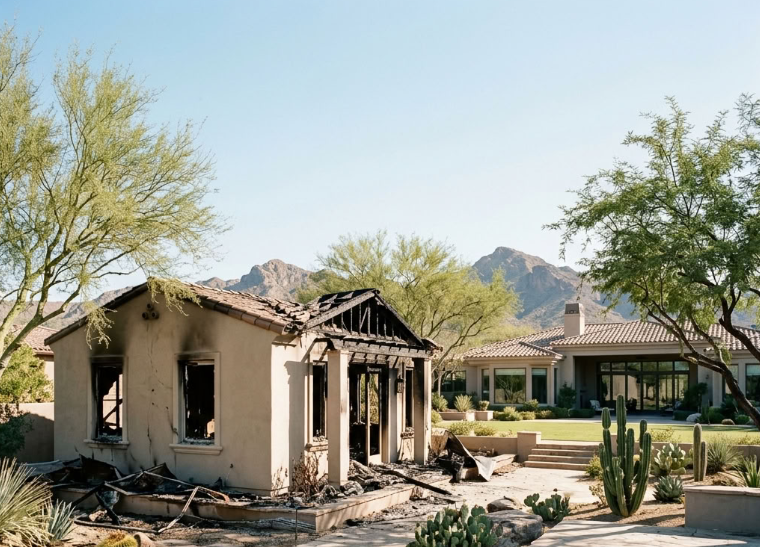
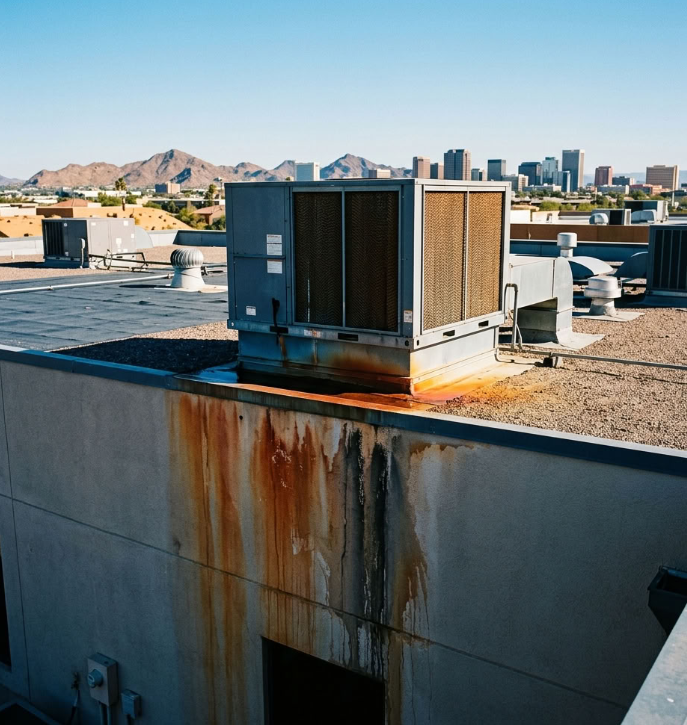
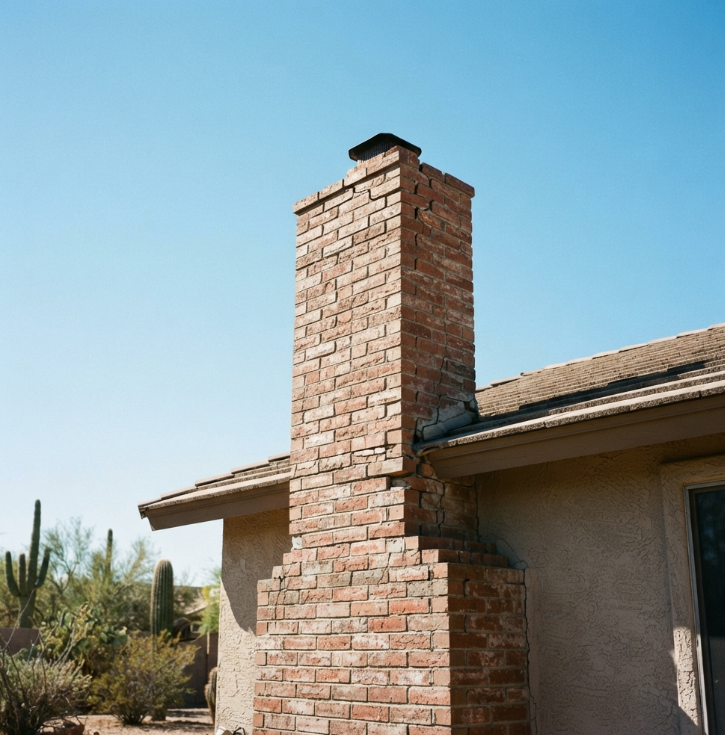
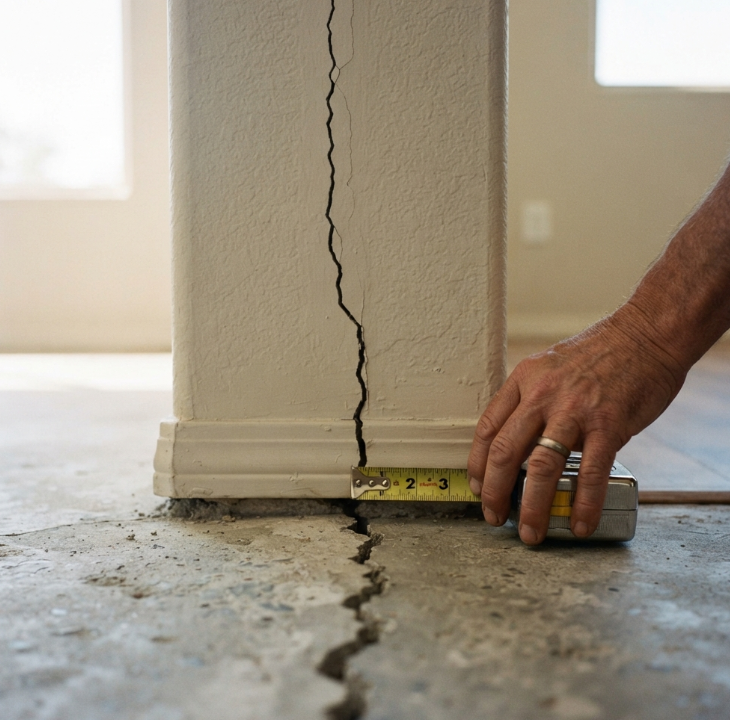
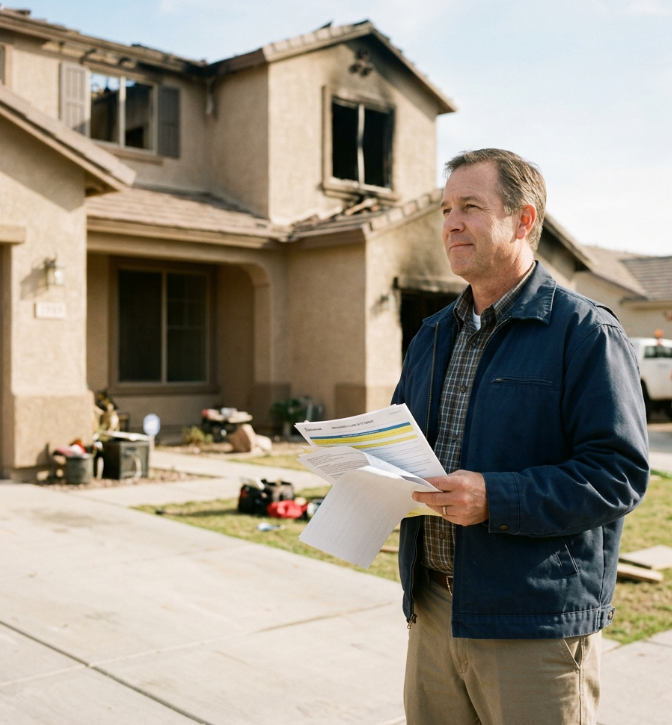
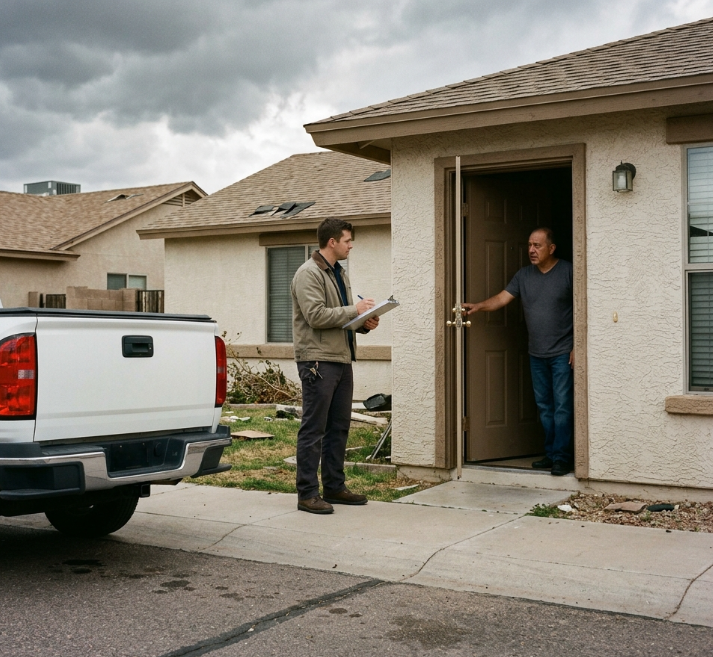
A Phoenix monsoon comes through. Wind lifts tile, hail hits the roof, or a tree limb damages part of the structure. Then you notice a stain spreading across the ceiling.
Now the question becomes:
Will homeowners insurance repair the roof—or replace the entire thing?
The answer depends on what caused the damage, how much of the roofing system was affected, whether the existing materials can be properly repaired, and how your policy settles roof losses.
Storm damage may be covered. An old roof is not automatically a covered roof. And a covered roof claim does not automatically mean full replacement.
For Arizona homeowners, that distinction matters.
What Roof Damage Is Commonly Covered?
Homeowners insurance commonly responds to sudden and accidental damage caused by covered events such as:
- Wind
- Hail
- Falling trees or branches
- Wind-driven debris
- Fire
- Certain storm-related openings that allow water into the home
For example, if high winds lift roofing materials and create an opening that allows rain into the structure, the resulting roof and interior damage may be part of the claim.
The carrier ultimately determines coverage based on the policy and facts of the loss.
The contractor's job is to document what happened and determine what is physically required to repair the property.
What Roof Damage Is Usually Not Covered?
Insurance generally does not replace a roof simply because it is old.
Common issues that may not be covered include:
- Normal wear and tear
- Age-related deterioration
- Long-term leaking
- Neglected maintenance
- Rot or deterioration unrelated to a covered event
- Installation defects
- Prior damage
- Excluded causes of loss
Two roofs can leak during the same monsoon and still have completely different claims.
One may have been damaged by high winds that created a new opening.
Another may have been deteriorating for years and simply started leaking during the rain.
The key question is:
What caused the damage?
Does Insurance Automatically Replace the Entire Roof?
No.
A few damaged tiles or shingles do not automatically mean the entire roofing system must be replaced.
The repair scope depends on several factors:
- How much of the roof was damaged
- Where the damage is located
- The type of roofing system
- Whether the surrounding material can be safely repaired
- Whether compatible replacement material is available
- The condition of the underlayment and other roof components
- Applicable building requirements
- The terms of the insurance policy
Sometimes the correct repair is limited.
Sometimes the damage is widespread enough that a larger section or complete replacement is necessary.
The contractor should determine what is technically required to complete a proper repair.
The carrier then determines what portion of that scope is covered.
Roof Repair vs. Roof Replacement
This is where a qualified contractor's inspection matters.
A roof may be repairable when:
- Damage is isolated
- Matching or compatible materials are available
- Surrounding roofing can be safely manipulated
- The underlayment and roof assembly remain serviceable
- A limited repair can be completed properly
A larger replacement may be necessary when:
- Damage is widespread
- Multiple areas or slopes are affected
- The existing roofing cannot be properly repaired
- Materials are no longer compatible or available
- The underlying roof assembly is also damaged
- The repair would not meet applicable requirements
The goal should not be to force a replacement or minimize a legitimate one.
It should be to establish the correct construction scope.
Does the Age of the Roof Matter?
Yes.
The age of the roof can affect both the condition of the system and how the insurance claim is paid.
Some policies provide
Replacement Cost Value, while others may settle the roof at
Actual Cash Value or under a separate roof-payment schedule.
Replacement Cost Value
Replacement-cost coverage generally pays the covered cost to repair or replace damaged property without permanently deducting depreciation, subject to the policy terms.
The carrier may initially withhold depreciation and release it after the covered work is completed.
Actual Cash Value
Actual-cash-value coverage factors depreciation into the settlement.
That means an older roof may receive a significantly lower payment even when the storm damage itself is covered.
Before assuming how much insurance will pay, ask:
Is my roof covered at replacement cost, actual cash value, or under a separate roof schedule?
What If Matching Roof Tile or Shingles Are Unavailable?
This is common with older Arizona roofing systems.
Tile profiles, colors, manufacturers, and shingle product lines change over time.
If the original roofing material is no longer available, the contractor should determine:
- Whether a compatible material exists
- Whether the replacement can properly integrate with the existing system
- Whether the surrounding roofing can be safely manipulated
- What repair method is technically feasible
A discontinued material does
not automatically mean the entire roof must be replaced.
It does mean the repairability of the roof needs to be evaluated carefully.
We cover this issue in more detail in our guide to
discontinued roof tile and shingles after an insurance claim.
A Roof Claim Can Quickly Become a Reconstruction Claim
This is where many homeowners underestimate the size of the project.
The visible roof damage may only be the beginning.
If water enters the building, the loss may also affect:
- Attic insulation
- Ceiling drywall
- Wall drywall
- Texture and paint
- Flooring
- Baseboards
- Cabinets
- Electrical fixtures
- Framing
- Other interior finishes
At that point, you no longer have just a roofing project.
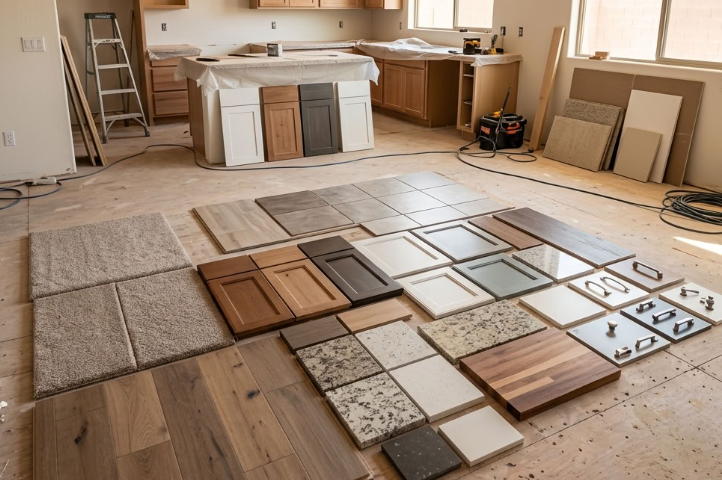
You have a property-damage reconstruction project.
The job does not end when the roof stops leaking. It ends when the affected property is put back together.
That is where working with a licensed general contractor can make a major difference.
A GC can coordinate the roofing portion along with the interior mitigation, repair, and reconstruction needed below it.
Does Insurance Cover Interior Water Damage From a Roof Leak?
It can, depending on the cause.
If a covered storm damages the roof and water enters through the resulting opening, the resulting interior damage may also be part of the claim.
If the leak results from long-term deterioration or an excluded condition, coverage may be different.
The important thing is to document both the roof damage and everything affected inside the property.
Do not assume the claim stops at the roof.
What Should You Do After Storm Damage?
1. Stay Safe
Do not climb onto a wet, damaged, or unstable roof.
2. Document the Damage
Photograph what you can safely see, including:
- Displaced roofing materials
- Fallen branches
- Exterior debris
- Ceiling stains
- Active leaks
- Wet flooring
- Interior damage
3. Protect the Property
Take reasonable temporary steps to prevent additional damage when it is safe to do so.
That may include temporary tarping, water extraction, drying, or moving contents away from the affected area.
4. Notify Your Insurance Carrier
Report the loss and ask about the carrier's inspection process.
5. Avoid Unnecessary Permanent Repairs Before Inspection
Permanent repairs completed too early can make the original damage harder to document.
Emergency stabilization is different.
Protect the property when necessary, but document conditions carefully.
6. Have a Qualified Contractor Inspect the Property
The adjuster evaluates the claim.
The contractor evaluates what is required to repair the building.
Those are two different jobs.
Can You Choose Your Own Contractor?
Generally, yes.
Your carrier may recommend a preferred contractor or network provider, but homeowners are typically able to choose the contractor they want to perform the repairs.
The contractor should be properly licensed for the work being performed.
When the damage involves both the roof and the interior, ask:
- Who is handling the roofing?
- Who is handling the interior damage?
- Who is coordinating the trades?
- Who is documenting the reconstruction scope?
- Who handles additional damage discovered during the work?
- Will I need another contractor after the roof is complete?
If the answer involves several separate companies, make sure someone is clearly responsible for coordinating the entire reconstruction.
Why a General Contractor Matters When the Damage Goes Beyond the Roof
A roofing contractor may be exactly what you need for an isolated roof repair.
But if the loss also affected the interior, the project may involve:
- Roofing
- Water mitigation
- Drywall
- Insulation
- Electrical work
- Flooring
- Painting
- Trim
- Structural repairs
- Multiple inspections and trades
That is where a licensed general contractor becomes valuable.
Instead of treating each damaged component as a separate project, the GC coordinates the affected property as one reconstruction.
For insurance losses, that can also help keep the roof scope and the resulting interior repairs aligned.
How RCS Builders Handles Roof-Related Insurance Losses
RCS Builders is a licensed Arizona general contractor specializing in property-damage restoration and reconstruction throughout Greater Phoenix.
When storm or roof damage affects more than the roofing system, we can coordinate the full repair.
Depending on the loss, that may include:
- Emergency stabilization
- Water mitigation
- Damage documentation
- Roofing coordination
- Insulation replacement
- Drywall and texture
- Interior painting
- Flooring repairs
- Cabinetry and trim
- Structural repairs
- Insurance reconstruction estimating
- Final build-back
RCS can manage the broader restoration project, or we can step in after another qualified roofer or mitigation company has already completed its portion of the work.
We do not have to perform every phase of the loss to handle the reconstruction.
Frequently Asked Questions
Will Insurance Replace My Entire Roof After Hail or Wind Damage?
Not automatically.
The repair scope depends on how much of the roof was damaged, whether the existing roofing can be properly repaired, material availability, the roofing system, and the policy.
Does Insurance Cover an Old Roof?
An older roof can still sustain covered storm damage.
Age may affect how the claim is settled, particularly under actual-cash-value coverage or a roof-specific payment schedule.
Normal deterioration itself is generally not covered.
Does Insurance Cover Roof Leaks?
It depends on what caused the leak.
A sudden leak caused by covered storm damage may be covered.
A leak caused by long-term deterioration or neglected maintenance may not be.
What Is Recoverable Depreciation?
Recoverable depreciation is part of a replacement-cost settlement that may initially be withheld and later released after covered repairs are completed and policy requirements are satisfied.
Not every roof policy provides recoverable depreciation.
Can RCS Handle the Interior Repairs if Another Roofer Handles the Roof?
Yes.
RCS can step in for the water-damage reconstruction and interior repairs even when another qualified roofing contractor performs the roof repair or replacement.
Can RCS Coordinate the Whole Loss?
Yes.
When appropriate, RCS can coordinate the roof-related work along with mitigation and interior reconstruction under one GC-managed restoration project.
The Bottom Line
Homeowners insurance may cover roof repair or replacement when the damage results from a covered sudden event such as wind, hail, or a falling object.
But a storm does not automatically mean a full roof replacement.
The important questions are:
- What caused the damage?
- How much of the roof was affected?
- Can it be properly repaired?
- How does your policy settle roof losses?
- Did water damage anything inside the home?
- Who is responsible for completing the entire property repair?
That last question is where RCS Builders can help.
When storm damage affects both the roof and the interior, the project does not end when the leak stops. It ends when the property is rebuilt.
For roof-related insurance restoration and reconstruction throughout Greater Phoenix, call
RCS Builders at
480-204-9035.
Related Services
Insurance coverage, deductibles, depreciation, exclusions, and claim settlements depend on the individual policy and facts of the loss. RCS Builders provides construction assessment, restoration, and reconstruction services and does not determine coverage or provide public-adjusting services.