Can You Upgrade Your Home During an Insurance Rebuild?
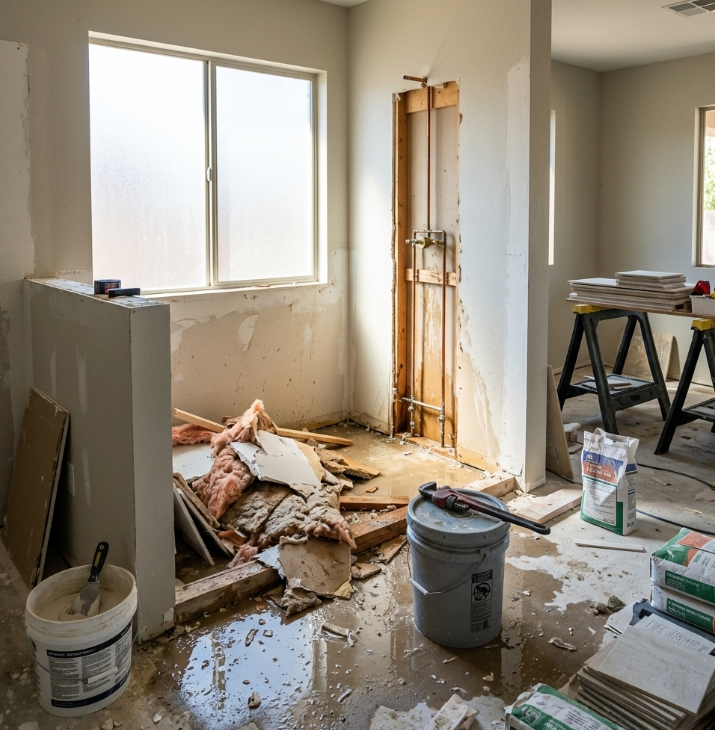
Your bathroom, kitchen, or living area is already being rebuilt after water, fire, storm, or another covered loss.
Drywall is open. Flooring has been removed. Cabinets may need to come out. Materials have to be selected anyway.
That naturally leads to a question:
If the room is already being reconstructed, can you upgrade it instead of putting everything back exactly the way it was?
In many cases, yes.
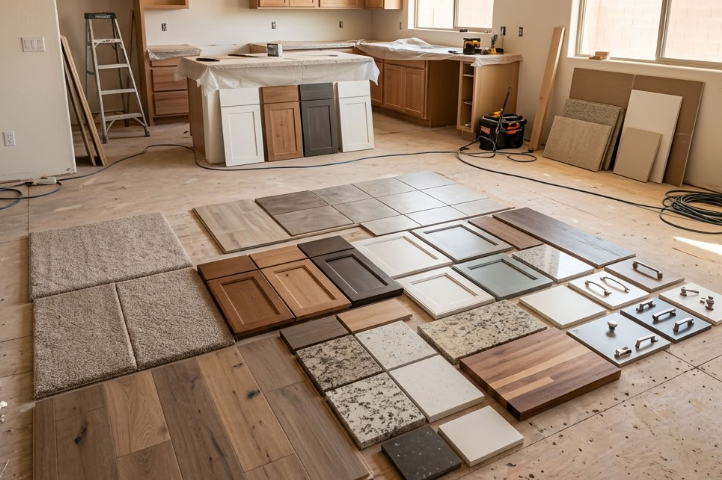
You may be able to choose better flooring, upgraded countertops, different cabinetry, a custom shower door, taller baseboards, new fixtures, or even a modified layout.
The important part is understanding who pays for what.
Insurance pays according to the covered repair scope. You pay for elective improvements beyond that scope.
Under replacement-cost coverage, the carrier generally evaluates the covered repair using materials of similar kind and quality, subject to the policy’s terms, limits, deductible, exclusions, and claim conditions. If you select a higher-grade material, add something that did not exist before, or redesign the space, the additional cost is generally your responsibility.
A qualified reconstruction contractor can coordinate both sides of the project while keeping the insurance-funded repairs and owner-paid improvements clearly separated.
What Does Insurance Normally Pay For?
The answer depends on your policy and the covered loss, but the starting point is typically the cost to repair or replace the damaged property.
With replacement-cost coverage, that generally means using materials of similar kind and quality without deducting for depreciation, although the policy may place conditions on when and how replacement-cost benefits are paid. Actual-cash-value coverage is different because depreciation is factored into the settlement.
For example, if water damage ruins a standard laminate countertop, the covered scope may be based on replacing it with a comparable laminate product.
You can still choose quartz.
The carrier, however, does not automatically become responsible for the full quartz installation simply because you prefer it. The covered laminate replacement establishes the insurance side of the project. The additional installed cost associated with the quartz becomes an owner-paid upgrade.
The same concept can apply to:
- Carpet upgraded to luxury vinyl plank
- Laminate countertops upgraded to quartz or granite
- Standard cabinets upgraded to semi-custom cabinetry
- A basic vanity upgraded to a larger or higher-end vanity
- A shower curtain rod replaced with a custom frameless glass door
- Standard plumbing fixtures replaced with premium fixtures
- Basic baseboards replaced with taller decorative trim
- A standard tub surround upgraded to tile
- Existing lighting replaced with decorative fixtures
- Builder-grade finishes replaced with higher-end selections
The exact calculation depends on the approved scope, selected product, installation requirements, and policy terms.
The Upgrade Difference Is More Than the Material Price
One of the most common misunderstandings is that the homeowner only pays the difference between two products on a store shelf.
That is not always how construction pricing works.
The real comparison is usually between
two complete installed scopes.
Suppose the covered repair calls for carpet, but you choose luxury vinyl plank. The difference may involve more than the cost per square foot.
The LVP installation may also require:
- Additional floor preparation
- Moisture testing or mitigation
- Removal of existing tack strip
- Different transitions
- Baseboard or quarter-round work
- Underlayment
- Stair components
- Material freight
- Additional labor
- Changes where the new floor meets tile or other finishes
The upgrade difference should account for the complete cost of delivering the upgraded result—not just the difference between two material prices.
The same applies when changing from a curtain rod to custom shower glass. The new scope may require final field measurements, fabrication, specialty hardware, installation, and coordination with the completed tile opening.
A good general contractor prices the actual construction difference before the homeowner commits.
A Realistic Bathroom Example
Imagine that water damage requires a bathroom to be reconstructed.
The covered insurance scope includes:
- Drywall repair
- Texture and paint
- Flooring replacement
- Baseboard replacement
- Restoration of the affected shower area
- Reinstallation or replacement of the original basic shower setup
During reconstruction, the homeowner decides to replace the existing curtain rod with a custom frameless shower enclosure.
The custom glass is not required to restore the original setup. It is an elective improvement.
The project should therefore show:
- The covered bathroom reconstruction
- Any approved supplemental work
- The owner-paid custom shower door as a separate change order or clearly separated invoice item
The contractor can coordinate the complete bathroom and install the upgraded door without representing the door as covered insurance work.
That is the right way to combine insurance reconstruction and an owner-funded improvement.
Can You Use the Insurance Amount as a Credit Toward an Upgrade?
Sometimes this is described as “using the insurance allowance” toward a better product, but that language can be misleading.
A better way to understand it is:
The covered repair establishes the baseline. You are responsible for the additional installed cost of the upgrade.
For example:
- Comparable covered flooring scope: $8,000
- Selected upgraded flooring scope: $11,000
- Simplified upgrade difference: $3,000
That example does not necessarily mean the homeowner’s total out-of-pocket cost is only $3,000.
The homeowner may also be responsible for:
- The policy deductible
- Depreciation that is not recoverable
- Work excluded by the policy
- Costs above policy limits
- Additional owner-selected changes
- Items not approved as part of the covered scope
The carrier’s estimate also should not be treated like a gift card that can automatically be moved from one unrelated item to another.
Insurance reimbursement is based on the policy, covered damage, completed repair, supporting documentation, and the actual way the claim is settled. The contractor should clearly document the covered work and the elective upgrade instead of manipulating one scope to fund the other.
Upgrade, Supplement, or Code Requirement?
These three terms are frequently confused, but they mean very different things.
An Upgrade Is an Elective Improvement
An upgrade is something the owner chooses because it is better, different, or more desirable than the covered replacement.
Examples include:
- Premium flooring
- Higher-grade countertops
- Custom shower glass
- Decorative fixtures
- Upgraded cabinets
- Added storage
- A different finish package
The owner generally pays the added cost.
A Supplement Addresses Additional Covered Work
A supplement is used when the reconstruction requires covered work that was not included—or was not fully included—in the original insurance estimate.
Examples may include:
- Additional damaged drywall discovered after demolition
- Missing cabinet components
- Required flooring preparation
- Additional paint surfaces
- Concealed framing damage
- A repair operation necessary to complete another covered item
- Updated material pricing or labor requirements
A supplement is not a way to make the carrier pay for an owner-selected upgrade. It is documentation supporting additional covered repair work.
A Code Upgrade Is Required, Not Elective
A code-related item becomes necessary when current building requirements apply to the permitted repair.
That does not automatically mean the carrier will pay for it.
Arizona DIFI identifies increased costs caused by changes in building ordinances as a separate type of coverage. Whether a code-required item is covered depends on the policy and any applicable ordinance-or-law limits.
Examples could include required updates to:
- Electrical systems
- Plumbing components
- Insulation
- Safety glazing
- Smoke or carbon-monoxide alarms
- Structural connections
- Energy-code requirements
The contractor documents what the jurisdiction requires. The carrier determines whether the policy covers that increased cost.
Can You Change the Layout During an Insurance Rebuild?
Yes, but a layout change is more involved than selecting a better finish.
Changing cabinet color is one decision.
Moving the entire cabinet layout is another.
Relocating any of the following may affect design, cost, permitting, and schedule:
- Plumbing fixtures
- Electrical outlets
- Lighting
- Appliances
- Walls
- Doors
- Showers or tubs
- Cabinets
- Mechanical components
The insurance scope may still contribute the covered cost of restoring what existed before the loss. The owner would generally be responsible for the added design and construction costs created by the new layout.
For example, insurance may cover rebuilding the original bathroom configuration. If the homeowner wants to remove the tub, build a larger walk-in shower, relocate the plumbing, add a niche, and install frameless glass, the contractor should separate the original covered reconstruction from the owner-paid redesign.
This is where a licensed general contractor becomes especially important. The project now involves more than material selection. It may require revised plans, specialty trades, permits, inspections, fabrication, and a new construction sequence.
Will Upgrades Delay the Rebuild?
They can.
Standard like-kind materials may be available quickly. Custom or premium selections may require longer lead times.
Potential schedule impacts include:
- Custom cabinet manufacturing
- Countertop templating and fabrication
- Special-order flooring
- Imported or specialty tile
- Custom shower-glass measurements and fabrication
- Revised plumbing or electrical work
- Permit revisions
- Material reselection when products are unavailable
- Added inspections
- Owner selection delays
An elective upgrade may be worth the added time, but that decision should be made knowingly.
Do not assume the insurance carrier will extend Additional Living Expense or other time-sensitive benefits because an owner-selected product delayed construction. ALE is policy-based coverage for necessary increased living expenses after an insured event, so any effect from elective project changes should be discussed with the adjuster before the upgrade is finalized.
When Should Upgrade Decisions Be Made?
As early as possible.
Ideally, upgrade decisions should be discussed while the reconstruction scope and schedule are being developed—not after the original materials have already been ordered.
Before the Contract Is Finalized
Tell the contractor which areas you may want to improve.
This allows the team to identify what belongs to the covered rebuild and what needs separate pricing.
Before Rough-In Work
Any change involving plumbing, electrical, framing, lighting, or layout should be resolved before walls are closed.
Before Materials Are Ordered
Flooring, cabinetry, tile, countertops, fixtures, and trim should be selected before procurement whenever possible.
Before Custom Fabrication
Cabinets, countertops, and shower glass often depend on exact final dimensions. Late design changes may require remeasurement, reordered materials, or added fabrication costs.
Before the Work Is Performed
Every owner-paid change should be documented and approved before the contractor proceeds.
Arizona DIFI recommends using a written contract that identifies the scope, materials, timeline, and total cost before work begins. That same clarity should apply to reconstruction change orders and owner-paid upgrades.
How Owner-Paid Upgrades Should Be Documented
A clean reconstruction file should make it easy to understand what belongs to the claim and what belongs to the homeowner.
Depending on the project, documentation may include:
- The carrier’s current estimate
- The contractor’s reconstruction estimate
- Approved supplements
- Material-selection records
- Written owner change orders
- Upgrade pricing
- Applicable permits
- Progress invoices
- Final insurance-related invoicing
- Separate owner-paid invoice items
- Completion photographs and supporting records
The paperwork does not have to become unnecessarily complicated.
It simply needs to answer three questions:
- What work is part of the covered reconstruction?
- What additional covered work was documented during the project?
- What did the owner voluntarily add or upgrade?
When those answers are clear, the homeowner, contractor, and carrier are less likely to disagree about the final numbers.
How Upgrades Can Affect Recoverable Depreciation
With some replacement-cost policies, part of the approved replacement amount may initially be withheld as recoverable depreciation.
The timing and requirements for releasing that amount depend on the policy and carrier, but completion documentation and actual repair costs can matter. Replacement-cost and actual-cash-value settlements work differently, and the deductible remains the policyholder’s responsibility.
An owner-paid upgrade should therefore be separated from the covered replacement work.
For example, if the carrier approved a comparable countertop replacement and the owner selected quartz, the final documentation should make clear:
- That the covered countertop replacement was completed
- What portion represents the covered baseline
- What additional amount represents the owner-selected upgrade
The contractor should not submit the entire upgraded amount as though the policy covered all of it.
Accurate documentation protects the integrity of the claim and gives the carrier the information needed to evaluate any remaining payment.
For a deeper explanation, read
How Insurance Depreciation Works After Property Damage.
Do You Have to Use the Same Contractor for Mitigation and Upgrades?
No.
The company that extracted the water, dried the structure, completed remediation, or removed damaged materials does not have to be the company that performs the reconstruction.
A licensed general contractor can step in after mitigation and manage:
- The covered build-back
- Reconstruction estimating
- Missing-scope documentation
- Material selections
- Owner-paid upgrades
- Permit coordination
- Specialty trades
- Final construction and closeout
The important part is giving the reconstruction contractor access to the mitigation records, photographs, measurements, estimates, and current property conditions.
RCS Builders can handle mitigation and reconstruction together, but we can also take over strictly for the rebuild after another qualified mitigation company has completed its work.
Learn more about our
Insurance Build-Back and Put-Back Services.
Why a General Contractor Matters When You Combine Insurance Repairs and Upgrades
A simple material substitution may seem straightforward.
But once a project includes covered repairs, supplements, owner upgrades, permits, multiple trades, fabrication, and schedule changes, someone has to coordinate the entire construction plan.
That is the general contractor’s role.
Arizona requires businesses performing or offering to perform most construction work to hold the appropriate contractor license. The Registrar of Contractors also treats activities such as supervising a project, scheduling specialty trades, and selecting or purchasing construction materials as contracting activity. Generally, work exceeding $1,000 in labor and materials—or work requiring a permit—requires a licensed contractor.
A reconstruction GC should be able to:
- Establish the covered repair baseline
- Review the existing estimate and property conditions
- Identify missing reconstruction work
- Price upgrades as complete installed scopes
- Coordinate licensed specialty contractors
- Manage permits and inspections
- Integrate owner improvements into the schedule
- Document changes before proceeding
- Keep covered work and elective work financially separate
- Carry the project through the final walkthrough
The goal is not to force the owner to rebuild every detail exactly as it was.
The goal is to give the owner choices without creating confusion about coverage, pricing, responsibility, or project completion.
How RCS Builders Handles Insurance Rebuild Upgrades
RCS Builders is a licensed Arizona general contractor and an IICRC-certified restoration firm serving residential and commercial properties throughout Greater Phoenix.
We can become involved during an active property loss, or we can step in after another company has completed mitigation and handle the reconstruction from that point forward.
When a client wants to make improvements during the rebuild, our process is straightforward:
1. We Establish the Reconstruction Scope
We review the current property conditions, mitigation documentation, carrier estimate, and work required to put the damaged area back together.
2. We Separate Covered Repairs From Improvements
We identify what belongs to the insurance reconstruction and what represents an owner-selected change.
3. We Price the Complete Upgrade Difference
We account for the full installed scope—not only the visible material difference.
4. We Document the Change
The homeowner receives clear written pricing before the upgraded work proceeds.
5. We Coordinate Everything as One Construction Project
The financial scopes remain separate, but the trades, materials, permits, fabrication, and schedule are managed together.
6. We Keep the Final Billing Clear
Covered reconstruction, supplements, and owner-paid improvements are identified so the project does not end with confusion over who was responsible for what.
You do not have to hire RCS for every phase of the loss.
We can manage the complete restoration when needed, or we can enter the project after mitigation and handle the rebuild—including owner-selected upgrades—from there.
Frequently Asked Questions:
Can I Upgrade My Flooring During an Insurance Rebuild?
Generally, yes.
The carrier may base the covered repair on flooring comparable to what was damaged. If you select a higher-grade or different flooring system, you would generally pay the additional installed cost.
The difference may include floor preparation, transitions, underlayment, trim, and labor—not just the material price.
Can I Upgrade My Cabinets or Countertops?
Yes.
The covered scope may provide for cabinetry and countertops comparable to the pre-loss materials. You can select upgraded products, but the added cost, design changes, extended cabinetry, or upgraded fabrication would generally be owner-paid.
Can I Add a Frameless Shower Door During the Rebuild?
Yes.
If the property previously had a curtain rod or a more basic enclosure, a custom frameless door can be added as a separately priced owner improvement.
The contractor should coordinate the glass measurements and installation with the completed tile and shower opening.
Can I Remodel Areas That Were Not Damaged?
Yes, but unrelated remodeling is generally not part of the insurance claim.
It should be priced as separate owner-funded work, even when it is performed at the same time as the covered reconstruction.
Is an Upgrade the Same as a Supplement?
No.
A supplement addresses additional covered repair work that was missing, underpriced, or discovered after the original estimate.
An upgrade is an elective improvement selected by the owner.
A contractor should never represent an owner-selected upgrade as covered supplemental work.
Can I Change the Layout?
Usually, yes, provided the proposed changes are feasible and comply with applicable codes.
Layout changes may require additional design, permits, plumbing, electrical work, framing, materials, and labor.
Those added costs are generally owner-paid unless a specific part is independently included in the covered repair.
Do I Have to Choose the Exact Same Color or Product?
Not necessarily.
Replacement-cost coverage generally focuses on similar kind and quality, but actual availability, matching requirements, carrier scope, and policy language all matter.
The contractor should document the original material and proposed replacement before ordering.
Will Insurance Pay for the Entire Upgrade?
Generally, no.
The carrier remains responsible only for what is covered under the policy and approved repair scope. The owner is typically responsible for the additional cost of the elective improvement.
Can RCS Handle the Rebuild if Another Company Did the Mitigation?
Yes.
RCS can review the existing mitigation documentation, inspect the property, develop the reconstruction scope, coordinate owner-selected improvements, and manage the project through the final walkthrough.
The Bottom Line
An insurance loss may have created the need to rebuild, but that does not mean you have to ignore every opportunity to improve the finished space.
You may be able to upgrade materials, add features, or make thoughtful layout changes while the property is already under construction.
The project simply needs to be structured correctly.
Insurance restores the covered damage. Owner-paid improvements make the finished space better. A qualified general contractor keeps those scopes separate financially while coordinating them as one construction project.
RCS Builders can manage your property recovery from mitigation through reconstruction, or we can step in after another mitigation company finishes and handle the complete rebuild from that point forward.
We will give you a clear answer about:
- What belongs to the covered reconstruction
- What may need to be documented as a supplement
- What represents an owner-paid upgrade
- How the change affects pricing and schedule
- Whether the improvement makes sense while the space is already open
For insurance reconstruction and owner-paid upgrades throughout Greater Phoenix, call RCS Builders at 480-204-9035.
Related Resources
- Insurance Build-Back and Put-Back Services
- Reconstruction and Rebuild Services
- What Pre-Loss Condition Means in an Insurance Claim
- How Insurance Depreciation Works After Property Damage
- General Contractor, Handyman, or Mitigation Company: Who Do You Need?
Coverage, claim payments, depreciation, code-upgrade coverage, and reimbursement requirements depend on the specific policy and loss. This article provides general educational information and is not legal, insurance, or public-adjusting advice.