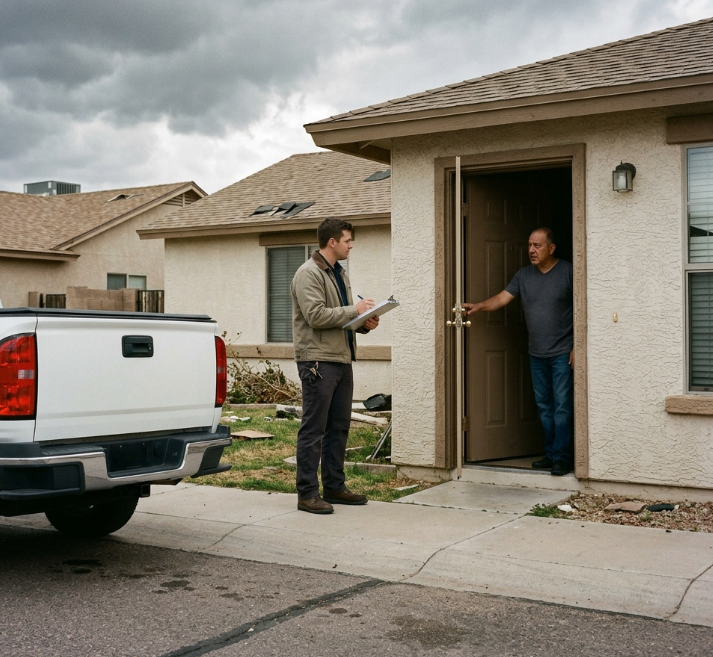
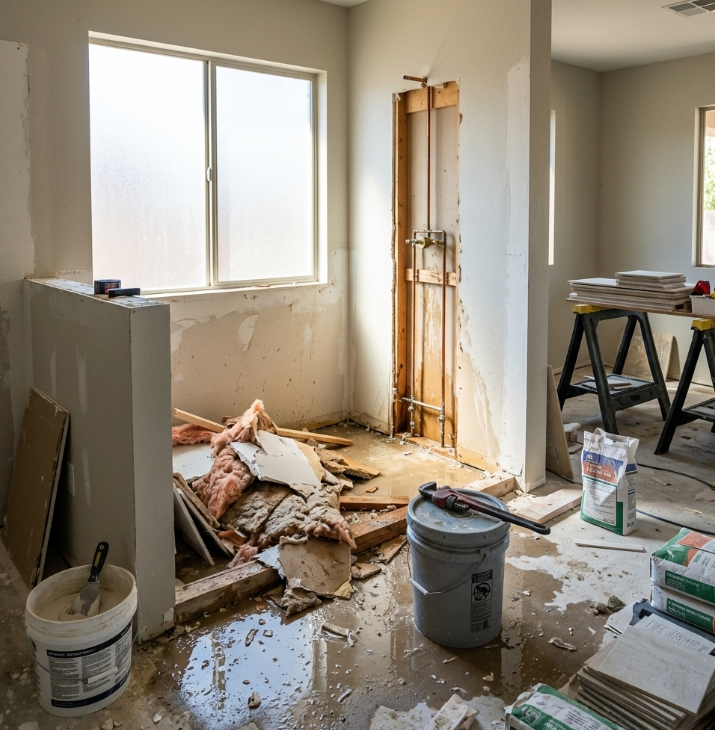
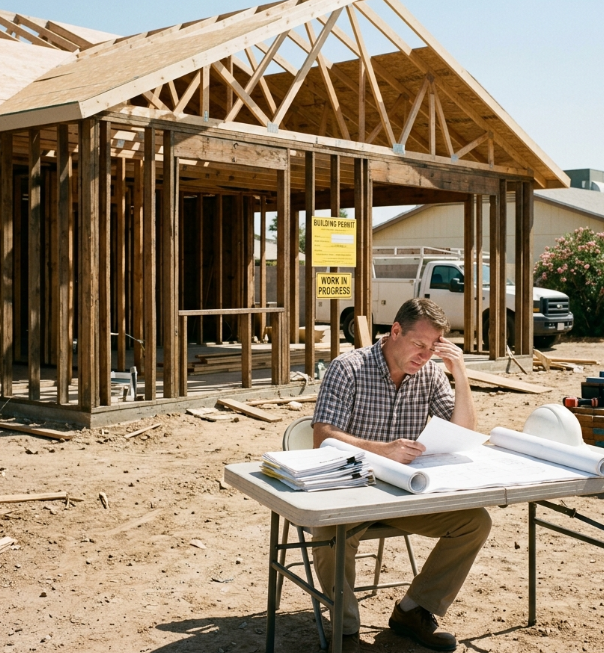
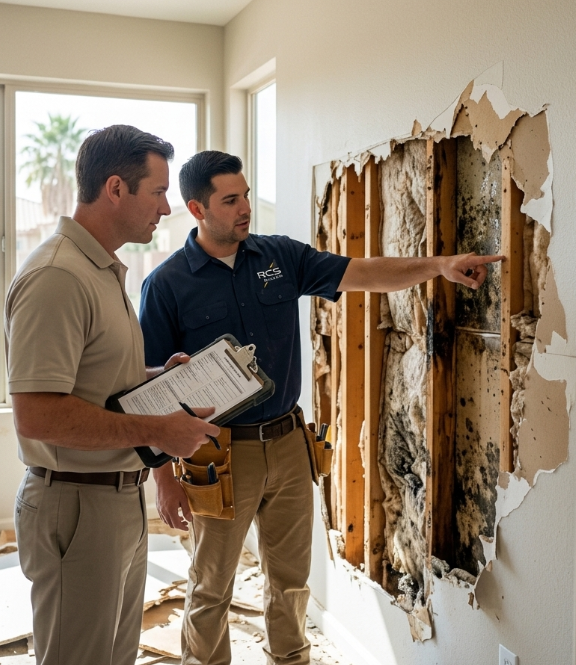
After a loss, you're making a high-stakes hiring decision under pressure. Your property is damaged, you're stressed, the clock is running, and someone needs to start work fast. That combination — urgency plus vulnerability — is exactly the environment where the wrong contractor gets hired.
And in restoration specifically, the wrong contractor is expensive. Poor work that has to be redone. Inadequate documentation that sinks your insurance claim. A company that takes a deposit and disappears. An unlicensed operator whose work fails inspection or voids your coverage. The stakes are high and the pressure is real, which is exactly why knowing how to vet a contractor properly — quickly — matters so much.
Here's how to do it right, even when you're moving fast.
This applies to any restoration contractor regardless of what caused the loss — water, fire, storm, mold, or structural. The vetting standard is the same whether you're hiring for a flooded kitchen or a fire rebuild.
Start With the License — And Actually Verify It
In Arizona, most restoration and reconstruction work requires a contractor licensed by the Arizona Registrar of Contractors, the ROC. This isn't a formality — it's the baseline that separates legitimate contractors from operators you shouldn't let near your property.
Verify the license yourself. Don't take a contractor's word that they're licensed, and don't just look for a license number on their truck or website. Go to the Arizona ROC website — azroc.gov — and look up the contractor directly. The ROC maintains a searchable database where you can confirm a license is active, in good standing, and appropriate for the type of work.
Check what the license actually covers. ROC licenses are classified by type of work. Confirm the contractor holds the right classification for your job — general contracting for reconstruction, the appropriate classifications for the specific trades involved. A license for one type of work doesn't authorize another.
Check the license status and history. An active license in good standing is what you want. The ROC record also shows complaint history and any disciplinary actions. A pattern of complaints or disciplinary issues is a warning worth taking seriously.
Understand why this matters beyond legality. Unlicensed work can fail inspection, complicate or void your insurance coverage, create liability problems, and leave you with no recourse through the ROC if something goes wrong. The ROC provides a recovery fund and complaint process for work by licensed contractors — protections you forfeit entirely by hiring an unlicensed operator.
Confirm Insurance — Both Kinds
A legitimate restoration contractor carries insurance that protects you, and you should confirm it exists before work begins.
General liability insurance. This covers damage the contractor might cause to your property during the work. Ask for proof — a certificate of insurance — and confirm it's current. A contractor without adequate liability coverage means damage they cause could become your problem.
Workers' compensation insurance. This is the one property owners overlook, and it matters enormously. If a worker is injured on your property and the contractor doesn't carry workers' comp, you could potentially be exposed to liability for that injury. Confirm the contractor carries workers' compensation coverage for their crew.
Ask for certificates, not assurances. A legitimate contractor provides certificates of insurance without hesitation. One who's evasive about proof of insurance is telling you something.
The Restoration-Specific Credentials
Beyond the license and insurance that any contractor should have, restoration work has its own relevant credentials.
IICRC certification. The Institute of Inspection Cleaning and Restoration Certification sets the industry standards for restoration work. A contractor with IICRC-certified technicians is trained to those standards. Ask which certifications their technicians hold and whether they're current — and remember that a company claiming to be "certified" should be able to tell you specifically who on your job holds what credential.
Xactimate capability. If your loss involves an insurance claim, the contractor should write estimates in Xactimate — the platform most carriers use. A contractor who can't produce a proper Xactimate estimate creates friction with your claim.
Insurance claim experience. Restoration and insurance claims are intertwined. A contractor experienced specifically in insurance restoration understands documentation, adjuster coordination, supplements, and the claim process. One who only does cash retail work may not know how to support your claim.
The Questions That Actually Tell You Something
Beyond credentials, the right questions reveal whether a contractor operates at the level your property deserves.
Do you handle the full scope in-house, or do you subcontract and hand off? A contractor who takes the job from emergency mitigation through final reconstruction under one roof gives you continuity and accountability. One who hands off between phases creates the gaps where documentation breaks and problems fall through the cracks.
How do you document the job? The answer should be specific — moisture readings, photo documentation, affected-area logs, drying records. A contractor who documents thoroughly is protecting both the quality of the work and your insurance claim. A vague answer here is a red flag.
How do you handle supplements? On an insurance job, this question separates contractors who pursue your full claim from those who build to the initial approval and leave money on the table. A strong contractor documents and submits supplements as standard practice.
Can you provide references from similar jobs? A contractor with a track record can point to past work and satisfied clients. Recent references for similar types of losses tell you they've done this before.
What's your timeline, and what could change it? A straight answer about realistic timelines — including the factors that could extend them, like permitting or material availability — indicates a contractor who understands the work. Unrealistic promises are a warning.
Are you local, and how long have you worked in this market? A contractor rooted in Greater Phoenix knows the local conditions, the municipal requirements, the carriers, and the specific damage patterns of this market. This matters especially after major storm events, when out-of-area operators flood in.
The Red Flags That Should Stop You
Certain signs should give you serious pause regardless of how urgent your situation feels.
Pressure to sign immediately or pay large sums upfront. Legitimate contractors don't demand full payment before work or pressure you into signing under duress. A demand for a large upfront payment — especially in cash — is one of the most common signs of a scam, particularly after storm events.
No verifiable license or evasiveness about credentials. If you can't verify their ROC license, or they're cagey about providing proof of license and insurance, walk away.
No physical address or local presence. A contractor with no verifiable local business presence — especially one who showed up unsolicited after a storm — is a risk. Storm chasers who follow major weather events into a market, do fast work, and disappear are a real phenomenon.
Unsolicited door-to-door solicitation after a storm. Reputable contractors generally aren't going door to door drumming up work after a monsoon. This is a classic storm-chaser pattern.
Prices dramatically lower than others. A bid far below everyone else's usually means corners will be cut, scope is missing, or the low number is bait that grows through change orders later. Restoration done right has real costs.
Reluctance to work with your insurance or put things in writing. A contractor who won't document the scope, won't provide a written estimate, or is evasive about the insurance process is one to avoid.
Why Moving Fast and Vetting Well Aren't in Conflict
The tension property owners feel is that vetting takes time and the loss is urgent. But the two aren't actually in conflict, because the vetting that matters most is fast.
Verifying an ROC license takes a few minutes on the ROC website. Confirming insurance is a matter of asking for a certificate. The key questions can be asked in a single conversation. You can do the essential vetting in the same timeframe it takes to have an initial phone call and inspection — you don't have to choose between speed and diligence.
And the mitigation itself can begin while final decisions are made. A legitimate contractor can start emergency stabilization — stopping the damage from getting worse — while you complete your vetting for the full restoration. Protecting the property and choosing your contractor carefully aren't mutually exclusive.
The Bottom Line
The pressure of a loss is exactly what makes property owners vulnerable to hiring the wrong contractor — and in restoration, the wrong contractor is costly in ways that compound. But the essential vetting is fast: verify the ROC license yourself, confirm both types of insurance, check the restoration-specific credentials, ask the questions that reveal how they operate, and watch for the red flags that should stop you.
A contractor who's licensed, insured, credentialed, experienced with insurance claims, locally rooted, and transparent about how they work is one you can hand your property to with confidence. One who's evasive about any of that is telling you what you need to know.
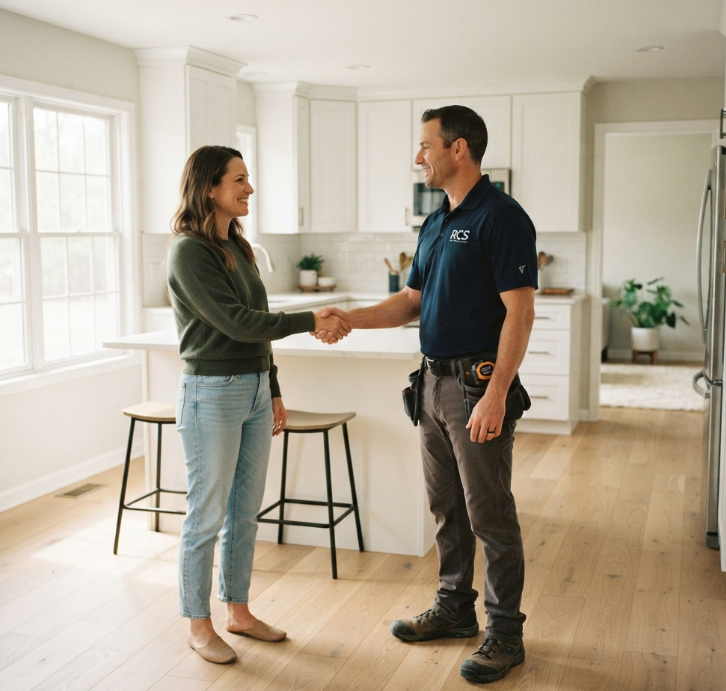
RCS Builders is a licensed Arizona general contractor, IICRC certified, fully insured, Xactimate-fluent, and rooted in Greater Phoenix. We handle the full scope in-house, document every job thoroughly, and operate transparently because we know the trust you're placing in a restoration contractor after a loss is significant.
Verify us — look up our
ROC license, ask us the hard questions, check our references. If you want to talk through your situation,
call us at 480-204-9035.
Related: