Most property owners understand that restoration work sometimes requires permits. What they don't expect is the call from their contractor explaining that the job also requires architectural drawings, structural engineering, and a full plan review with the city before a single board goes back up.
That call comes more often than people expect — and it almost always comes after the kind of loss that's already stressful enough without adding a municipal approval process on top of it.
Here's when plans and permits move beyond standard restoration territory, what the full process looks like across Greater Phoenix, and why it matters who's managing it.
The Difference Between a Restoration Permit and a Plan Review
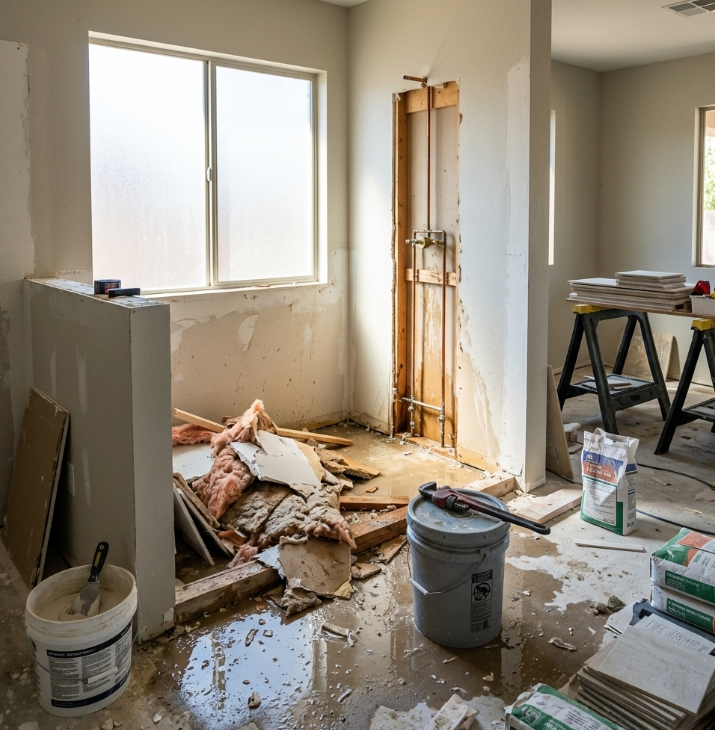
Most restoration work that requires permits gets handled with an over-the-counter permit — a straightforward application that a licensed contractor submits to the building department, often approved same-day or within a few days, covering defined scope like drywall replacement, electrical work within existing systems, or plumbing repairs.
Plan review is a different process entirely. It's required when the scope of work is complex enough that a building official needs to review engineered drawings before approving the work — because what's being built or rebuilt has structural, fire-life-safety, or code compliance implications that can't be evaluated from a permit application alone.
In a property damage context, plan review typically gets triggered when:
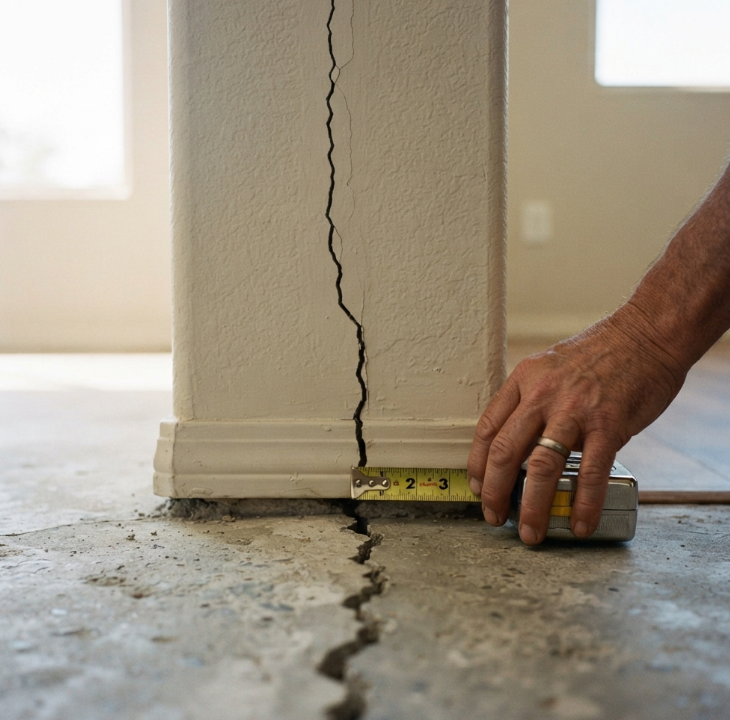
The damage is structural — load-bearing walls, roof framing, foundation elements, or primary structural systems were compromised and the rebuild requires engineering to confirm the replacement meets current code. A fire that burns through roof framing, a vehicle impact that takes out a load-bearing wall, a storm that collapses a significant roof section — all of these move into plan review territory.
The scope of rebuild is large enough that the city requires full documentation. Different municipalities set different thresholds, but significant square footage of structural reconstruction almost always requires submitted drawings.
The use or occupancy of a building is changing as part of the rebuild — less common in pure restoration but relevant when a property owner uses a damage event as an opportunity to reconfigure a commercial space.
Code upgrades triggered by the extent of damage require engineered solutions — fire suppression systems, structural reinforcement, accessibility compliance — that have to be drawn and reviewed before they can be approved.
What Triggers Plan Review After Specific Loss Events
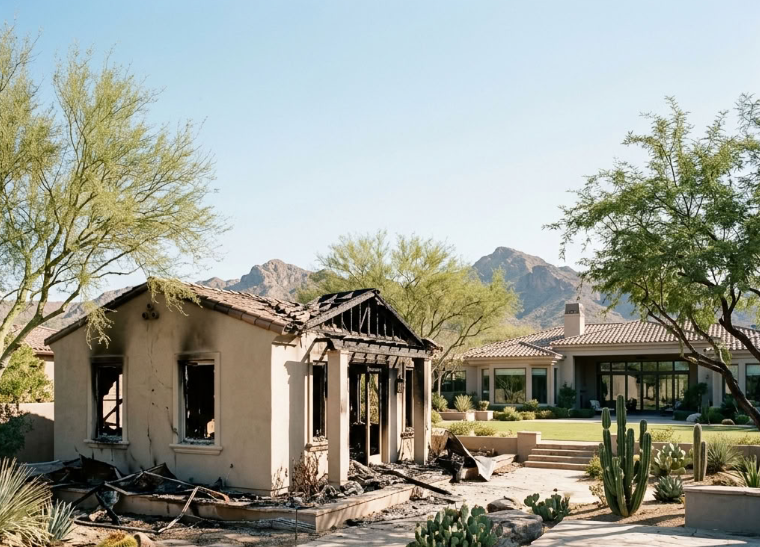
Fire damage. Fire is the most common trigger for full plan review in restoration work across Greater Phoenix. A significant fire doesn't just damage surfaces — it compromises structural members, destroys insulation and fire-rated assemblies, and often requires rebuilding portions of a structure from the framing out. When that framing is structural, when fire-rated assemblies have to be reconstructed, or when the extent of the rebuild crosses municipal thresholds, plan review is required before reconstruction begins.
Commercial fire losses almost always require plan review. Residential fires that involve structural framing, roof systems, or significant portions of exterior walls typically do as well.
Vehicle impact. A vehicle into a building — whether a residence, a retail storefront, a warehouse, or any other structure — commonly compromises structural elements at the point of impact. A car through a garage wall that takes out a header. A truck into a commercial storefront that damages the structural steel. These aren't patch repairs — they're structural replacements that require engineering and plan review to confirm the rebuilt assembly meets current code.
Storm structural damage. Monsoon events in the Valley occasionally produce wind damage severe enough to compromise roof framing, collapse carport or patio cover structures, or damage exterior walls at attachment points. When the damage is structural rather than just surface-level, the rebuild moves into plan review territory.
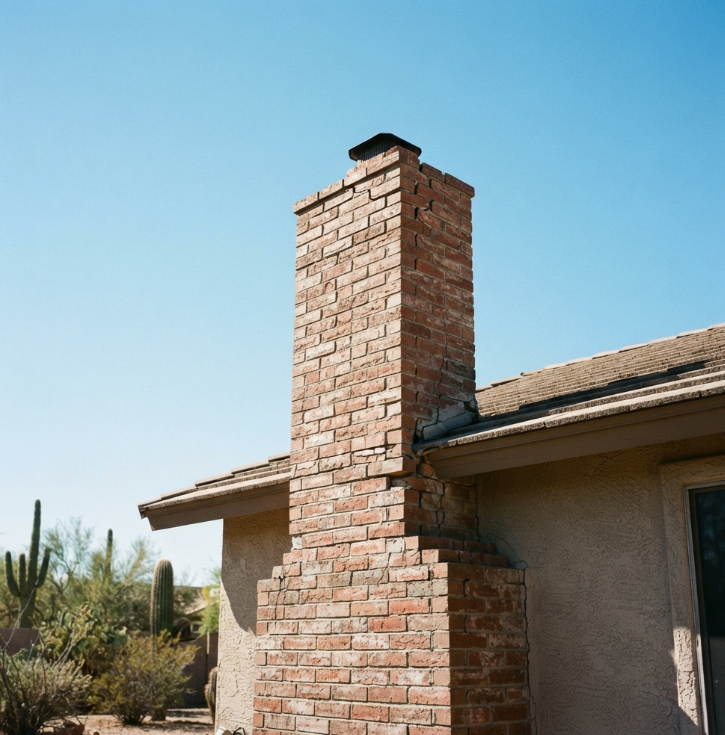
Partial structural collapse. Whether caused by a damage event, deferred maintenance that reached a failure point, or a combination — any partial structural collapse that requires rebuilding primary structural elements will require engineering and plan review.
What the Plans and Permits Process Actually Looks Like
Once it's established that plan review is required, here's what the process involves:
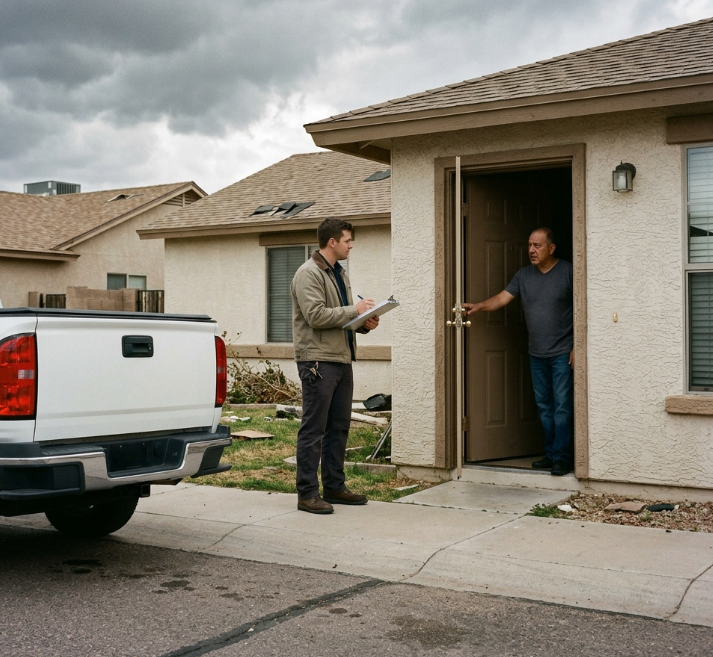
Structural assessment. Before drawings can be prepared, the damaged structure needs to be assessed by someone qualified to evaluate its current condition — typically a structural engineer or a licensed contractor with the experience to identify what's compromised, what's salvageable, and what the rebuild scope needs to address. This assessment informs the drawings and the engineering calculations that support them.
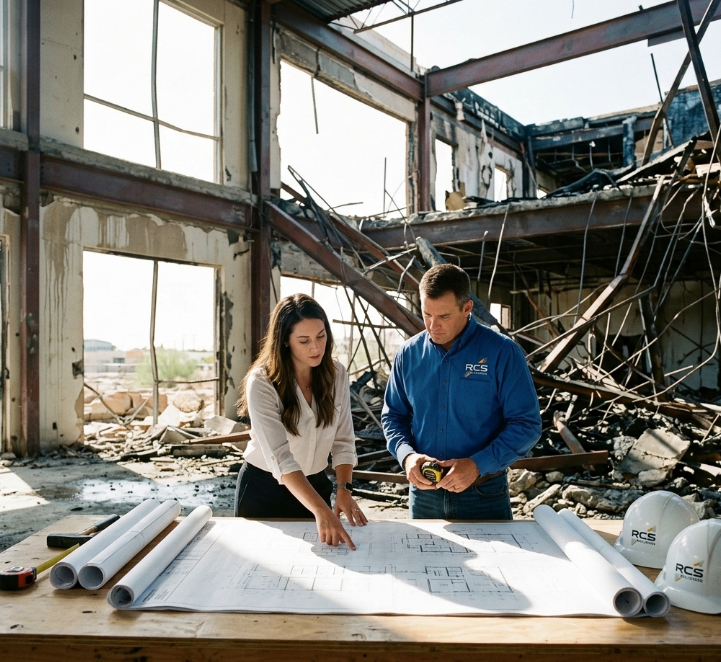
Architectural and engineering drawings. Depending on the scope, the rebuild requires drawings prepared by a licensed architect, a structural engineer, or both. These drawings document existing conditions, proposed work, structural calculations, materials specifications, and code compliance details. For a complex commercial loss, this package can be substantial. For a residential structural repair, it may be more limited — but it still has to be prepared by someone with the appropriate license.
Plan submittal. The completed drawing package gets submitted to the building department of the municipality where the property is located. In Greater Phoenix, that means a different department for every city — Phoenix, Scottsdale, Tempe, Chandler, Gilbert, Mesa, Glendale, Peoria all have their own building departments with their own submittal requirements, review processes, and timelines.
Plan review. A plan reviewer — a building official employed by the municipality — reviews the submitted drawings for code compliance. They may approve them as submitted, return them with comments requiring revisions, or request additional information. The back-and-forth between the design team and the plan reviewer is a normal part of the process and can extend the timeline.
Permit issuance. Once the drawings are approved, the permit is issued and construction can begin. Inspections are required at defined stages of the work — typically framing inspection before walls close in, and final inspection at project completion.
Timeline Realities Across Greater Phoenix Municipalities
This is where property owners and insurance carriers sometimes have very different expectations — and where documentation of the process becomes critical for business interruption claims and restoration period disputes.
Plan review timelines vary significantly across Phoenix-area municipalities and fluctuate based on volume. In a busy construction market, first review cycles can run three to six weeks in some jurisdictions. Revision cycles add time on top of that. A complex commercial loss in a jurisdiction with a backlogged plan review queue can be looking at two to three months from submittal to permit issuance before a single board goes back up.
Phoenix has implemented an electronic plan review system that has improved turnaround times for straightforward submittals. Scottsdale's building department is generally known for relatively efficient review on residential projects. Chandler, Gilbert, and Mesa all have their own processes and timelines that an experienced contractor navigating the market regularly knows from direct experience.
The important thing for property owners and their insurance carriers to understand: plan review timelines are not within the contractor's control. A carrier that sets a restoration period expectation without accounting for mandatory plan review is setting an expectation that the actual process can't meet — and the documentation of when plans were submitted, when review comments were received, and when the permit was issued is the evidence that supports a restoration period extension.
How This Interacts With Your Insurance Claim
The plans and permits process has direct implications for your claim that most property owners don't anticipate.
The restoration timeline extends. A job that would take six weeks to build takes six weeks plus however long plan review requires. That extension affects business interruption coverage periods, rental income coverage periods, additional living expense coverage periods — any time-based coverage that's running during the restoration is affected by a plan review requirement the carrier may not have factored into their initial timeline estimate.
Design costs are a claim item. Architectural and engineering fees incurred as a direct result of the covered loss are generally a covered scope item. They should be in your contractor's estimate or submitted as a supplemental item. If they're not, they're coming out of your pocket for work that your carrier should be covering.
The approved scope may change during plan review. Plan reviewers sometimes identify code compliance requirements that weren't in the original restoration scope — fire suppression requirements, structural reinforcement, accessibility upgrades. These additions are legitimate scope items that need to be captured and submitted to the carrier, ideally with supporting documentation from the plan reviewer's comments.
Permits pull the property into the public record. Once a permit is issued and work begins, the project is documented in the municipal permit system. That documentation is a long-term asset for the property — evidence that the structural rebuild was permitted, engineered, inspected, and approved to current code.
Why Contractor Choice Matters More at This Stage
The plans and permits process is where a mitigation-only company or a contractor without genuine general contracting experience hits a wall. Coordinating with structural engineers, preparing permit submittals, managing the plan review process across different municipal jurisdictions, sequencing construction around mandatory inspections, and keeping the insurance claim moving while all of it is happening — this is GC work at a level that requires experience and relationships the market doesn't have uniformly.
A contractor who has navigated plan review across Phoenix, Scottsdale, Chandler, Gilbert, and Mesa — who knows the submittal requirements, the typical timelines, the preferred engineers in each market, and the plan reviewers' common comments — moves through this process faster and with fewer surprises than one doing it for the first time on your job.
The difference in timeline between a contractor who knows this process and one who's figuring it out on your project can be weeks. On a job where business interruption coverage is running, every week matters.
The Single Point of Accountability Argument
On a job that involves structural damage, plan review, and a complex insurance claim simultaneously, the property owner's biggest protection is a single contractor who owns the entire scope — assessment through final inspection.
When the structural engineer is coordinating directly with the contractor who's building the job, the drawings reflect what's actually going to be built. When the contractor managing the permit process is also managing the construction schedule, the sequencing around inspections doesn't create delays. When the same team that documented the damage is also managing the plan review timeline, the documentation that supports the insurance claim's restoration period is consistent and complete.
Splitting this scope across multiple parties — a mitigation company, a separate GC, an independently hired engineer, and a project manager trying to coordinate all of them — creates gaps that cost time and money and fall on the property owner to manage.
RCS Builders handles structural damage restoration from initial assessment through final inspection as a licensed general contractor across Greater Phoenix. We coordinate engineering and architectural services, manage the plan review process across municipal jurisdictions, document the timeline in a way that supports your insurance claim, and don't hand the job off when it gets complex.
If you're dealing with structural damage from a fire, vehicle impact, storm event, or any other cause and you want to understand what the rebuild process actually involves,
call us at 480-204-9035. We'll give you a straight answer on what the job requires and what the timeline looks like.
Related: