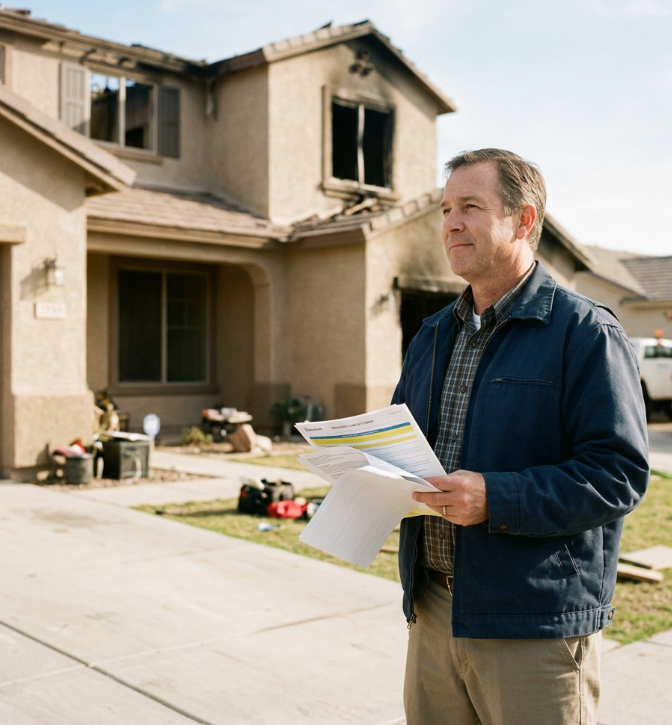
Storm Damage vs. Deferred Maintenance: How Insurance Carriers Tell the Difference in Phoenix
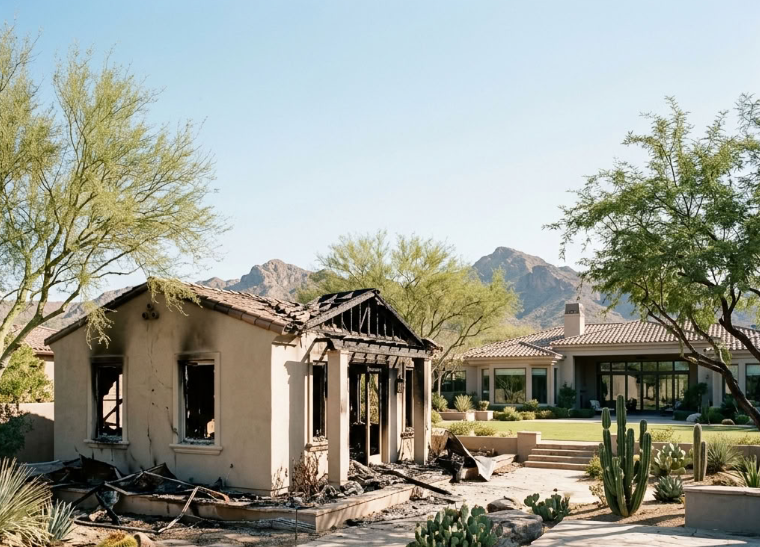
The monsoon hits. Wind tears across the roof. Debris lands in the yard. You call your carrier, file a claim, and an adjuster comes out to assess the damage.
And then the denial letter arrives. Not because the storm didn't happen. Not because you don't have coverage. But because the carrier says the damage wasn't caused by the storm — it was caused by the condition the property was already in.
This is one of the most common and most frustrating claim outcomes in Greater Phoenix, and it happens more often than most property owners realize. Understanding how carriers make this determination — and what you can do about it — starts with understanding what they're actually looking at when an adjuster walks your roof or inspects your exterior after a storm event.
The Core Distinction Carriers Are Making
Insurance policies cover sudden, accidental losses caused by a covered peril. A monsoon that tears off a section of roof is a covered peril. The resulting damage is a covered loss.
What policies don't cover is damage that was already present before the storm — wear and tear, deterioration, deferred maintenance, materials that had reached the end of their useful life. If a roof was failing before the storm hit and the storm finished what age and neglect started, the carrier's position is that the storm didn't cause the damage. The storm revealed it.
That distinction sounds clean in principle. In practice, the line between storm-caused damage and pre-existing deterioration is frequently contested, genuinely ambiguous, and determined by an adjuster who is working fast and whose employer benefits from the finding going one way rather than the other.
What Adjusters Are Actually Looking For
When a carrier sends an adjuster to assess a storm claim in Phoenix, they're not just documenting what's damaged. They're forming a theory of causation — what caused this damage, when did it occur, and was the property in a condition that would have withstood a normal storm event of this type.
The specific things they're evaluating:
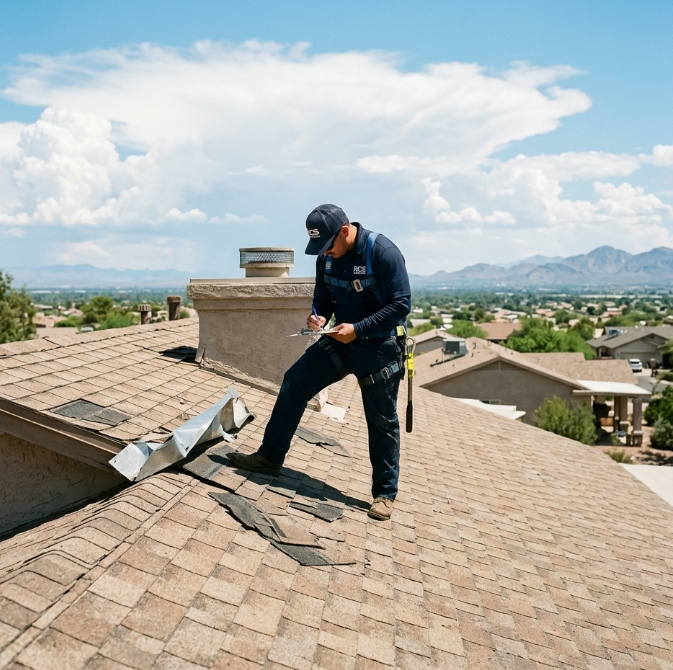
Age and condition of materials. A roof with 20-year-old shingles on a 25-year product has one year of expected useful life remaining. When that roof sustains damage in a storm, the adjuster notes the age and condition before documenting the storm damage itself. Pre-existing granule loss, cracking, curling, or missing shingles are all documented as evidence of pre-storm deterioration.
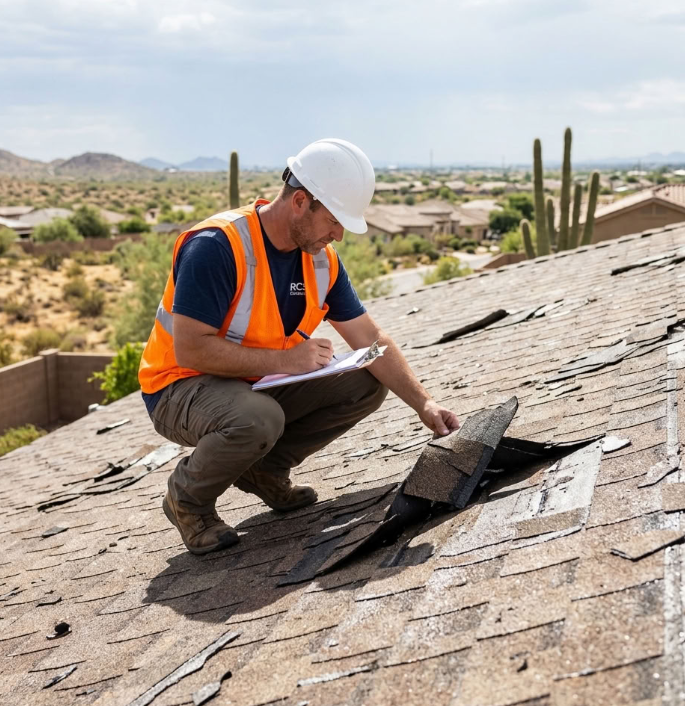
Pattern of damage. Legitimate storm damage has a directional pattern consistent with the wind event. Damage that appears random, scattered, or inconsistent with the direction and intensity of the storm raises questions about whether it predated the event. Hail damage, for example, leaves a recognizable impact pattern on soft metals, shingles, and other surfaces — adjusters look for that pattern and are skeptical of claimed hail damage that doesn't produce it.
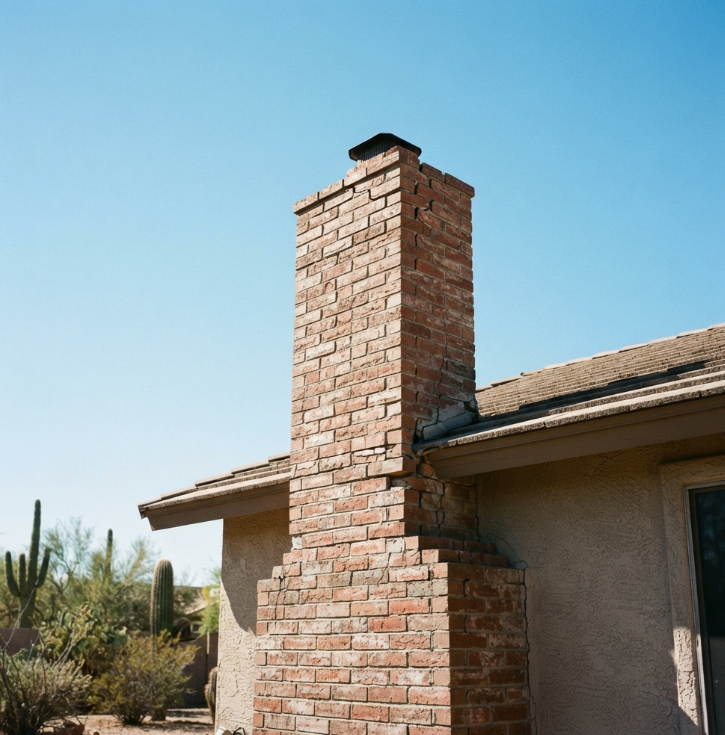
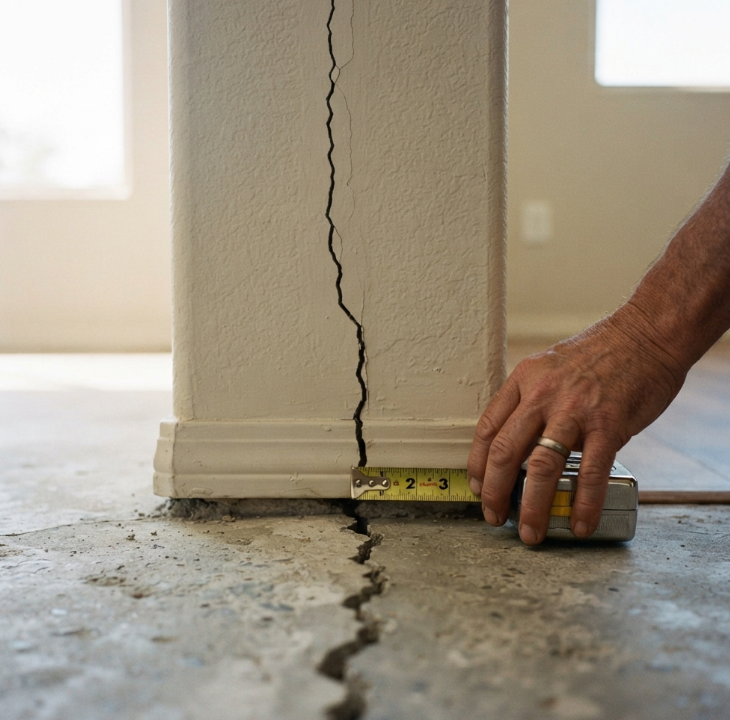
Maintenance history. Evidence of deferred maintenance — failed caulking, deteriorated flashing, cracked or missing mortar, unsealed penetrations — suggests a property that wasn't being maintained to a standard that would preserve its condition between storm events. Adjusters document these observations and they inform the causation finding.
Interior damage consistency. If a roof claim is accompanied by interior water damage, the adjuster evaluates whether the pattern of interior damage is consistent with a sudden storm intrusion or with a slow, ongoing leak that predated the storm. A ceiling stain with defined rings and discoloration around it tells a different story than fresh water damage in a pattern consistent with a sudden intrusion event.
Why Phoenix Properties Are Particularly Vulnerable to This Finding
The Valley's climate creates conditions that make the storm damage vs. deferred maintenance finding more common here than in most markets.
Extreme UV exposure degrades roofing materials faster than in cooler climates. A shingle roof in Phoenix ages differently than the same product installed in Minnesota. Manufacturers' rated lifespans assume average conditions — Phoenix is not average conditions. By the time a 25-year shingle is 15 years old in the Valley, it may already show deterioration patterns that an adjuster can point to as pre-existing.
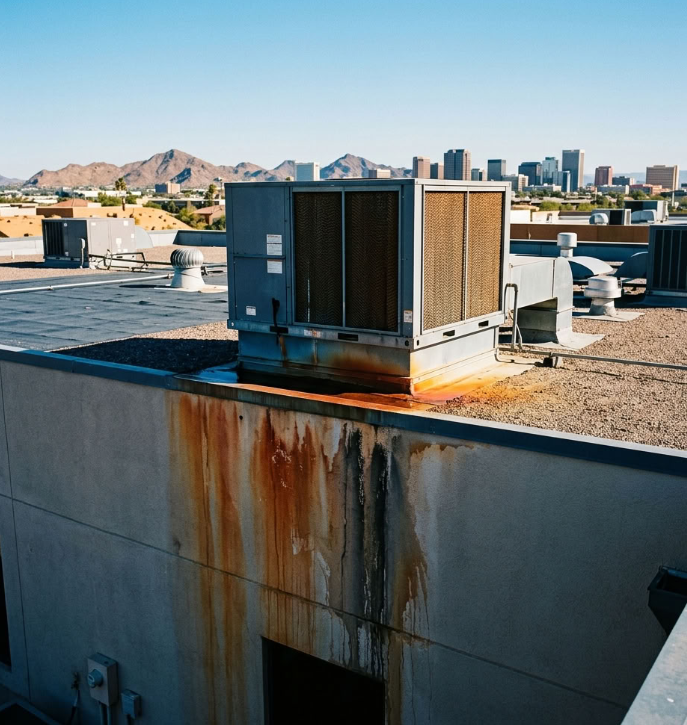
The expansion and contraction cycle from triple-digit summer heat to cooler winter temperatures stresses flashing, sealants, caulking, and penetrations in ways that create failure points long before a storm arrives to expose them. HVAC penetrations, pipe boots, ridge caps, and valley flashing are all common failure points in Phoenix that deteriorate between monsoon seasons and then get attributed to storm damage when the monsoon hits.
And the monsoon itself is a complicating factor. When significant storm events hit the same market simultaneously, carriers are processing a high volume of claims at once. Adjusters are moving fast. The incentive to find pre-existing deterioration rather than process a full storm claim is highest when the claim volume is highest — which is exactly when Phoenix properties are filing.
The Documentation That Changes the Outcome
The single biggest factor in whether a storm claim succeeds or gets characterized as deferred maintenance is documentation of the property's pre-storm condition.
If you have photographs of your roof from the year before the storm — showing intact shingles, functioning flashing, no significant deterioration — that documentation directly contradicts a finding of pre-existing damage. If you have a roof inspection report from two years prior showing the roof in acceptable condition, that's evidence the adjuster has to account for.
Most property owners don't have this documentation because they don't think about it until they need it. Which is why the time to document your property's condition is before a storm season, not after.
In the Phoenix market, the practical version of this is straightforward: photograph your roof, your exterior, your windows and door frames, and any other vulnerable areas at the start of each monsoon season. Date-stamped photos on your phone create a baseline record that establishes pre-storm condition. It takes thirty minutes and costs nothing. What it's worth at claim time can be substantial.
When the Finding Is Wrong
Not every deferred maintenance finding is legitimate. Adjusters make mistakes. They work fast, they see a lot of properties, and they sometimes mischaracterize storm damage as pre-existing deterioration when the evidence actually supports a covered loss.
If your claim was denied or significantly reduced on the basis of pre-existing condition and you believe the damage was actually caused by the storm, you have options.
A second opinion from an independent roofing contractor or a public adjuster who can document the damage from the property owner's perspective is the first step. An independent assessment that contradicts the adjuster's causation finding gives you something to work with in an appeal or a supplement conversation.
Your contractor's documentation matters here too. A restoration contractor who photographs the damage in detail, documents the pattern and characteristics of the storm damage, and produces a written scope narrative that supports a storm-causation finding is giving you real ammunition for an appeal — much more than a repair estimate alone.
The appraisal process exists specifically for valuation disputes, and in some cases for causation disputes, when the carrier's position and the property owner's position are genuinely at odds. An experienced public adjuster can evaluate whether your situation warrants that process.
The Maintenance Conversation Worth Having Before Monsoon Season
There's an honest version of this that goes both ways.
Some denied storm claims involve genuine deferred maintenance that the property owner knew about and didn't address. A roof that was reported as needing replacement two years ago and wasn't replaced is a different situation than a well-maintained roof that sustained legitimate storm damage. Carriers aren't wrong to distinguish between them — the policy language supports it.
The practical takeaway for Phoenix property owners: routine maintenance isn't just about preventing damage. It's about preserving your claim position when damage occurs. A property that's been maintained — with documentation to prove it — is in a fundamentally different position at claim time than one that hasn't.
Annual roof inspections before monsoon season, addressed flashing and sealant failures, replaced pipe boots, cleared gutters and drainage — none of it guarantees a smooth claim, but all of it eliminates the easiest arguments a carrier can make against one.
If You're Looking at a Storm Claim Right Now
The time to build your documentation is immediately — before additional weather events, before materials are disturbed, and before the claim picture gets muddier than it already is.
RCS Builders works storm damage claims across Greater Phoenix regularly. We know what carriers look for, how to document storm damage in a way that supports the covered loss finding, and how to push back when a pre-existing condition characterization isn't supported by what's actually on the property.
If you've got active storm damage or a claim that's been denied or underpaid on deferred maintenance grounds,
call us at 480-204-9035. We'll look at what you have and tell you honestly where things stand.
Related: