Nobody calls their contractor after a pipe fails and asks about permits. They call about the water. The damage. The claim. Getting someone on-site fast.
Permits are an afterthought — until they're not. Until the project is underway and someone asks whether the work was permitted, or the sale of the property surfaces an unpermitted repair, or an insurance carrier asks for documentation that doesn't exist because nobody pulled it.
Here's when permits are required in Arizona restoration work, who's responsible for pulling them, and what happens when they get skipped.
Why Permits Exist in the First Place
Building permits exist because not all construction work is visible once it's done. A contractor can close up a wall, finish a ceiling, or lay flooring over structural work that was done incorrectly — and nobody will know until something fails or someone opens it back up.
The permit process creates a checkpoint. Work gets inspected by a municipal building official before it's closed in. If it doesn't meet code, it gets corrected before it's buried behind drywall. That inspection record becomes part of the property's documented history.
For restoration work specifically, permits matter for a second reason: insurance documentation. A permitted repair is a documented repair. When a carrier, a future buyer, or a lender asks what work was done and whether it was done to code, a permit and a passed inspection are the answer.
When Permits Are Required in Arizona Restoration Work
The general rule in Arizona — and in most Phoenix-area municipalities — is that permits are required whenever work affects structural components, electrical systems, plumbing, mechanical systems, or anything that involves opening walls and making changes beyond cosmetic repair.
What that means in practice for restoration work:
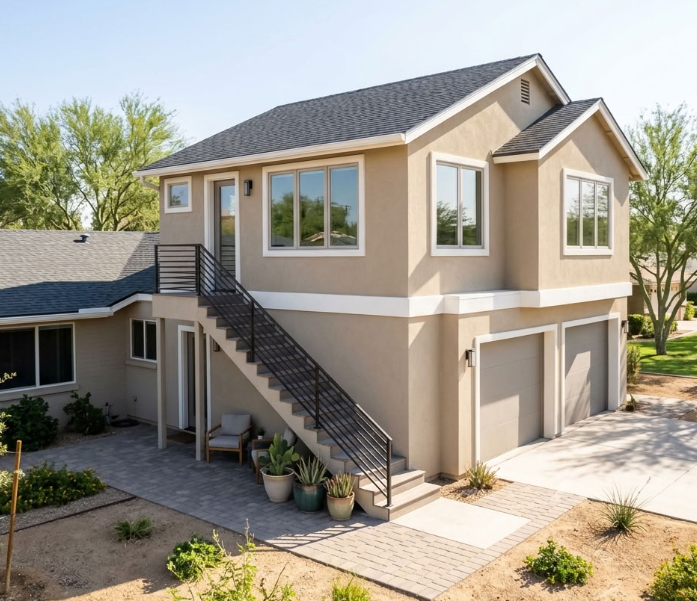
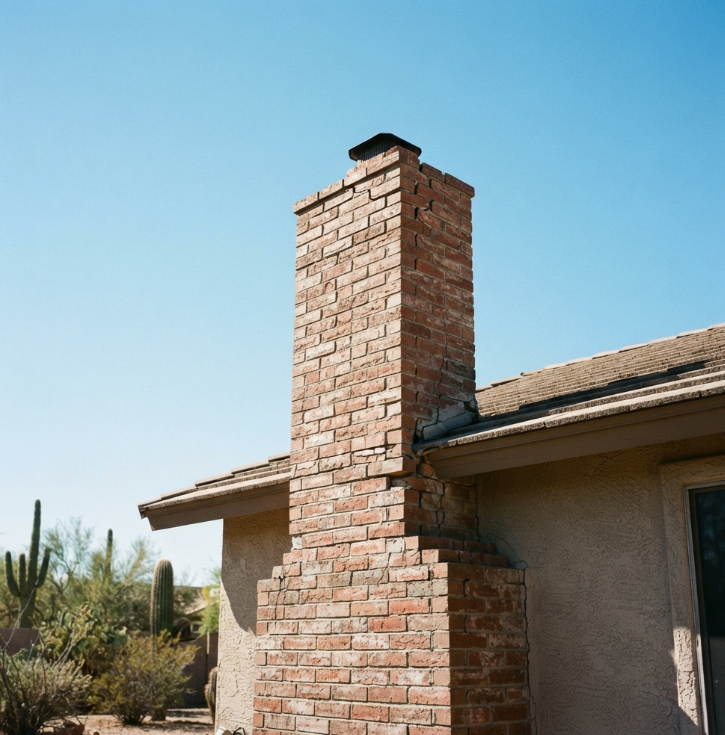
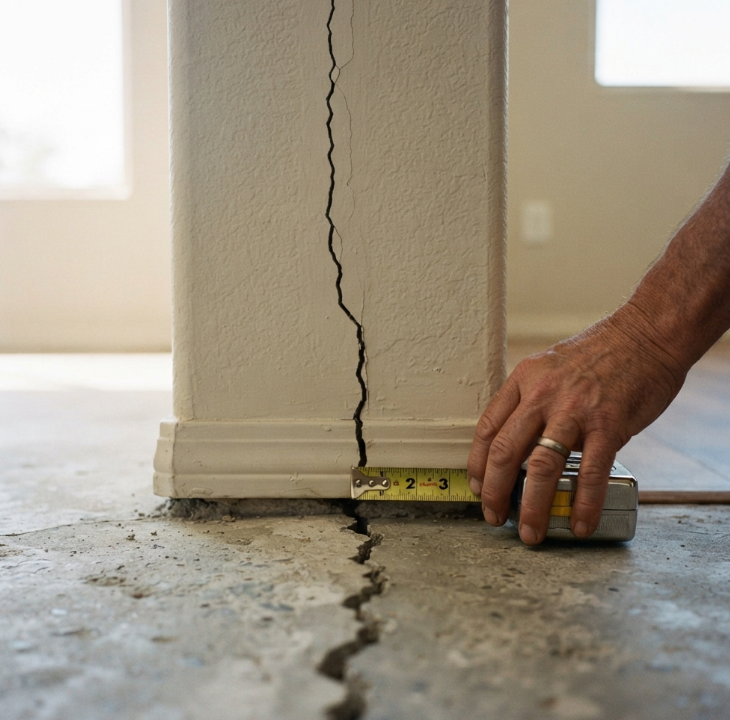
Structural repairs. Any work that touches load-bearing elements — walls, beams, roof framing, foundation — requires a permit. A storm that takes out a section of roof and requires structural repair isn't a patch job. It's permitted work.
Electrical work. Restoration that exposes wiring and requires any modification, extension, or replacement of electrical components requires a permit and inspection. A water loss that saturates a wall containing electrical runs — and requires that wiring to be addressed — triggers this requirement.
Plumbing work. Any repair, replacement, or modification of supply or drain lines beyond basic fixture replacement typically requires a permit. A pipe failure that requires section replacement inside a wall is permitted work in most jurisdictions.
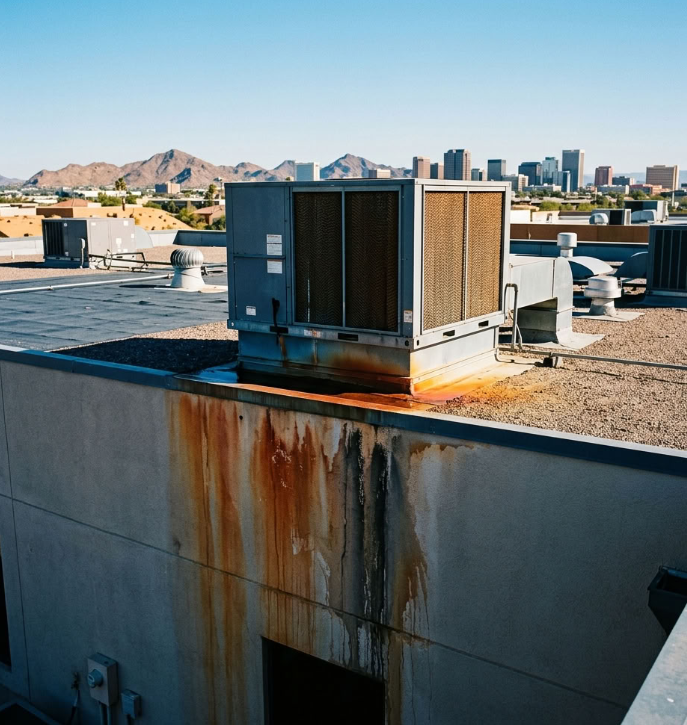
HVAC work. Replacement or significant modification of HVAC systems and ductwork requires permits in most Phoenix-area cities.
Significant square footage of drywall replacement. This varies by jurisdiction, but some municipalities require permits when drywall replacement exceeds certain thresholds, particularly when it involves fire-rated assemblies in commercial properties.
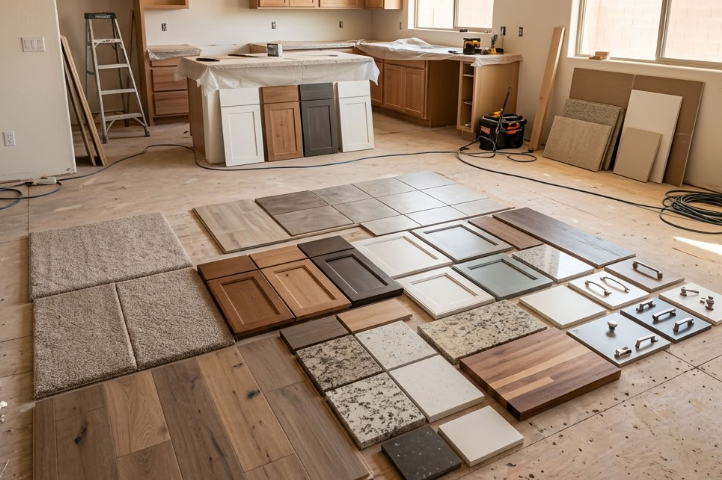
What typically doesn't require a permit: cosmetic work like paint, flooring replacement over an existing substrate, cabinet replacement, trim work, and minor repairs that don't touch structural or mechanical systems.
The Code Upgrade Reality
Here's where permits get complicated for restoration work — and where property owners sometimes push back on them.
When you pull a permit for restoration work, the work has to be brought up to current code. Not the code from when the property was built. Current code.
In Greater Phoenix, where a significant portion of the housing stock dates from the 1970s through 1990s, current code often looks meaningfully different from original construction. GFCI outlet requirements in wet areas. Arc fault protection requirements in bedrooms. Insulation R-values. Egress window sizing. Fire blocking requirements in wall assemblies.
A restoration that opens up walls in an older Chandler or Mesa home can trigger code upgrades that weren't in the original damage scope and aren't covered by insurance as part of the basic restoration. Some policies include code upgrade coverage — sometimes called ordinance or law coverage — and some don't. If yours does, that coverage has limits.
This is one of the reasons some property owners and contractors are tempted to skip permits on restoration work. If the permit triggers a code upgrade that costs money the insurance isn't covering, skipping the permit looks like the easier path in the short term.
It isn't.
What Happens When Permits Get Skipped
Unpermitted work follows a property. It doesn't disappear when the walls close up.
When you sell a property in Arizona, disclosure requirements apply. Unpermitted work is a material fact that has to be disclosed. Buyers and their lenders routinely pull permit histories as part of due diligence. Unpermitted restoration work — particularly anything involving structural, electrical, or plumbing — can complicate or kill a sale, require remediation before closing, or result in the work being opened back up for retroactive inspection.
Insurance carriers can also use unpermitted work as a basis for denying a subsequent claim. If a later loss occurs in an area where unpermitted work was done, the carrier may argue that the unpermitted work contributed to the loss or that coverage is limited because the property wasn't maintained to code.
And municipalities do conduct permit audits, particularly in areas with active development or following complaint-driven inspections. An unpermitted repair discovered after the fact can result in stop-work orders, fines, and requirements to demolish and redo the work with a permit.
The short-term friction of pulling a permit is almost always less than the long-term exposure of skipping one.
Who Pulls the Permit — and Who's Responsible
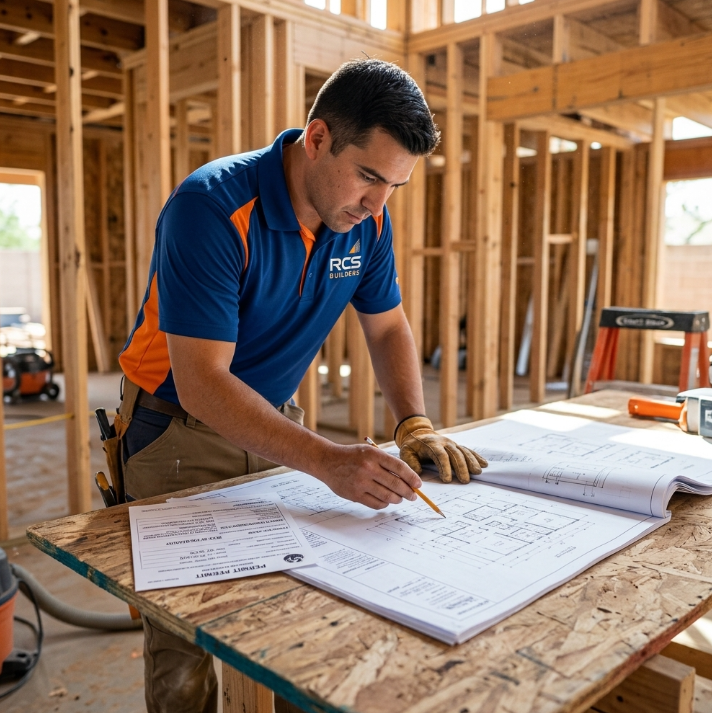
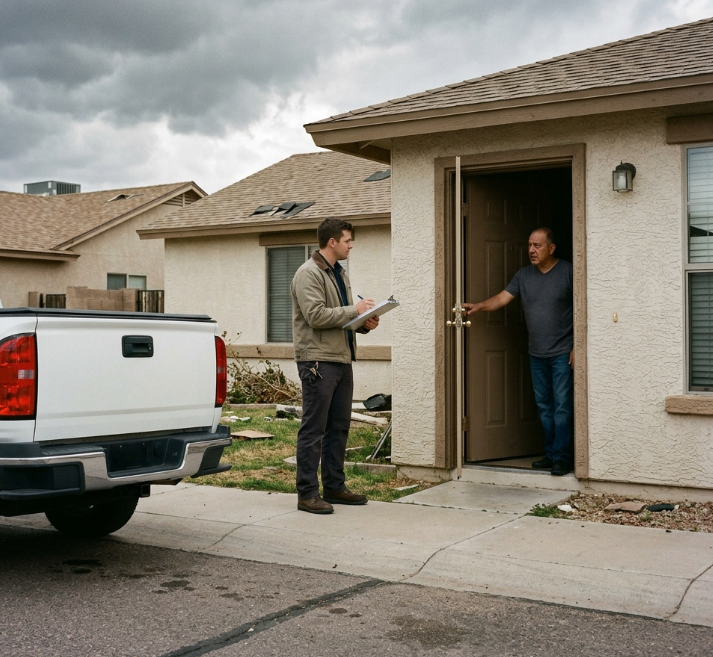
In Arizona, permits are pulled by the licensed contractor performing the work — not the property owner. A contractor who tells you to pull your own permit for work they're doing is either uninformed or trying to shift liability they should be carrying.
Your contractor's ROC license is what authorizes them to pull permits in Arizona municipalities. When they pull the permit, they're taking responsibility for the work meeting code at inspection. That accountability is part of what you're paying for when you hire a licensed general contractor.
What the property owner is responsible for: making sure the contractor they hire is licensed and pulls the permit before work begins — not after, not retroactively, not "when we get to that phase." Before.
If a contractor tells you a permit isn't required for work that clearly affects structural or mechanical systems, that's worth a second opinion. Call the city's building department directly — most Phoenix-area municipalities have permit lookup tools online and will tell you whether a permit is required for a described scope of work.
Permits in the Insurance Claim Context
For restoration work that's part of an insurance claim, permits are a documentation asset, not just a regulatory requirement.
A permit and a passed inspection provide independent third-party verification that the restoration work was done to code. That documentation supports your claim, protects against future disputes about the quality of the repair, and creates a clean record for the property going forward.
It also matters for the supplement conversation. When code upgrades are triggered by permitted work, those upgrades are a documentable scope addition that a knowledgeable contractor can submit to the carrier for consideration under any ordinance or law coverage in your policy. Without the permit, that conversation doesn't happen — because the code upgrade requirement was never officially triggered.
Different Cities, Different Requirements
Greater Phoenix is a patchwork of municipalities — Phoenix, Scottsdale, Tempe, Chandler, Gilbert, Mesa, Queen Creek, San Tan Valley, Maricopa, Avondale, Sun City, Surprise, Tolleson, Glendale, Peoria, Avondale and a dozen others — each with their own building department and permit thresholds. What requires a permit in Chandler may have a slightly different threshold in Mesa. Commercial properties generally have more stringent requirements than residential.
A contractor who works regularly across the Valley knows which jurisdictions require what and how to navigate the process efficiently. Permit timelines vary too — some municipalities have same-day or next-day permit issuance for straightforward residential restoration scopes, while commercial permits in certain cities can take weeks. That timeline affects project scheduling and should be part of the planning conversation before work begins, not a surprise mid-project.
The Bottom Line
Permits aren't bureaucratic friction for their own sake. They're the documentation that proves the work was done right — to code, by a licensed contractor, with independent inspection. In a restoration context, that documentation protects your insurance position, your property value, and your ability to sell or refinance without surprises.
RCS Builders is a licensed general contractor across Greater Phoenix and we pull permits on every job that requires them. We know the requirements in each municipality we work in, we build permit timelines into project scheduling, and we don't skip the step because it's inconvenient. If you're mid-project and unsure whether the work is permitted, or evaluating a contractor who's unclear on the requirement,
call us at 480-204-9035 — we'll give you a straight answer.
Related: