Every restoration contractor in the Phoenix market has some version of the word "certified" on their website. It shows up in headlines, in bullet points, in the tagline under the logo. Certified. Licensed. Professional. Experienced.
Most of it means nothing specific. Some of it means something real.
IICRC certification is in the second category — but only if you understand what it actually requires, what it covers, and what it doesn't. Here's the honest version.
What the IICRC Is
The Institute of Inspection Cleaning and Restoration Certification is the leading standard-setting body for the restoration industry in the United States. It's not a trade association you join by paying dues. It's not a rating system based on reviews. It's a certification body that develops technical standards for restoration work and tests technicians against those standards.
The standards IICRC publishes — the S500 for water damage, the S520 for mold remediation, the S770 for large loss, among others — are the reference documents that insurance carriers, industrial hygienists, and restoration professionals across the country use to define what proper restoration practice looks like. When an adjuster wants to know whether a drying protocol was appropriate, or whether a mold remediation was performed to industry standard, they're referencing IICRC standards.
Certification means a technician has been trained in those standards, passed a written examination, and met continuing education requirements to maintain the credential. It's not handed out for showing up.
The Certifications That Actually Matter in Restoration
IICRC offers a range of certifications across different restoration disciplines. The ones most relevant to residential and commercial property damage in the Phoenix market:
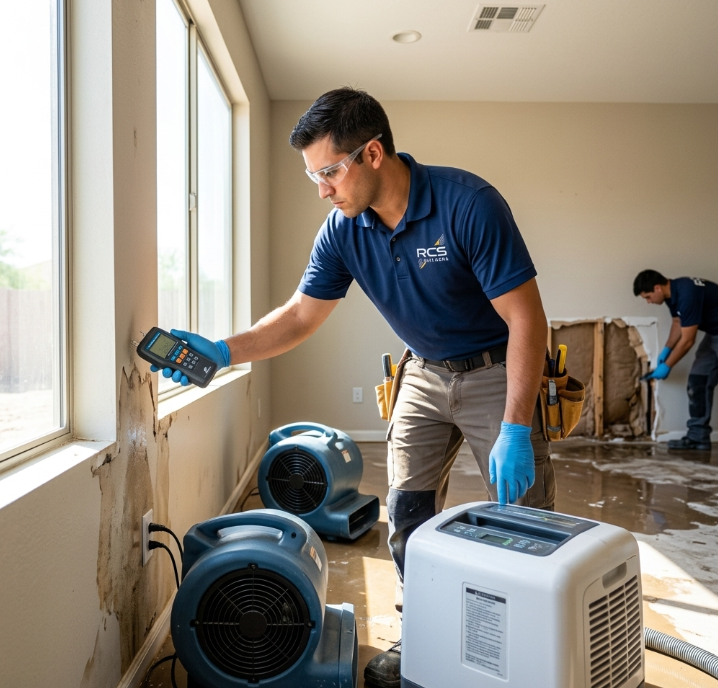
WRT — Water Damage Restoration Technician. The foundational credential for water mitigation work. Covers the science of drying — psychrometrics, evaporation, dehumidification, structural drying principles — and the protocols for extracting water, setting equipment, monitoring moisture, and documenting a drying project. A technician running a water loss without this credential is working without a framework.
ASD — Applied Structural Drying. A more advanced credential that goes deeper into the technical side of drying structures — calculating equipment placement, understanding how different building materials respond to moisture, managing drying conditions in complex environments. Where WRT covers the what, ASD covers the how at a higher level of precision.
AMRT — Applied Microbial Remediation Technician. The mold remediation credential. Covers containment, PPE requirements, remediation protocols, documentation, and the standard of care for returning a structure to a condition where clearance testing can be passed. In Arizona, where water events create mold risk faster than most property owners expect, this credential matters on any job where moisture has been present long enough for biological growth to begin.
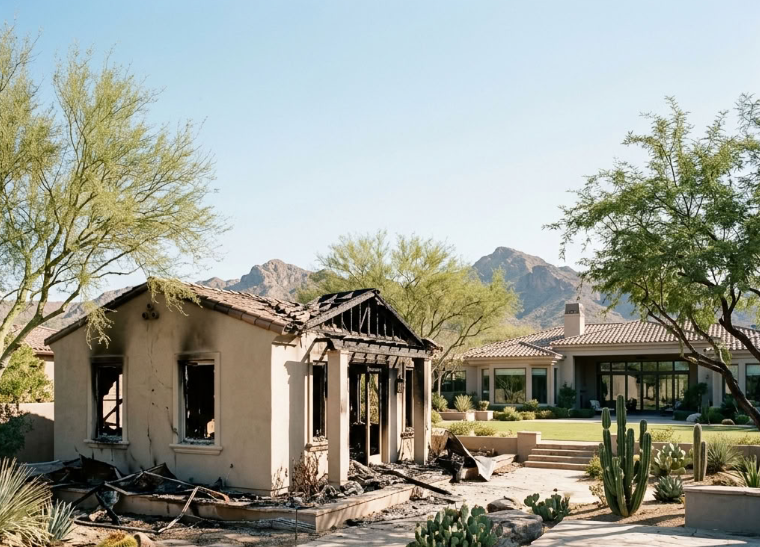
FSRT — Fire and Smoke Restoration Technician. Covers the specific protocols for fire and smoke damage — soot chemistry, odor removal, content cleaning, structural decontamination. Fire and smoke restoration is a different discipline than water mitigation, and the technicians doing it should be trained specifically for it.
What Certification Doesn't Mean
This is the part that matters as much as what it does mean.
IICRC certification is held by individual technicians, not companies. A company can call itself IICRC certified — and most do — but what that means in practice is that some number of their technicians hold current credentials. It doesn't mean every technician on your job is certified. It doesn't mean the person running your drying equipment at 7am on day three is the same person whose credentials are on the company's website.
Ask the question directly: which certifications do the technicians assigned to my job hold, and are those credentials current? A company that's genuinely invested in IICRC standards will have a clear answer. One that's been using the credential as a marketing line without the substance behind it will not.
Certification also doesn't substitute for experience. A technician who passed the WRT exam last month is certified. A technician who's run hundreds of water losses across different building types, materials, and moisture conditions in the Phoenix climate is experienced. The best technicians are both — credentialed and seasoned. Ask how long the company has been doing this work, not just whether they have the certificates.
Why It Matters More in Phoenix Than Most Markets
The Valley's climate creates restoration conditions that aren't typical of most of the country. Extreme summer heat accelerates drying in some ways and creates hidden moisture problems in others — materials that appear dry on the surface can retain moisture in ways that standard drying timelines don't account for. Monsoon events produce rapid, high-volume water intrusion that requires equipment deployment at a scale and speed that an undertrained crew will mismanage.
The mold risk timeline in Phoenix is also compressed relative to cooler climates. The combination of heat and moisture creates conditions where mold colonization can begin faster than most property owners expect — which means the drying protocol has to be right from the first day, not adjusted after the fact when readings come in wrong.
A technician trained to IICRC standards understands the science behind these conditions. They're not guessing at equipment placement or drying timelines — they're applying a framework that's been validated across thousands of loss scenarios. In a market where the conditions are as demanding as they are in Greater Phoenix, that framework matters.
What to Ask Before You Hire
When you're evaluating restoration contractors after a loss, here are the questions that actually tell you something:
Which IICRC certifications do your technicians hold, and are they current? Can you provide the certification numbers for the technicians assigned to my job? How do you document moisture readings and drying progress throughout the project? What's your protocol if the structure isn't drying on schedule? Do you write your estimates in Xactimate?
A contractor who can answer all of those questions specifically and without hesitation is operating at a different level than one who responds with general assurances about being certified and professional and experienced. The specifics are what matter.
The Documentation Connection
IICRC standards aren't just about how the physical work gets done — they define what documentation a properly run restoration project produces.
Daily moisture readings logged by affected area and material. Equipment placement records. Drying goal calculations. Photo documentation of conditions at each stage of the project. A final drying report that establishes the structure reached acceptable moisture levels before reconstruction began.
That documentation isn't just good practice — it's what your insurance carrier needs to confirm the mitigation was performed to standard, what a mold remediation firm needs to establish baseline conditions, and what your contractor needs to write a defensible reconstruction scope. On any job where subrogation is possible, it's also the evidentiary record of what was found and how it was addressed.
A crew that's working to IICRC standards produces this documentation as a natural output of doing the job right. A crew that isn't doesn't — and the absence of that documentation creates problems downstream that nobody anticipated on day one.
Where RCS Builders Stands
RCS Builders is IICRC certified across water damage restoration and mold remediation disciplines. Our technicians are trained to the S500 and S520 standards, we document every project to those standards, and we write our estimates in Xactimate so the documentation we produce integrates cleanly with your carrier's claim process.
We've been doing this work in Greater Phoenix for over 30 years. The certification reflects a standard of practice that was in place long before it became a marketing line.
If you're evaluating contractors after a loss and you want to talk through what the job actually requires,
call us at 480-204-9035. We'll tell you what to look for and what questions to ask — whether you hire us or not.
Related: