The property sits empty for a few months. Maybe it's between tenants. Maybe the owner is a snowbird who left in May and won't be back until October. Maybe it's in probate. Maybe it's a commercial space between leases. Whatever the reason, nobody's there — and then something goes wrong.
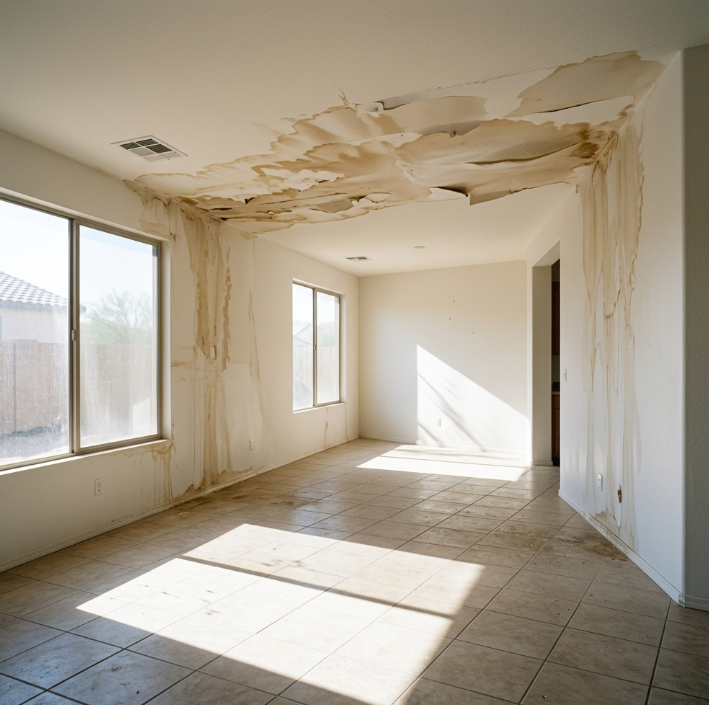
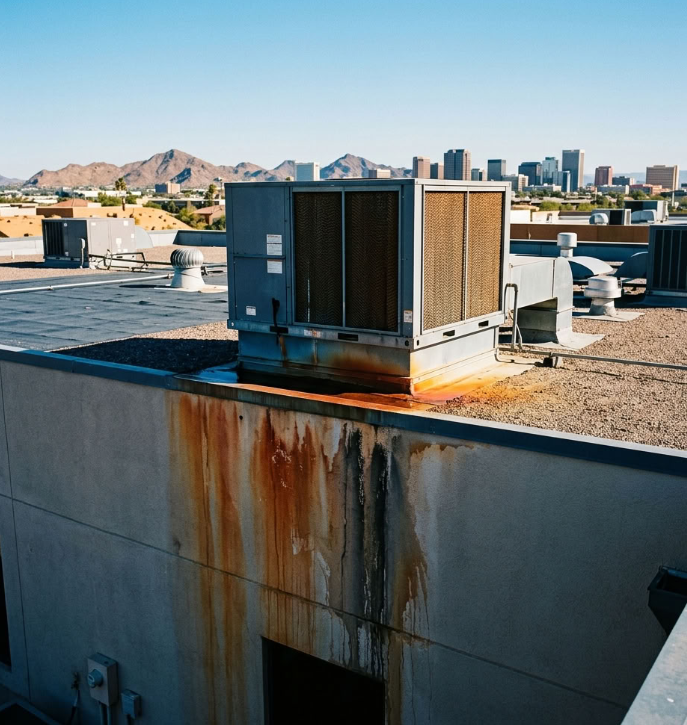
A pipe fails. A monsoon pushes water through a compromised roof. Vandals get in. Copper gets stripped. And when the owner files a claim, they find out that the policy they've been paying premiums on doesn't respond the way they expected — because the property was vacant.
This catches people off guard constantly in the Phoenix market. Here's why it happens and what to do about it.
What Vacancy Does to Your Insurance Policy
Most standard homeowner and landlord policies contain a vacancy clause. The specific language varies by carrier and policy, but the effect is consistent: once a property has been unoccupied for a defined period — typically 30 to 60 days — certain coverages are modified, suspended, or eliminated entirely.
The rationale from the carrier's perspective is straightforward. An occupied property has eyes on it. A pipe that starts failing gets noticed. A roof leak gets reported. Vandalism gets discovered quickly. An empty property has none of that — damage that would be caught and addressed in 24 hours in an occupied building can go undetected for weeks or months in a vacant one, compounding into a loss that's dramatically larger than it would have been otherwise.
Carriers price their policies assuming a baseline level of oversight that vacancy eliminates. When that oversight disappears, they adjust the coverage accordingly.
What Typically Gets Excluded or Limited
The specific exclusions triggered by vacancy vary by policy, but the most common ones in standard homeowner and landlord policies include:
Vandalism and malicious mischief. This is almost universally excluded after vacancy thresholds are crossed. Vacant properties are targeted for vandalism, break-ins, and copper theft — all of which carriers exclude once the property has been empty long enough. In Phoenix, where vacant properties in certain submarkets attract this activity regularly, this exclusion has real financial consequences.
Water damage from plumbing failures. Some policies exclude or limit coverage for pipe failures and resulting water damage in vacant properties — particularly when the failure and resulting damage went undetected for an extended period. The argument is that reasonable property oversight would have caught the failure before the damage compounded.
Glass breakage. Broken windows in vacant properties — whether from vandalism, storm, or other causes — are frequently excluded after vacancy thresholds.
Liability coverage modifications. Some policies modify liability coverage in vacant properties, which matters if someone is injured on the property while it's empty.
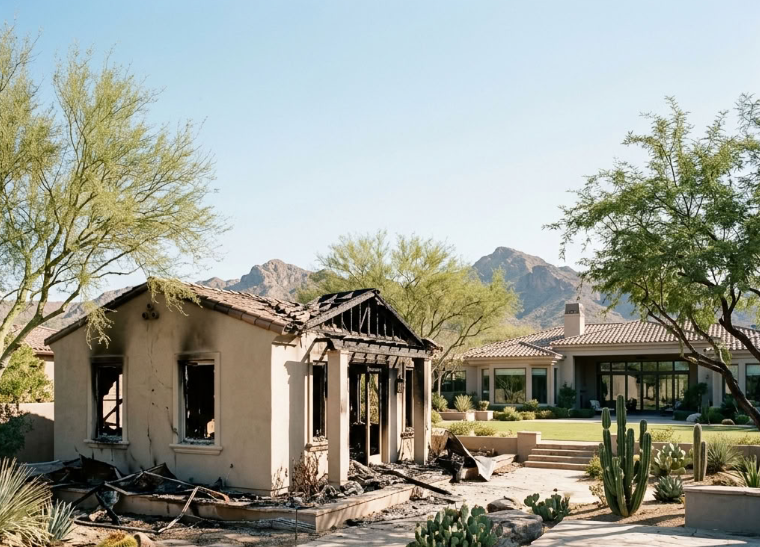
What typically remains covered even in vacant properties: fire, lightning, and certain weather events — though even these can be limited depending on policy language and how long the vacancy has lasted.
The Phoenix Market Has More Vacancy Exposure Than Most
Greater Phoenix has several characteristics that make vacancy clause exposure more common here than in most markets.
The snowbird pattern is significant. A substantial portion of Phoenix-area homeowners — particularly in communities like Sun Lakes, Fountain Hills, Carefree, and parts of Scottsdale — leave for four to six months during summer. Their properties sit empty through the hottest part of the year and through the entire monsoon season. That combination — extreme heat stressing plumbing and roofing systems, followed by high-intensity storm events — is exactly the condition that produces the losses vacancy clauses are designed to limit coverage for.
Landlords between tenants face the same exposure. The Phoenix rental market moves fast, but turnover gaps happen. A property that sits empty for six weeks between leases while a landlord makes repairs and finds a new tenant crosses the 30-day vacancy threshold on most policies without the landlord ever thinking about it.
Probate properties sit for months or years while estates are settled. Commercial properties between leases in the Valley's retail and office markets can sit vacant for extended periods. All of them carry the same exposure.
How to Know Where Your Policy Stands
The first step is reading your policy's vacancy clause — specifically the definition of vacancy, the threshold in days, and what coverages are modified or excluded once that threshold is crossed.
The definition of vacancy matters more than most people realize. Most policies distinguish between vacant and unoccupied. An unoccupied property still contains the owner's personal property and furnishings — it's just not being actively lived in. A vacant property has been emptied of personal property and is truly unoccupied. The vacancy clause typically triggers on the vacant definition, not the unoccupied one — which means a snowbird who leaves their furniture in place may be in a different position than one who removes everything before leaving.
Some policies also have specific provisions for seasonal properties or properties under renovation that modify how the vacancy definition applies. Read the language carefully or ask your agent directly: if this property sits empty for 60 days, what coverage do I have and what do I not have?
What to Do If Your Property Is or Will Be Vacant
The options depend on how long the vacancy is expected to last and what the property is worth protecting.
Vacant property endorsement. Many carriers offer an endorsement that extends standard coverage to vacant properties for an additional premium. If your property is going to be empty for a defined period, this is the most straightforward fix — call your carrier or agent before the vacancy threshold is crossed and ask about adding the endorsement.
Vacant property policy. For longer-term vacancies — extended probate, commercial properties between leases, properties under extended renovation — a standalone vacant property policy may be more appropriate than an endorsement on a standard policy. These policies are designed specifically for vacant properties and price the risk accordingly.
Increase oversight. Some carriers will modify their vacancy clause findings if the property owner can demonstrate active oversight — regular documented inspections, maintained utilities, a property management company checking in on schedule. If you can't add a vacant property endorsement, documented oversight is the next best protection of your claim position.
Winterization and maintenance. In Phoenix, winterization in the traditional sense isn't the issue — the equivalent is pre-monsoon preparation. Roof inspections before summer, addressed flashing and sealant failures, cleared drainage, HVAC systems maintained and running to prevent extreme heat buildup that accelerates plumbing stress. A property that's been actively maintained is in a better position at claim time than one that was simply locked and left.
If Damage Already Occurred in a Vacant Property
If you're reading this after a loss at a vacant property, the vacancy clause issue is going to surface in the claim process. Here's what matters:
Document when the vacancy began and when the damage occurred as precisely as possible. If the damage occurred before the vacancy threshold was crossed, the clause may not apply. If it occurred after, the specific exclusions in your policy determine what coverage remains.
Don't assume the claim is dead. Carriers sometimes apply vacancy clauses broadly when the actual language supports a narrower interpretation. A public adjuster or an attorney who handles insurance disputes can evaluate whether the carrier's position is consistent with the policy language.
And document the damage thoroughly from day one — cause of loss, timeline, extent of damage, everything. The same documentation principles that apply to any restoration claim apply here, and the stakes are potentially higher because the carrier already has a basis for limiting coverage.
Property Managers and Investors Face This Risk Every Cycle
For anyone managing multiple properties in the Phoenix market — rental portfolios, commercial buildings, HOA-managed units — vacancy clause exposure isn't a theoretical risk. It's a recurring one that surfaces every time a unit turns over, every time a commercial tenant leaves, every time a seasonal property owner heads north for the summer.
Building vacancy clause awareness into property management protocols — knowing your threshold, adding endorsements proactively, conducting and documenting regular inspections of empty units — is the difference between a covered claim and an expensive surprise.
RCS Builders works with property managers and investors across Greater Phoenix regularly. We understand the insurance coordination piece on vacant property losses and we know how to document a claim in a way that gives you the best possible position with your carrier. If you're dealing with a loss at a vacant property or you want to talk through what your exposure looks like,
call us at 480-204-9035.
Related: