There's a moment in almost every significant property damage claim where someone — a neighbor, a contractor, a friend who went through something similar — mentions a public adjuster. Sometimes it's framed as a lifeline. Sometimes it sounds like a scam. Most property owners have no real framework for evaluating either version.
Here's the honest one.
What a Public Adjuster Actually Does
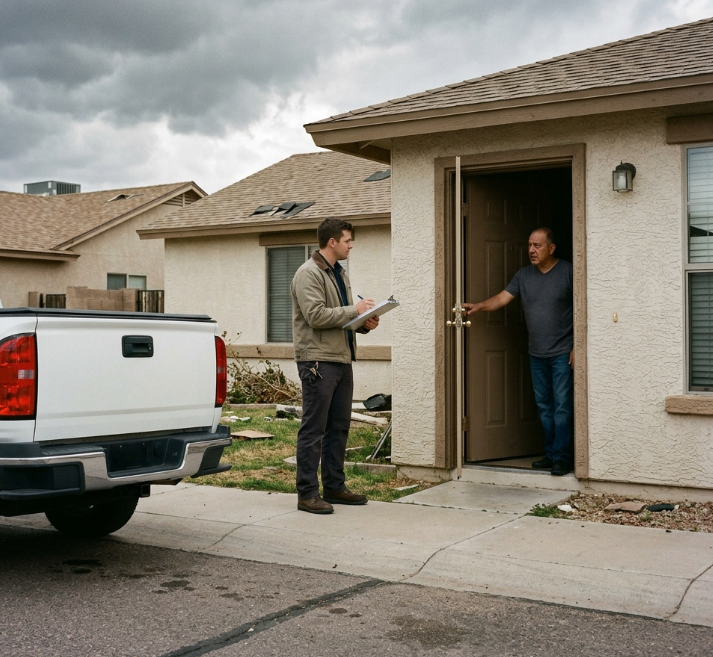
Your insurance carrier has an adjuster. That adjuster's job is to evaluate your claim on behalf of the carrier — documenting damage, applying policy language, and producing an approved scope that reflects what the carrier believes is owed under your policy.
A public adjuster does the same work, but for you.
They're licensed by the Arizona Department of Insurance, they represent the property owner exclusively, and they're compensated as a percentage of your final settlement — typically between 10 and 15 percent in Arizona depending on the complexity of the loss and when in the process they get involved. That fee structure means their financial interest is directly aligned with maximizing your approved claim, not minimizing it.
They review your policy, document the loss independently, prepare their own estimate, negotiate with the carrier on your behalf, and push back when the carrier's scope is incomplete or the valuation is low. On a complex or contentious claim, a good public adjuster can recover multiples of their fee in additional approved scope.
That's the version that works. The version that doesn't — unlicensed operators, storm chasers who show up unsolicited after a monsoon, contractors who offer to "handle the adjuster" without a PA license — is a different conversation entirely. If someone is offering to negotiate your insurance claim without a license from the Arizona Department of Insurance, walk away.
When It Actually Makes Sense to Hire One
The honest answer is that a public adjuster isn't the right call for every claim. Their value is tied directly to the size and complexity of the loss — and the gap between what your carrier approved and what the job actually requires.
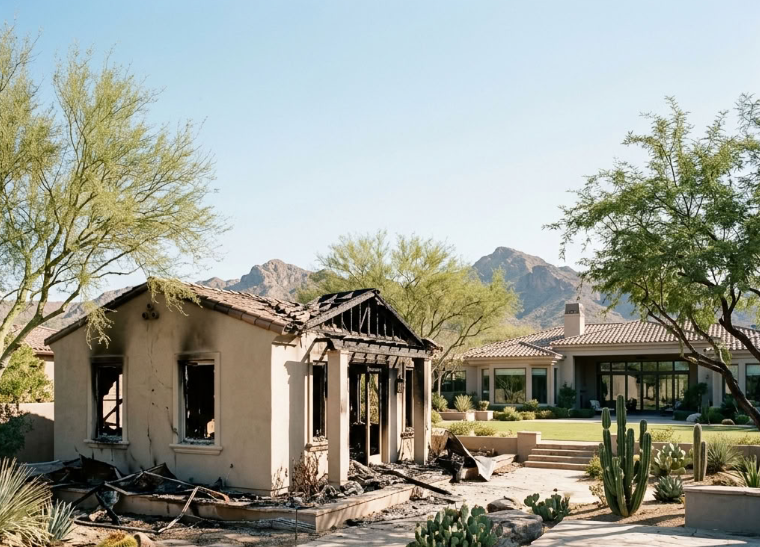
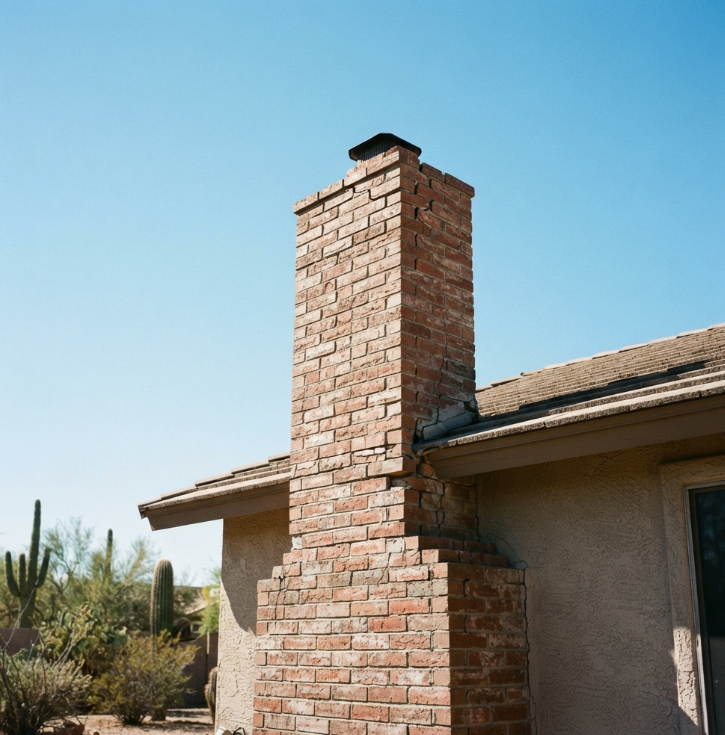
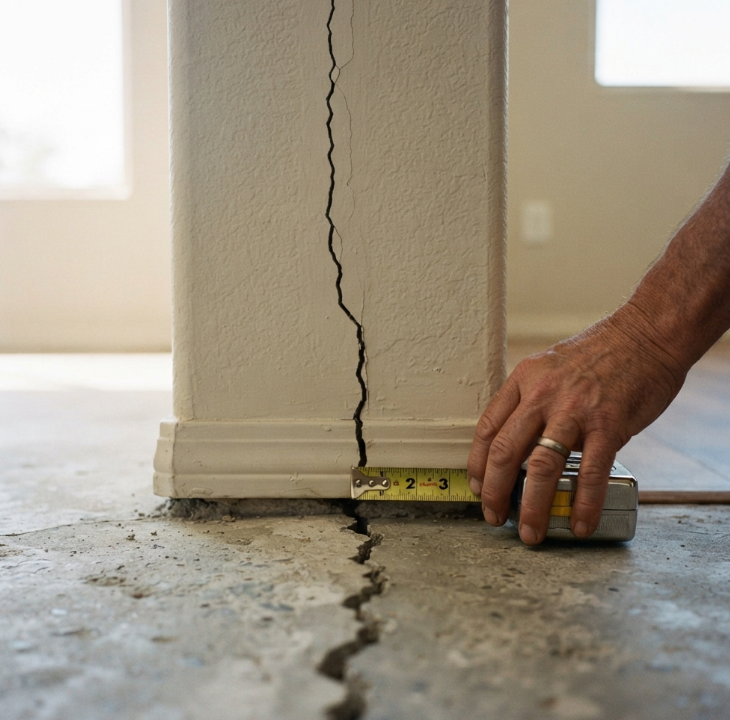
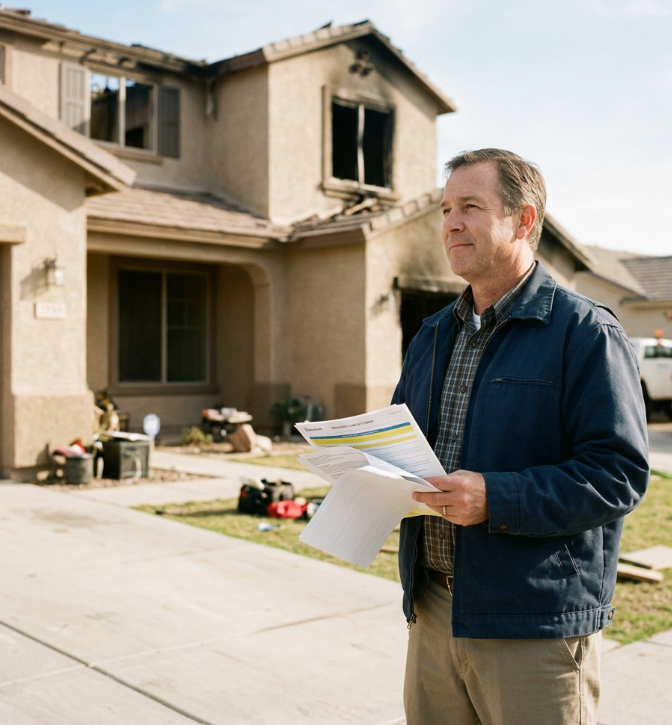
Large losses are where they earn their fee. A fire that took out a significant portion of your structure. A water event that saturated multiple floors across thousands of square feet. A storm that compromised your roof, your interior, and your contents simultaneously. These are claims where the initial carrier scope is almost always incomplete, where supplements are guaranteed, and where the documentation and negotiation burden is significant enough that having a dedicated advocate makes financial sense.
Denied or severely underpaid claims. If your carrier denied a claim you believe should be covered, or approved a number that bears no realistic relationship to what the restoration actually costs, a public adjuster has the policy expertise and negotiation standing to challenge that position more effectively than most property owners can on their own.
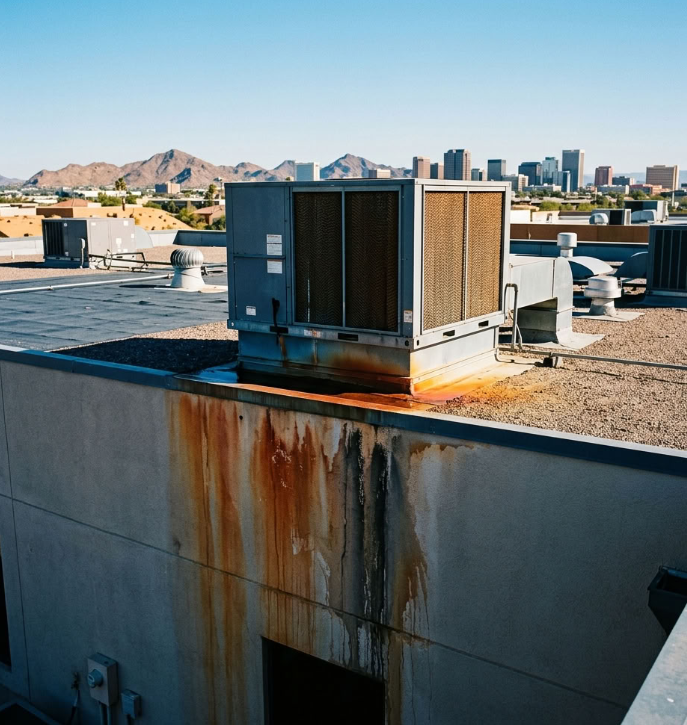
Complex commercial losses. Multi-unit properties, commercial buildings with business interruption components, properties with specialized equipment or finishes — these claims have layers that benefit from someone whose full-time job is navigating carrier negotiations.
When you're overwhelmed and the stakes are high. The claims process is a part-time job for the property owner during an already stressful period. If the loss is large enough that mistakes have real financial consequences and you don't have the bandwidth to manage it yourself, a public adjuster absorbs that burden.
When It Probably Doesn't Make Sense
For straightforward, smaller claims — a single room water loss, a contained appliance failure, damage that's clearly covered and reasonably scoped — the math often doesn't support a PA fee. If your carrier approves $15,000 and a public adjuster recovers an additional $5,000, their 10-15 percent cut of the total comes close to eating the recovery.
It also doesn't make sense if your contractor is already doing the work a public adjuster would do on the scope and documentation side. A restoration contractor who writes in Xactimate, reviews the carrier's scope critically, identifies missing line items, and handles supplements throughout the project is functioning as a de facto advocate without the additional fee. If you have that contractor, you may not need both.
The question to ask yourself: is the gap between what my carrier approved and what this job actually requires large enough that 10-15 percent of the total settlement is worth paying to close it? On a $200,000 loss with a $60,000 scope dispute, yes. On a $20,000 claim with a $3,000 disagreement, probably not.
The Timing Question Nobody Asks Early Enough
Public adjusters are most valuable when they're involved early — ideally before the carrier's initial inspection, or at minimum before the initial scope is approved.
Once an approved scope is in place and work has begun, a public adjuster can still get involved, but their leverage is reduced. They're working to reopen something that's already been agreed to rather than shaping the initial evaluation. It's not impossible — supplements can be filed, appraisal can be invoked, appeals can be pursued — but the window for maximum impact is at the front end of the claim.
If you're going through a significant loss and you're considering a public adjuster, the time to make that call is before your first adjuster walkthrough, not after.
How It Works Alongside Your Contractor
A public adjuster and a restoration contractor aren't competing roles — they're complementary ones on a large or complex claim. The PA handles the carrier relationship, the policy interpretation, and the negotiation. The contractor handles the physical work, the technical documentation, and the scope execution.
Where it gets complicated is when the two aren't communicating. A public adjuster who doesn't understand what the contractor's scope requires, or a contractor who isn't coordinating their documentation with the PA's negotiation strategy, creates gaps that end up costing the property owner. The best outcomes happen when both are aligned from the start.
RCS Builders works alongside licensed public adjusters in the Valley regularly and can connect you with the right resource if your situation calls for one. If you're not sure whether your loss warrants a PA,
call us at 480-204-9035 — we'll give you an honest read on whether the math makes sense and what your options look like from where you are in the process.
One Thing to Know About PA Fees in Arizona
Arizona law caps public adjuster fees and requires written contracts before any work begins. If a public adjuster is asking for payment upfront, asking you to sign something that isn't a clear fee agreement, or isn't providing their license number on request — those are red flags worth taking seriously.
The Arizona Department of Insurance maintains a license lookup tool at
azinsurance.gov. Use it before you sign anything.
Related: