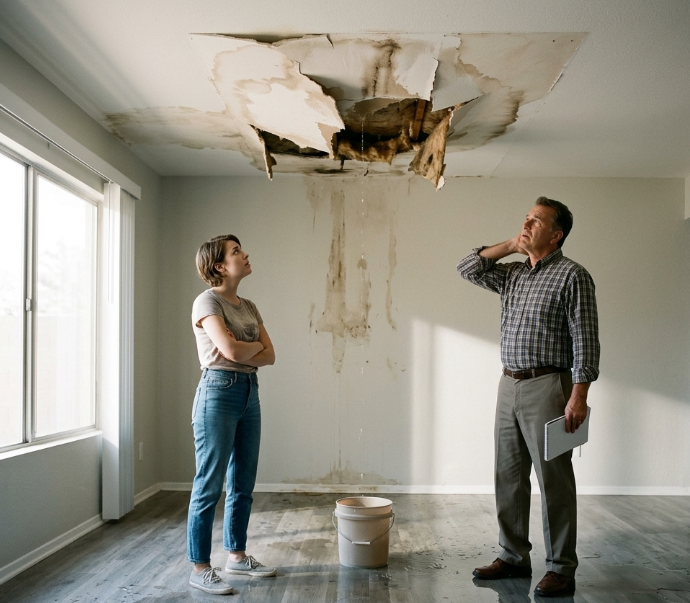
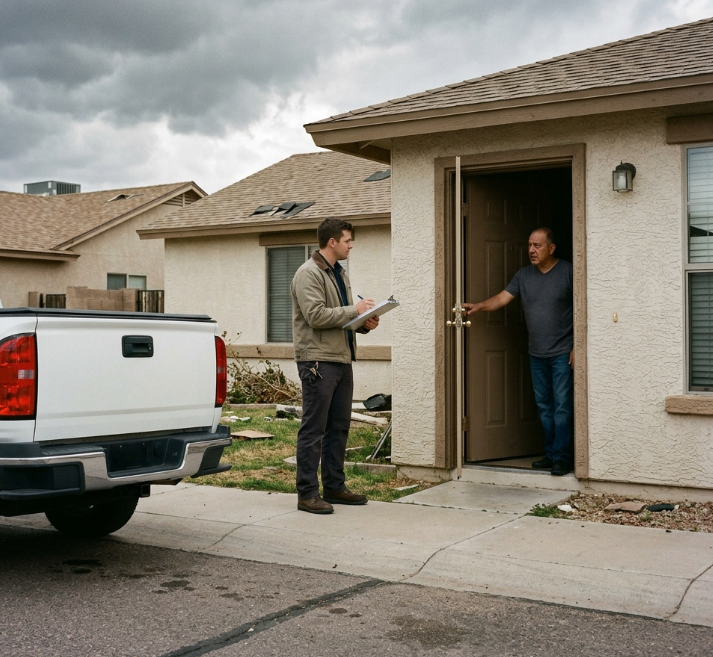
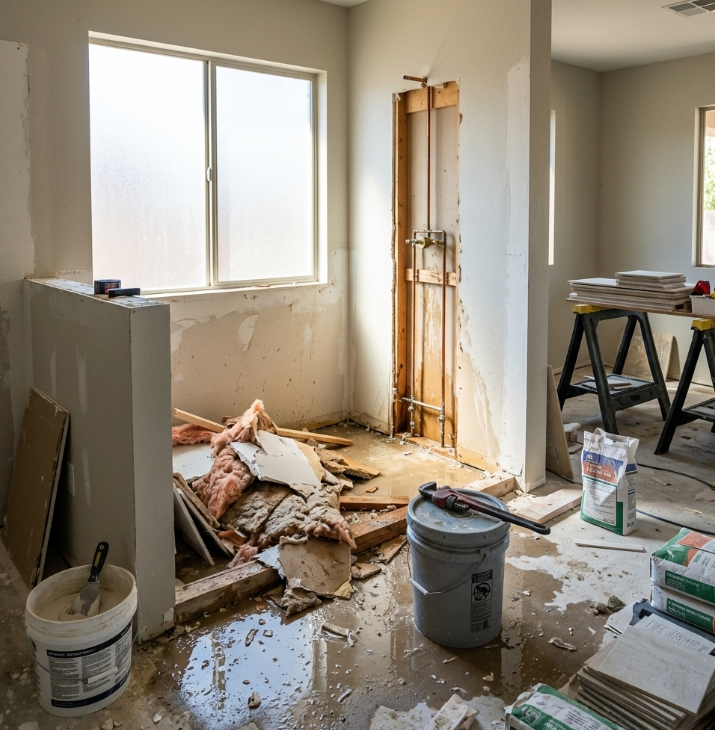
Water comes through the ceiling of a rental unit on a Tuesday night. The tenant calls the landlord. The landlord calls their insurance carrier. Somewhere in that chain of calls, the question surfaces that nobody has a clean answer to: whose insurance is this, whose responsibility is this, and who is actually filing the claim?
It's one of the most common points of confusion in residential property damage — and it costs both landlords and tenants real money when nobody understands the answer until they're already in the middle of it.
Here's how it actually works.
The Property and the Contents Are Two Different Things
The cleanest way to understand landlord vs. tenant insurance responsibility is to separate the physical structure from everything inside it.
The landlord owns the building. Their insurance — a landlord policy, also called a dwelling fire policy or a non-owner occupied policy — covers the structure itself. Walls, floors, ceilings, built-in fixtures, the roof, the HVAC system, plumbing, electrical. If the building is damaged, the landlord's policy is the one responding to it.
The tenant owns their stuff. Their renters insurance — if they have it — covers their personal property. Furniture, electronics, clothing, everything they brought into the unit. If a pipe fails and ruins a tenant's couch and laptop, that's a renters insurance claim, not a landlord claim.
The separation sounds clean. In practice it gets complicated quickly, because damage events don't respect that line. A water loss soaks the building and the contents simultaneously. A fire damages the structure and destroys everything inside it. Both policies may be involved in the same event, responding to different portions of the loss.
When the Landlord Files
The landlord files a claim when the physical structure is damaged — which is most of the time in a significant property damage event.
Pipe failure, roof leak, storm damage, fire, mold resulting from a covered water event — all of these affect the building itself and trigger the landlord's policy. The landlord is the named insured. The landlord files. The landlord's adjuster comes out and scopes the structural damage. The landlord's contractor does the restoration and rebuild.
What the landlord's policy does not cover: the tenant's personal belongings, the tenant's temporary housing costs if they have to vacate during restoration, or the tenant's own liability if they caused the damage.
When the Tenant Files
The tenant files a claim against their own renters insurance when their personal property is damaged — regardless of what caused the damage.
If a pipe in the ceiling fails through no fault of the tenant and ruins their furniture, the tenant's renters insurance covers their contents. The fact that the landlord's policy is also responding to the structural damage doesn't affect the tenant's separate claim for their belongings.
Renters insurance also typically includes loss of use coverage — temporary housing costs if the unit becomes uninhabitable during restoration. That's the tenant's policy responding, not the landlord's.
And if the tenant caused the damage — left a bathtub running, started a kitchen fire through negligence, caused a plumbing failure through misuse — the liability portion of their renters insurance may respond to the landlord's claim for property damage. Which is exactly why landlords in Arizona should be requiring renters insurance as a lease condition, not treating it as optional.
The Negligence Question Changes Everything
Fault matters in rental property damage claims more than most landlords and tenants realize.
If a landlord's deferred maintenance caused the loss — a known plumbing issue that was never repaired, a roof that was reported as failing and never addressed, an HVAC system that leaked and created the conditions for mold — the landlord's negligence becomes part of the claim picture. The tenant may have a direct claim against the landlord for damaged personal property, temporary housing costs, and in some cases other damages.
If the tenant caused the loss through negligence, the landlord has a claim against the tenant — which the tenant's renters insurance liability coverage is designed to respond to. Without renters insurance, the landlord is pursuing the tenant directly, which is slower, less certain, and more expensive for everyone.
If a third party caused the loss — a contractor working in an adjacent unit, a neighboring property owner whose irrigation system failed, a manufacturer defect in an appliance — subrogation comes into play. Both the landlord's carrier and potentially the tenant's carrier may have subrogation rights against the responsible party.
The cleaner the documentation of what caused the loss, the clearer the fault picture — and the clearer the fault picture, the more predictably each policy responds.
The Vacancy Problem
Here's one that catches landlords off guard regularly in the Phoenix market: vacancy clauses.
Most standard landlord policies include a vacancy clause that modifies or suspends certain coverages if the property has been unoccupied for more than 30 or 60 days — the specific threshold varies by policy. In the Valley, where seasonal rentals, tenant turnover gaps, and properties sitting between leases are common, a landlord can easily find themselves in a loss event with reduced coverage because the unit was technically vacant when the damage occurred.
If you manage rental properties in the Phoenix area and any of them sit vacant for periods, read your policy's vacancy clause carefully. A separate vacant property endorsement or a different policy structure may be warranted.
Multi-Unit Properties Add Layers
In a multi-unit property — an apartment complex, a duplex, a small commercial building with residential units — a single damage event can trigger multiple claims across multiple tenants simultaneously.
A pipe failure on the third floor saturates the second floor and the first. Three units are affected. Three tenants have damaged contents. Two units are uninhabitable. The landlord's structural claim is straightforward — one claim, one carrier, one contractor scoping the building damage across all three units. But the tenant-side picture is three separate renters insurance claims, three separate temporary housing situations, and potentially three separate conversations about what caused the loss and whether anyone's negligence is involved.
For property managers handling this in real time, the coordination burden is significant. Having a restoration contractor who understands multi-unit claims — who can scope the structural damage across all affected units in a single coordinated assessment, document the cause of loss clearly, and communicate directly with the landlord's carrier throughout — reduces that burden considerably.
What Landlords Should Have in Place Before a Loss
The time to sort out insurance structure and lease requirements is before something happens, not during it.
Require renters insurance. Make it a lease condition with a minimum liability limit — typically $100,000. Require that you're listed as an additional interested party on the tenant's policy so you receive notice if the policy lapses. This isn't punitive — it protects the tenant as much as it protects you.
Understand your own policy. Know your vacancy clause threshold. Know whether your policy covers loss of rental income during restoration — because if a significant loss makes a unit uninhabitable for 60 or 90 days, that income gap is real and it's either covered or it isn't. Know what your deductible is and whether it applies per occurrence or per unit in a multi-unit event.
Document the property condition at move-in and move-out. Photographs, written inventories, signed condition reports. If a damage event happens and fault is disputed, this documentation is the difference between a clean claim and a contested one.
If You're Managing Properties in the Valley and a Loss Just Happened
The first call is to your insurance carrier to report the loss. The second call should be to a restoration contractor who understands the multi-party dynamics of rental property claims — who can scope the structural damage, document the cause of loss clearly, and coordinate with your carrier from the first day of the job.
RCS Builders works with landlords and property managers across Greater Phoenix regularly — from single-family rentals to multi-unit complexes and commercial properties. We understand the insurance coordination piece, the tenant communication piece, and the documentation requirements that make rental property claims move faster and resolve more cleanly.
Call us at 480-204-9035 or reach out through our contact page. If you've got an active loss, we'll get someone out fast.
Related: