A pipe leaks inside a wall. The water is stopped, but the drywall, baseboards, flooring, and possibly the cabinets still need to be repaired.
Then someone asks when the house was built.
If your Phoenix-area home was built before 1978, repairs that disturb older painted surfaces may require additional precautions.
Water damage in a pre-1978 home can require EPA lead-safe renovation practices. Those requirements belong in the repair plan, alongside the drywall, flooring, cabinetry, and finishes needed to put the rooms back together.
www.epa.gov
The rebuild—also called
build-back or
put-back—is the work that replaces what was damaged or removed during mitigation.
RCS Builders is a licensed Arizona general contractor and an EPA Lead-Safe Certified Firm. We handle the damaged drywall, flooring, cabinetry, trim, texture, and paint, with the applicable lead-safe requirements built into the job.
We can also take over after another company has handled the water extraction and drying.
Why the Home’s Age Can Change the Repair Process
EPA’s Renovation, Repair and Painting Rule, commonly called the
RRP Rule, generally applies to paid work that disturbs painted surfaces in pre-1978 housing, subject to specific exceptions.
For covered work, the company needs firm certification, an assigned Certified Renovator, appropriately trained workers, and the required work practices and records. An Arizona contractor license and EPA firm certification serve different purposes.
www.epa.gov
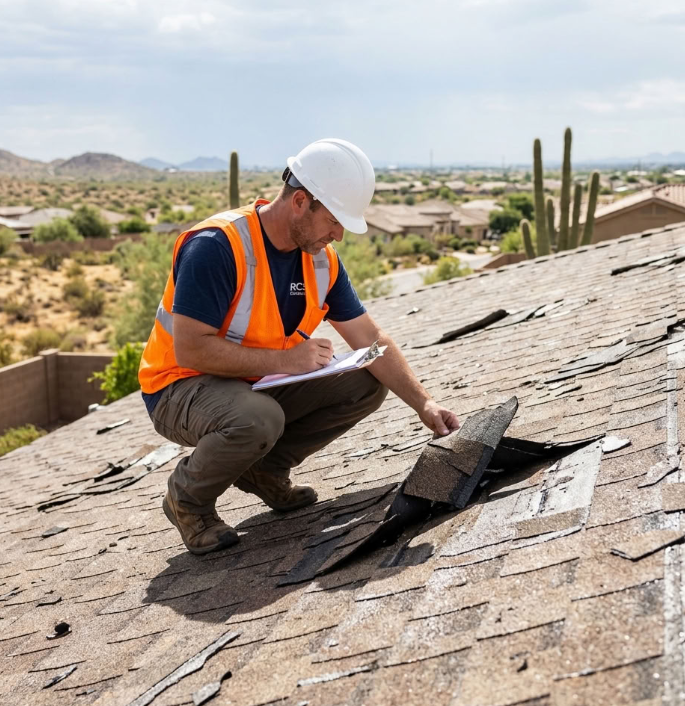
On a water-damage repair, the affected work might include:
- Removing painted drywall
- Disturbing painted baseboards and door casing
- Removing damaged painted cabinets or other components
- Preparing existing painted surfaces for repairs
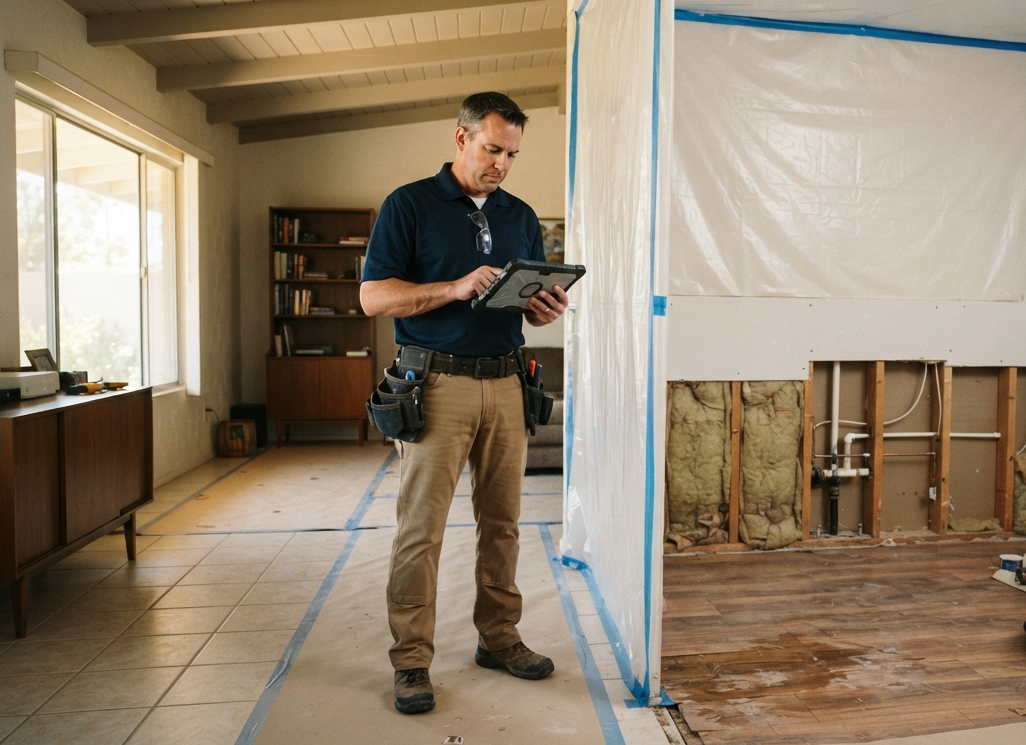
- Opening walls to reach damaged building materials
The home’s age does not establish that every surface contains lead. It does mean the contractor needs to account for the applicable requirements before disturbing those surfaces.
The right contractor plans the lead-safe work and the finished repair together.
What the Repair Process Includes
A complete repair plan addresses both how the damaged materials are handled and how the finished space will be rebuilt.
The contractor reviews the damaged areas, remaining moisture concerns, materials that need removal, and surfaces that will be disturbed.
Existing mitigation records, photographs, environmental reports, and insurance estimates help establish what has already happened and what remains.
This is also when the full build-back should be planned. If drywall and baseboards are being removed, the estimate should include replacing them and completing the surrounding finishes.
Prepare the work area and remove damaged materials
Where RRP applies, the plan must address the required occupant information, containment, trained personnel, dust-control practices, debris handling, cleaning, and verification.
Those requirements need to be incorporated before affected work begins.
www.epa.gov
Put the damaged rooms back together
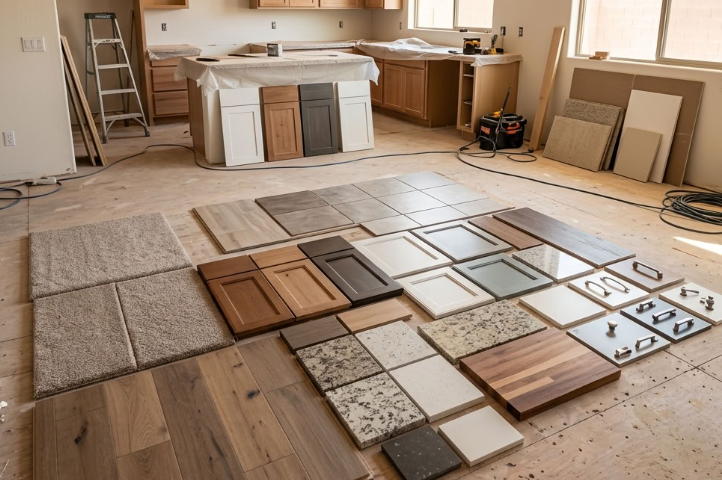
Once drying and any required environmental work are complete, the remaining repairs may include:
- Insulation replacement
- Drywall installation and finishing
- Texture and paint
- Flooring and baseboards
- Door casing and other trim
- Cabinetry, vanities, and countertops
- Framing or subfloor repairs where needed
- Coordination of applicable plumbing, electrical, and other specialty work
RCS manages the materials, trades, and sequence of work through the final walkthrough.
Already Had Another Company Dry the Property?
RCS can take over the build-back after another company finishes extraction, drying, or demolition.
We review the available records and inspect the property in its current condition. From there, we determine what still needs to be repaired or replaced and whether that work will disturb additional older painted surfaces.
Drying does not, by itself, resolve the lead-safe requirements for later renovation work.
The starting point is the property’s current condition. We review what has already been completed and develop a clear plan for the remaining repairs.
Learn more about our
insurance build-back and put-back services.
Does This Apply Only to Water Damage?
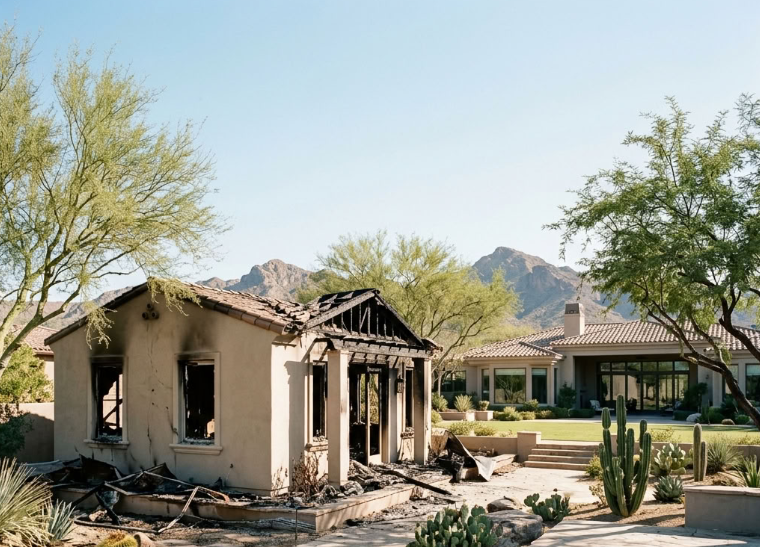
No. The same consideration can come up when qualifying repairs after a
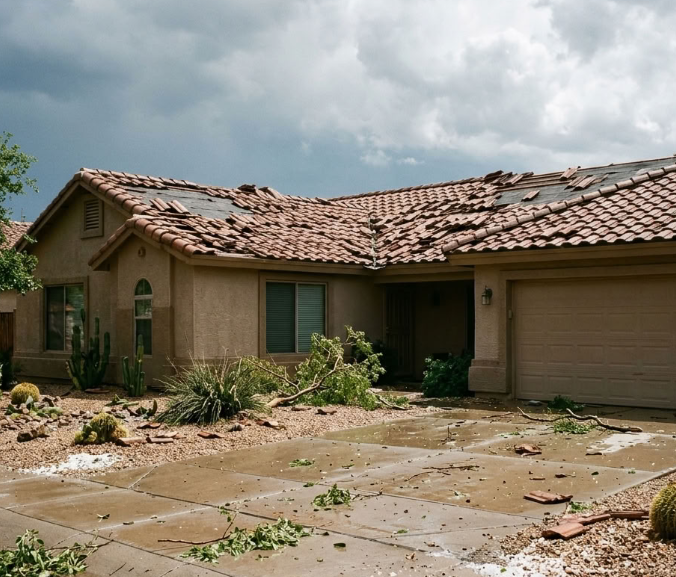
fire, storm, tree impact, or vehicle impact disturb older painted building components.
For example, a storm may damage a window opening and the surrounding painted wall. A vehicle impact may require removing damaged wall sections and trim. Fire repairs may involve painted ceilings, walls, doors, or cabinets.
The relevant question is what the work will disturb in a property covered by the RRP Rule. The cause of the damage does not, by itself, determine whether lead-safe requirements apply.
www.epa.gov
RCS evaluates those requirements as part of the repair scope while coordinating the work needed to put the property back together.
Does Every Older Home Need Lead Testing Before Repairs?
No.
EPA’s RRP Rule does not require lead-paint testing on every project.
A firm can presume lead-based paint is present and follow the rule, or use an accepted determination that the affected components are free of regulated lead-based paint.
www.epa.gov
That choice concerns lead paint under RRP. Separate asbestos, housing-program, worker-protection, or project requirements still need to be evaluated where applicable.
When environmental testing or specialist services are needed, RCS coordinates those steps with the appropriate professionals so the repair can move forward in the correct sequence.
Lead-safe renovation is also different from lead abatement. RRP covers qualifying renovation work that may disturb lead paint. Abatement is a separate activity directed at addressing lead hazards and requires different credentials.
www.epa.gov
Example: A Water-Damaged Closet and Adjoining Room
Consider a supply-line leak in a Phoenix home built in 1971.
Water affects a closet and part of the adjoining room. Painted drywall needs to be removed. Baseboards are damaged. Flooring extends into the affected area, and the repair will require new drywall, texture, and paint.
The construction plan needs to address:
- The materials being disturbed and the applicable lead-safe requirements.
- Any separate environmental work required for the affected scope.
- Controlled removal of damaged materials and the required cleaning.
- Completion of drying and other work needed before the walls and floors are closed up.
- Replacement of insulation, drywall, flooring, baseboards, and finishes as needed.
- Inspection of the completed work and the final walkthrough.
The put-back has to account for everything removed and the finishes needed to complete the room. RCS coordinates that work through completion.
This is an illustrative example; each property requires its own assessment.
How Does Lead-Safe Work Fit Into the Insurance Estimate?
The estimate should describe the work needed to complete the repair, including applicable work-area protection, selective removal, cleanup, and the full build-back.
If an initial estimate omits an operation the contractor identifies as necessary, the contractor can document the requirement and provide supporting information for the carrier’s review.
A required construction step is not automatically a covered insurance expense. Payment depends on the policy, the loss, and the carrier’s evaluation. Arizona DIFI advises homeowners to confirm coverage with their insurer rather than rely on a contractor’s assurance.
difi.az.gov
RCS provides construction assessment, repair estimating, and documentation. Your carrier determines coverage, and the agreed construction contract establishes the work and payment responsibilities.
What to Ask Before Hiring a Contractor
For an older-home damage repair, ask:
- Does your Arizona contractor license cover the proposed work?
- Is your company an EPA Lead-Safe Certified Firm?
- Will a Certified Renovator be assigned where RRP applies?
- Does the written scope include the complete build-back?
- Can you take over after another mitigation company?
- How will additional damage or required work be documented?
Firm certification is one part of the requirement. The assigned personnel, actual work practices, and project records matter too.
www.epa.gov
Frequently Asked Questions
Does a small drywall repair automatically avoid the lead-safe rules?
No. EPA provides a limited minor-repair exception, but demolition of painted surfaces and window replacement do not qualify for that exception just because the disturbed area is small. The contractor must evaluate the actual activity and applicable exceptions.
www.epa.gov
Is emergency water-damage work exempt?
Only certain immediate emergency activities may qualify for limited exceptions. Once the emergency portion is addressed, the remaining qualifying renovation work is subject to the normal requirements.
An emergency does not create an exemption for the entire rebuild.
www.epa.gov
Does cleaning verification mean the home is lead-free?
No. RRP cleaning verification is a procedure associated with the renovation work area. It is not a finding that every surface in the home is lead-free and should not be presented as a whole-home clearance certificate.
www.epa.gov
Can RCS handle the drywall, flooring, and cabinets after environmental work is complete?
Yes. RCS can replace damaged drywall, flooring, cabinets, trim, and finishes after another company handles mitigation or specialist environmental work.
We review the available documentation and inspect the property before establishing the remaining repair scope.
Do I have to use RCS for the mitigation to hire you for the repairs?
No. RCS can handle the rebuild even when another company performed the water extraction, drying, or demolition.
We can enter the project at the repair stage and manage the remaining work through completion.
Schedule a Rebuild Assessment
Water damage in an older home still leaves you with a practical problem: rooms that need to be put back together.
RCS Builders provides insurance reconstruction throughout Greater Phoenix, including Phoenix, Tempe, Mesa, Chandler, Gilbert, Scottsdale, Ahwatukee, Queen Creek and many more.
Our work includes drywall, insulation, texture, paint, flooring, cabinetry, trim, and coordination of the trades needed to complete the repair. As an EPA Lead-Safe Certified Firm and licensed Arizona general contractor, we incorporate the applicable requirements into the construction plan.
We can become involved during the loss or take over the remaining repairs after another company completes mitigation.
Have water damage in a pre-1978 home? [Call RCS Builders at
480-204-9035] to discuss the repair scope and schedule a rebuild assessment.
Related services